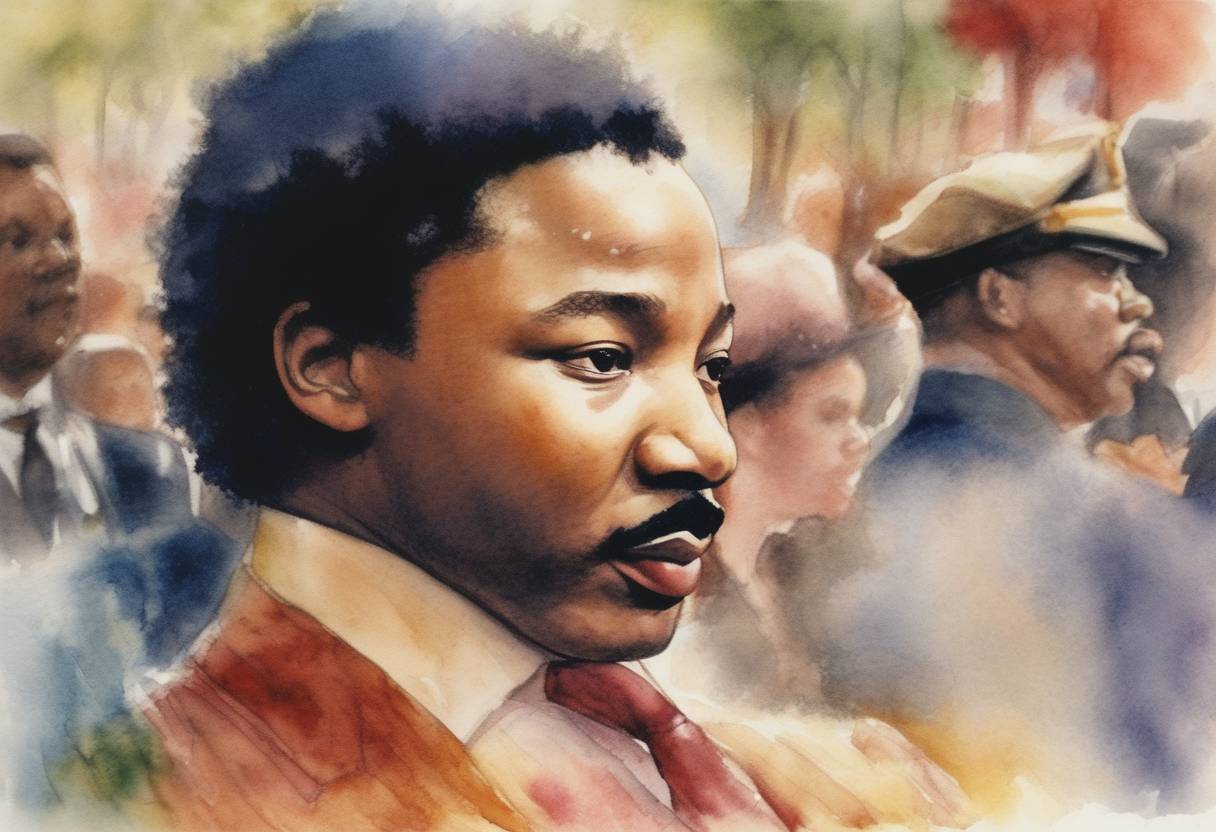
Martin Luther King Jr. Day Observed in All 50 States - January 18, 1993
On January 18, 1993, Martin Luther King Jr. Day was observed as a federal holiday across all 50 states in the United States for the first time. This occasion marked a significant milestone in recognizing Dr. King’s impact and legacy across the entire nation.
Background
Martin Luther King Jr. Day is a federal holiday in the United States commemorating the life and achievements of Dr. Martin Luther King Jr., the prominent leader of the Civil Rights Movement. The holiday honors his contributions to advancing civil rights through nonviolent activism, as well as his iconic role in the movement for racial equality.
The campaign to establish a holiday in King’s honor began shortly after his assassination in 1968. U.S. Representative John Conyers introduced the first legislation for a King holiday in 1968, but it initially faced significant opposition. It wasn’t until November 2, 1983, that President Ronald Reagan signed into law a bill establishing Martin Luther King Jr. Day as a federal holiday, to be observed on the third Monday of January each year, starting in 1986.
Path to Nationwide Observance
Despite being recognized as a federal holiday, adoption by individual states varied widely due to differing views and political resistance. Some states incorporated the holiday by renaming existing state holidays, while others created new ones.
The primary resistance came from states with significant political opposition to the establishment of a holiday honoring Dr. King, particularly in the South. Notably, South Carolina was the last state to formally adopt the holiday, doing so in 2000, when it made the day a paid holiday for all state employees.
Historical Significance
The nationwide observance of Martin Luther King Jr. Day in 1993 symbolized a unified recognition of Dr. King’s legacy and the ongoing struggle for civil rights in America. It underscored the broad acceptance of the values he championed—equality, justice, and nonviolence—irrespective of regional differences.
The 1993 observance was accompanied by various events and parades across the United States, paying tribute to King’s work and serving as reminders of the continuing challenges and commitments needed to achieve racial equality.
This unified observance demonstrated not only a tribute to Dr. King himself but also a critical reflection on the nation’s progression in civil rights and the journey still ahead to address ongoing racial disparities.