The Battle of Sluys: June 24, 1340
1340 · Sluys, Netherlands
The Battle of Sluys takes place during the Hundred Years' War, resulting in a significant naval victory for the English fleet over the French.
June 2, 1332
A naval encounter known as the Battle of Arnemuiden took place between the Kingdom of England and the Kingdom of France during the early stages of the Hundred Years' War. This engagement was significant for being the first recorded European naval battle involving the use of artillery.
Arnemuiden, Netherlands
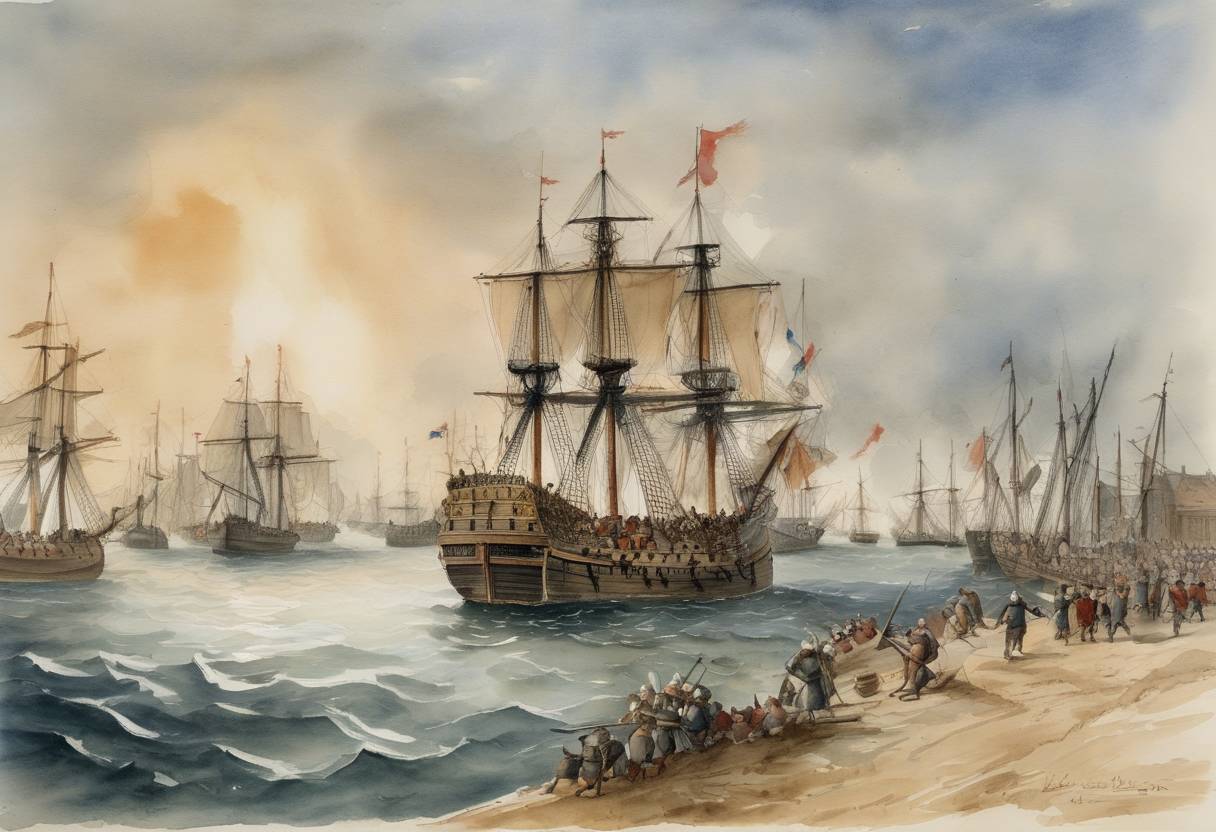
The Battle of Arnemuiden occurred on September 23, 1338, during the early stages of the Hundred Years’ War, not on June 2, 1332. This conflict between the Kingdom of England and the Kingdom of France was pivotal as it marked the first recorded use of artillery in a European naval battle, highlighting the evolving nature of warfare during this period.
The Hundred Years’ War, a prolonged conflict between England and France, was primarily driven by territorial disputes and claims to the French throne. Following decades of rising tensions and skirmishes, this period saw an escalation in both land and sea engagements. The English, seeking to protect their interests in the Low Countries, deployed a fleet to secure trade routes and maintain open communication lines.
The naval engagement unfolded near the port of Arnemuiden, located on the island of Walcheren in what is now the Netherlands. An English fleet commanded by John Kingston was tasked with safeguarding wool shipments, a critical commodity for English trade. As Kingston’s fleet embarked on its mission, a significantly larger French fleet intercepted them.
The encounter is notable for being the first known instance of artillery use in European naval warfare. The English ship “Christopher” was equipped with a small number of primitive cannons. Although the artillery fire may not have had a decisive impact on the battle’s outcome, it heralded the future role of gunpowder in naval engagements.
Despite the innovative use of artillery by the English, they faced a formidable and numerically superior French force. After a fierce engagement, the French succeeded in overpowering the English fleet. The battle ended in a French victory, with the English ships either captured or destroyed and their valuable cargo seized.
The Battle of Arnemuiden, though a tactical defeat for England, underscored the advent of artillery in naval warfare, setting a precedent for future conflicts. This introduction of gunpowder weaponry gradually transformed naval strategy, affecting ship design and combat tactics in the decades to follow.
The battle’s outcome reinforced French dominance at sea in the early stages of the Hundred Years’ War. It highlighted the vulnerability of English supply lines and underscored the strategic importance of naval power in sustaining military campaigns on the continent.
In the broader context of the Hundred Years’ War, the Battle of Arnemuiden was one of many naval confrontations that influenced the ebb and flow of power between England and France. It exemplified the dynamic and multifaceted nature of medieval warfare, foreshadowing the technological advancements that would eventually reshape both maritime and land engagements throughout Europe.