The Opening of the London Underground: January 10, 1863
1863 · London, England
The London Underground, the world's oldest underground railway, opens between Paddington and Farringdon.
June 13, 1842
Queen Victoria traveled by train for the first time on the Great Western Railway from Slough to Paddington station in London.
Slough, United Kingdom | Great Western Railway
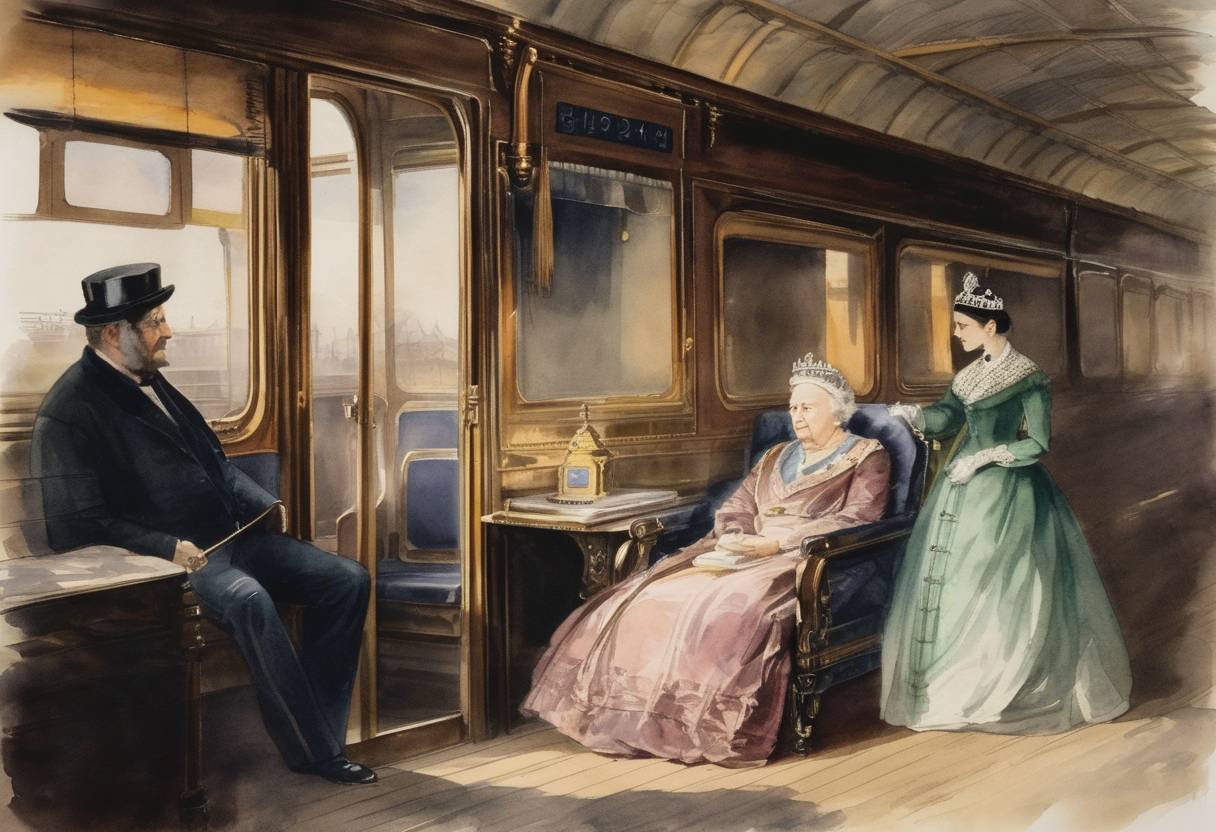
On June 13, 1842, Queen Victoria made history by traveling by train for the first time. This marked a significant moment in both royal and transportation history, showcasing the growing importance and trust in railway travel during the 19th century.
The Industrial Revolution had transformed Britain, and the development of railway networks played a crucial role in that transformation. The Great Western Railway (GWR), engineered by Isambard Kingdom Brunel, was one of the pioneering lines in this transport revolution. By 1842, railway technology had advanced considerably, and the railways were becoming a popular and efficient means of travel.
Queen Victoria’s journey began at the Slough railway station, a town which had become significant due to its position on the GWR line. Her destination was Paddington Station in London, a part of the expanding metropolis.
Queen Victoria’s acceptance of rail travel helped to solidify the railway’s status as a safe and reliable form of transportation, which not only facilitated economic growth but also promoted social change, as travel became more accessible to the broader public.
The success of this journey paved the way for future royal train travel, establishing a tradition that has continued into modern times. Queen Victoria’s ride underscored the symbiotic relationship between technological progress and societal advancements in the 19th century.
Source: www.royal.uk