Modern Neon Lighting Demonstration by Georges Claude
1910 · Paris, France
Modern neon lighting was first demonstrated by Georges Claude at the Paris Motor Show.
April 26, 1845
The first theatre to be gas-lit in Europe, the Théâtre de l'Ambigu-Comique, opened in Paris, France.
Paris, France | Théâtre de l'Ambigu-Comique
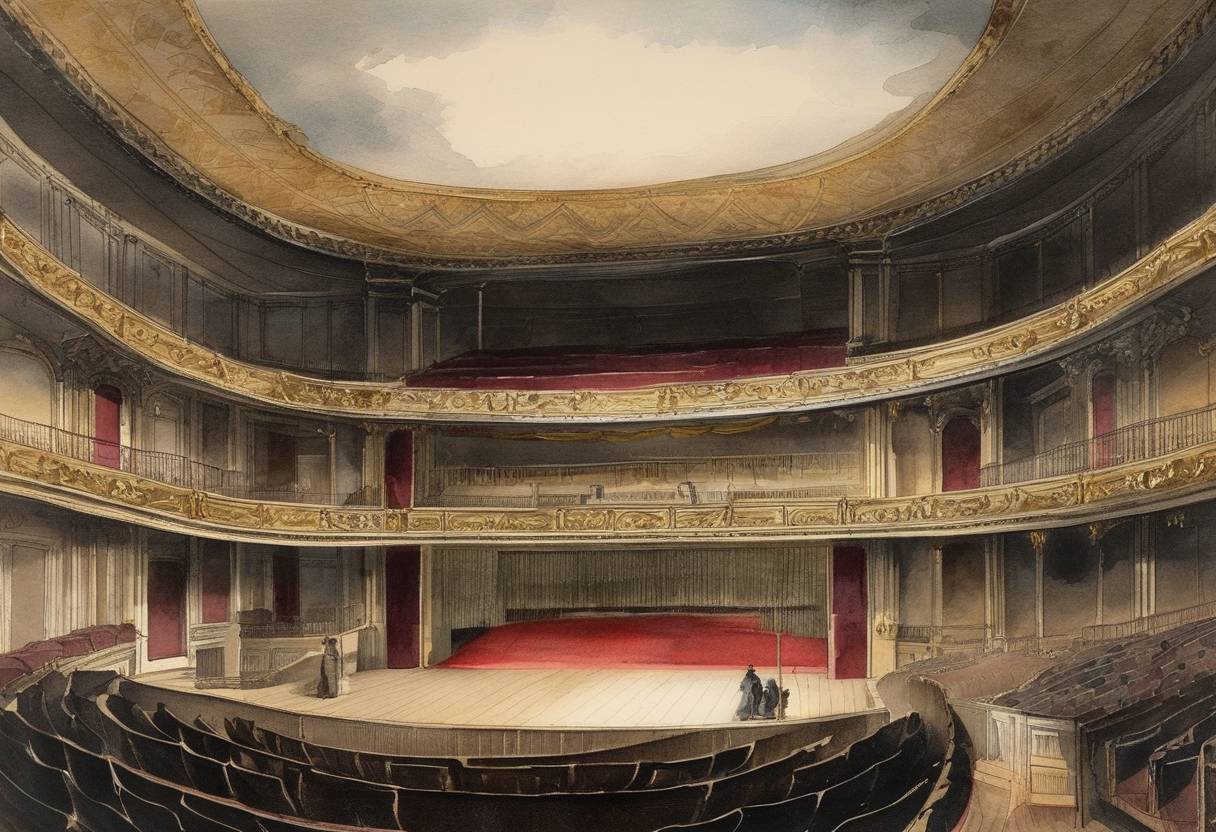
On April 26, 1845, the Théâtre de l’Ambigu-Comique in Paris, France, became the first theatre in Europe to be illuminated using gas lighting. This pivotal moment marked a significant technological advancement in the history of theatre production and the broader world of performing arts.
The advent of gas lighting represented a substantial improvement over the traditional sources of lighting, such as candles and oil lamps, which were commonly used in theatres before the mid-19th century. Gas lighting offered a more consistent and brighter light, vastly improving the visual experience for audiences. It also reduced the risk of fire, a perennial danger with open flame lighting fixtures.
Following the successful implementation at the Théâtre de l’Ambigu-Comique, other theatres quickly adopted gas lighting, transforming the theatrical landscape in Europe. This transition also paved the way for further innovations in stagecraft and the eventual introduction of electric lighting towards the end of the century.
The modernization of theatre lighting technology played a crucial role in shaping theatre as a central cultural institution during the 19th century, making performances more accessible and attractive to diverse audiences.
Source: www.theatrehistory.com