Thomas Edison and His First Patent: The Electric Vote Recorder
1869 · Washington, D.C., United States
Thomas Edison received his first patent for the electric vote recorder, marking the beginning of his prolific career as an inventor.
March 5, 1872
George Westinghouse patents an air brake for railroad trains, revolutionizing railway safety and efficiency.
Washington, D.C., United States | United States Patent Office
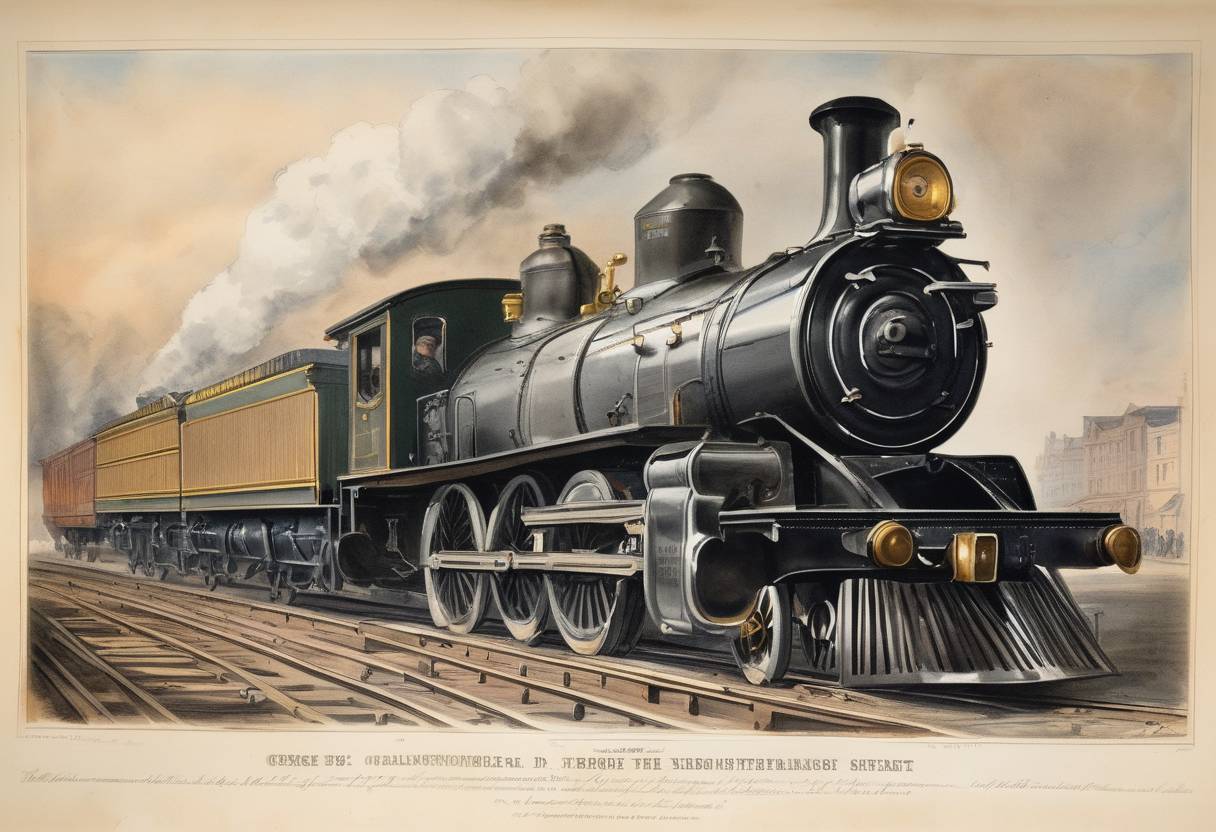
On March 5, 1872, George Westinghouse was granted U.S. Patent No. 124,405 for his invention of the air brake, a pivotal development in the field of railway safety and efficiency. This invention marked a significant advancement in the transportation industry, addressing critical safety challenges faced by railroads at the time.
Prior to Westinghouse’s invention, trains primarily relied on manual braking systems. Brakemen physically operated these brakes by running along the tops of moving cars. This method was not only labor-intensive but also fraught with danger, leading to frequent accidents and proved ineffective at high speeds or on long trains. These shortcomings emphasized the urgent need for a more reliable and efficient braking system.
Westinghouse’s air brake system utilized compressed air to activate brake cylinders on each car of a train simultaneously. A central compressor, operated by the locomotive, provided the necessary pressure to apply the brakes uniformly across the entire train. This innovation allowed for precise, rapid, and reliable stopping capability, significantly reducing stopping distances and enhancing safety for passengers and freight.
The introduction of the air brake had a transformative effect on the railway industry. By enabling trains to stop more safely and efficiently, it facilitated the operation of longer and heavier trains, thereby boosting the capacity and profitability of the rail networks. The air brake also reduced the risk of accidents, making rail travel and transportation of goods much safer.
Westinghouse’s invention was quickly adopted by railroads in the United States and eventually around the world. This adoption spurred further innovations and standardizations in railway systems, influencing the design and operation of trains into the modern era.
In addition to revolutionizing rail safety, the success of the air brake established George Westinghouse as a leading inventor and industrialist. His company, the Westinghouse Air Brake Company, became a major supplier of railway equipment. Westinghouse continued to innovate throughout his career, contributing to the development of alternating current (AC) power systems and various other technologies.
Overall, the patenting of the air brake on March 5, 1872, symbolized a critical leap forward in industrial technology and transportation safety, underpinning the growth and modernization of railroads worldwide.
Source: www.britannica.com