1832 · London, United Kingdom
The Great Reform Act received royal assent, marking a major political reform in Britain.
August 2, 1832
The First Reform Act receives Royal Assent in the United Kingdom, reforming the electoral system by redistributing seats in England and Wales.
London, United Kingdom | Parliament of the United Kingdom
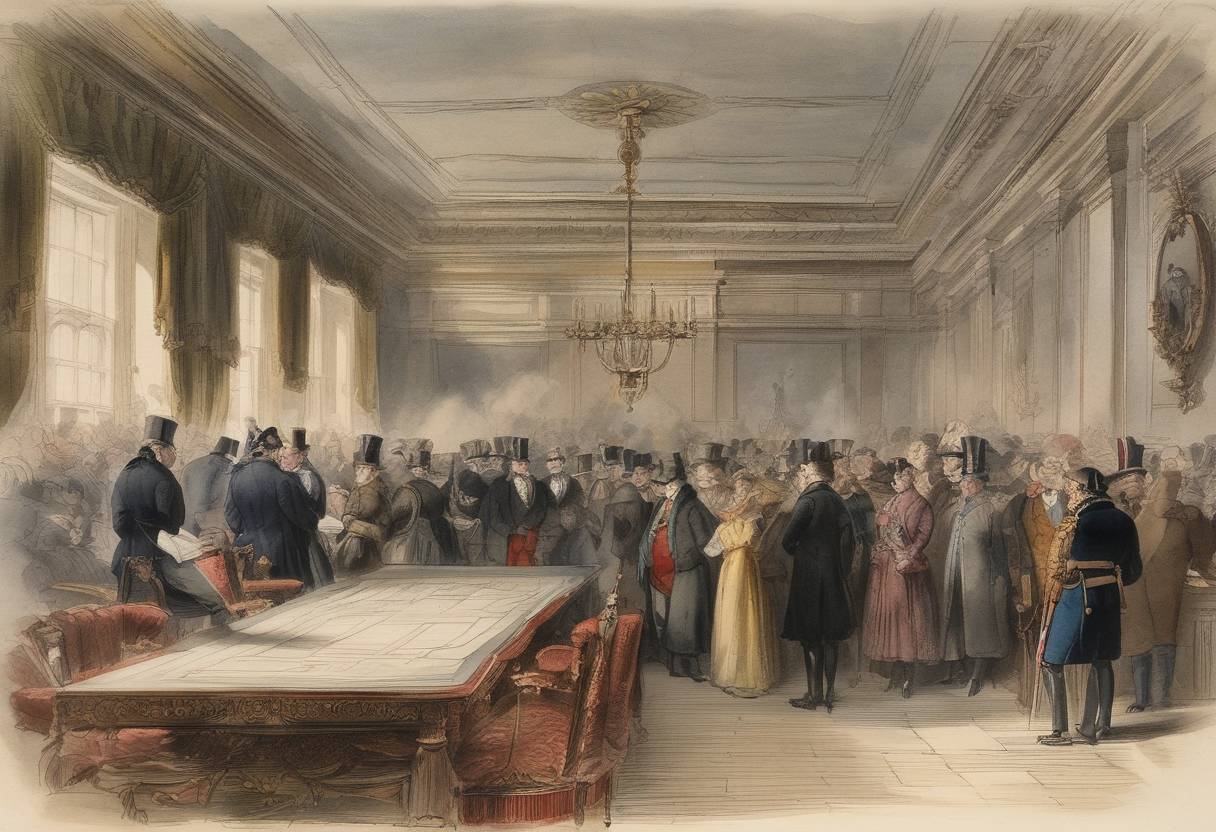
On August 2, 1832, the Great Reform Act, also known as the Representation of the People Act 1832, received royal assent in the United Kingdom, marking a significant milestone in the country’s political and electoral history. This historic legislation aimed to rectify many of the imbalances and inequities in the electoral system of England and Wales.
Before the enactment of the First Reform Act, the British electoral system was fraught with inconsistencies and corrupt practices. Many parliamentary boroughs, known as “rotten boroughs,” continued to send representatives to Parliament despite having severely diminished populations. Conversely, rapidly growing industrial cities like Manchester and Birmingham were underrepresented or entirely unrepresented. The call for reform had gained momentum during the early 19th century, fueled by widespread public discontent and organized movements demanding greater representation and fairer electoral processes.
The First Reform Act introduced several key changes:
Redistribution of Seats: The Act redistributed parliamentary seats, reducing representation from under-populated “rotten boroughs” and allocating those seats to burgeoning urban areas. It disenfranchised 56 boroughs in England and Wales and partially disenfranchised 30 others, creating 67 new constituencies.
Extension of the Franchise: While still limited, the franchise was extended to a broader segment of the middle-class male population. The Act granted the right to vote to male householders who paid a yearly rental of £10 or more, thereby doubling the electorate from approximately 500,000 to about 813,000 out of a population of 14 million.
Standardization of Voting Qualifications: The Act introduced a more uniform voting system across the nation, helping to eliminate some of the electoral anomalies and corruption associated with the lack of standardized criteria.
The passage of the First Reform Act represented a significant step towards democratization, setting in motion subsequent reforms that continued to expand voting rights in the United Kingdom. Although it was limited in scope—excluding working-class men, women, and non-landowners—it created a momentum for future electoral reforms. Notably, it paved the way for the Second Reform Act of 1867 and the eventual introduction of universal suffrage in the UK.
The First Reform Act also signified a shift in political power, encouraging an increased engagement from the middle class and amplifying their influence in governance. It was both a reflection of changing societal values and a catalyst for further constitutional advancements throughout the 19th and 20th centuries.
In conclusion, August 2, 1832, stands as a pivotal date in British history, marking the beginning of a series of reforms that would reshape the nation’s democratic landscape.
Source: en.wikipedia.org