The Death of Mao Zedong on September 9, 1976
1976 · Beijing, China
Mao Zedong, the founding father of the People's Republic of China, died, leading to significant political changes in China.
May 16, 1966
The Cultural Revolution in China begins officially with a directive issued by the Chinese Communist Party under the leadership of Chairman Mao Zedong. The aim was to preserve Chinese communism by purging remnants of capitalist and traditional elements from Chinese society and reimposing Maoism as the dominant ideology.
Beijing, China | Chinese Communist Party
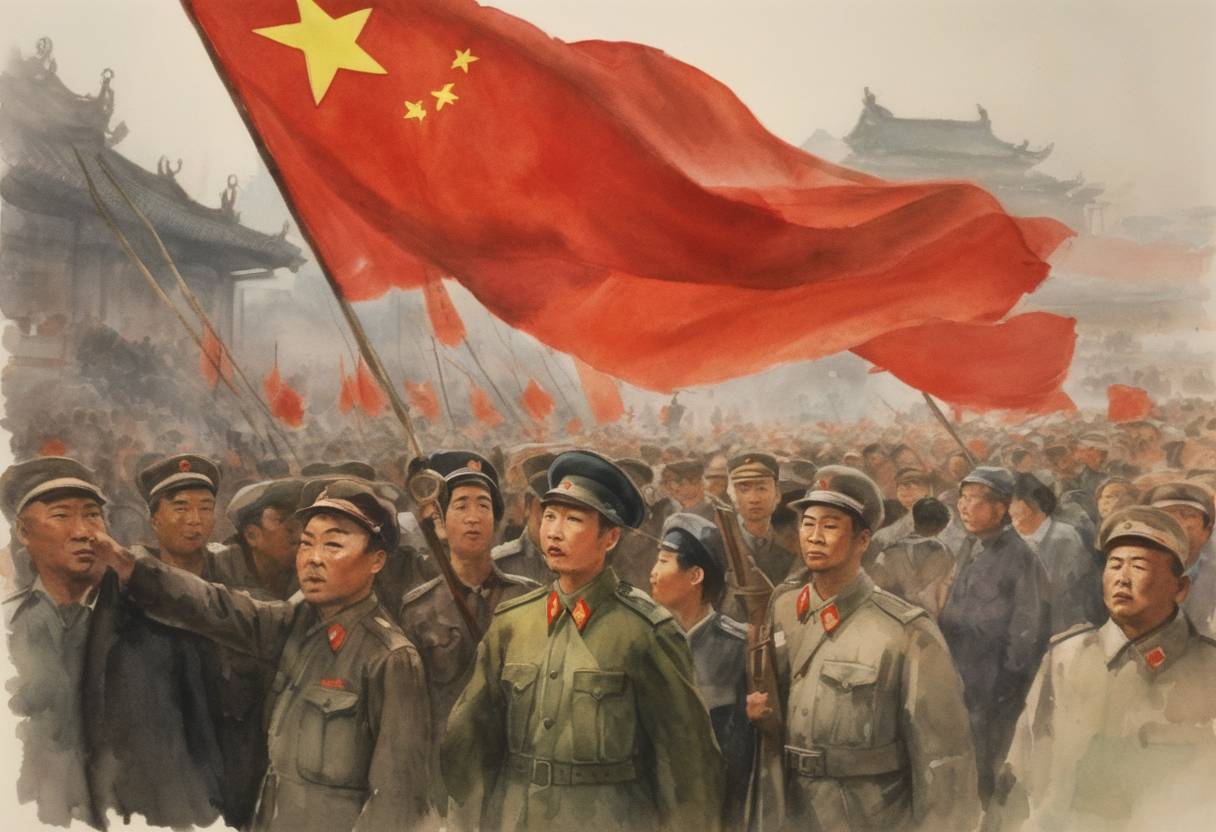
On May 16, 1966, the Chinese Communist Party (CCP), led by Chairman Mao Zedong, officially initiated the Cultural Revolution with the issuance of a seminal directive. This marked the beginning of a decade-long socio-political movement aimed at preserving the purity of Chinese communism by purging society of capitalist, traditional, and cultural elements perceived to be counter-revolutionary.
The groundwork for the Cultural Revolution was laid against the backdrop of the Great Leap Forward (1958-1962), an earlier Mao-led campaign aimed at rapid industrialization that resulted in economic disarray and widespread famine. Facing criticism and a perceived diminishing influence within the Party, Mao sought to reassert his dominance and ideological control.
In early 1966, Mao began consolidating support among radical elements within the Party and the army, particularly from the youth. By May, these tensions culminated in the creation of a potent directive labeling capitalist and traditional influences as threats to the communist ideology. The need to reinstitute Maoist ideology as paramount was emphasized, rallying support for a mass cultural cleansing.
The directive, commonly known as the “May 16 Circular,” called for a comprehensive campaign to rid Chinese society of “reactionary” elements that were allegedly infiltrating the Party, government, and broader cultural life. It highlighted the need for vigilance against “rightists” and intellectuals who harbored bourgeois tendencies.
The implementation of the Cultural Revolution took the form of mass rallies, the empowerment of “Red Guards” (mainly students), and public “struggle sessions” where perceived enemies of the state were humiliated and often subjected to harsh penalties. Educational institutions, works of art, literature, and religious practices were scrutinized and frequently dismantled or destroyed as part of the campaign to eliminate the “Four Olds”: old customs, culture, habits, and ideas.
Over the decade following the announcement, the Cultural Revolution had profound and often devastating impacts on Chinese society. It led to widespread social unrest, the persecution of millions (including many CCP officials and intellectuals), and severe disruptions in education and economic productivity.
The Cultural Revolution officially ended with Mao’s death in 1976 and the subsequent arrest of the “Gang of Four,” key figures who had been instrumental in the campaign’s fervor and excesses. In subsequent years, the Chinese government under Deng Xiaoping’s leadership sought to reform and modernize China, distancing itself from the radicalism of the Cultural Revolution. In 1981, the CCP officially declared that the Cultural Revolution had been a severe misstep.
The declaration on May 16, 1966, thus marked a pivotal point in 20th-century Chinese history, setting off a cascade of events that reverberated throughout the nation and left an enduring legacy in China’s political and social fabric.
Source: www.britannica.com