Edward III Crowned King of England
1327 · London, England
Edward III is crowned King of England after the deposition of his father, Edward II.
November 8, 1308
The coronation of Edward II as King of England took place at Westminster Abbey.
London, England | Kingdom of England
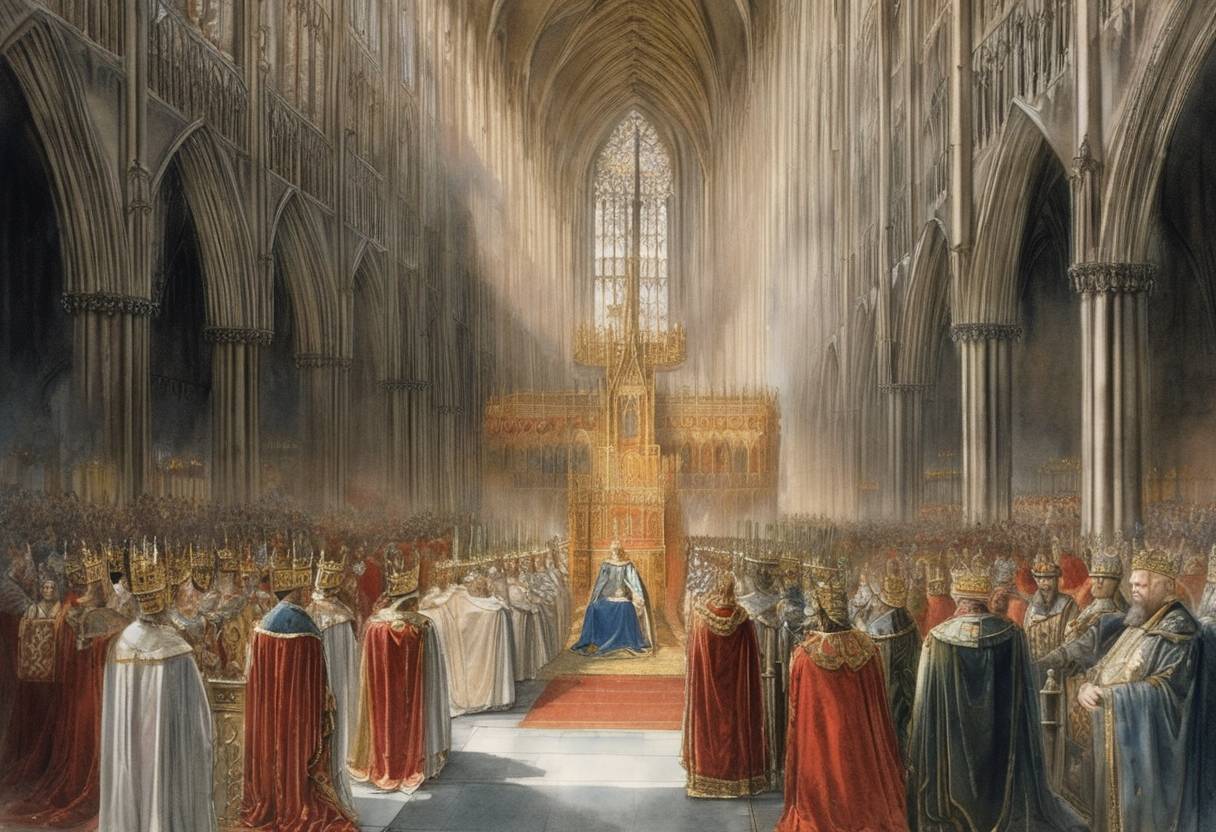
On February 25, 1308, Edward II was crowned King of England at Westminster Abbey. This significant event marked the official commencement of Edward II’s reign following the death of his father, Edward I, in 1307. The coronation was a ceremonious occasion, steeped in the traditions and pageantry of medieval monarchy.
Edward II ascended to the throne during a period fraught with political tensions. His father, Edward I, had left a legacy of strong kingship and military campaigns, particularly in Scotland. However, Edward II’s ascension faced scrutiny and skepticism due to his perceived lack of political acumen and leadership skills.
The coronation was conducted by Henry Woodlock, the Bishop of Winchester. It followed the traditional rites used for English monarchs, emphasizing the divine right of kings. The Archbishop of Canterbury, the principal celebrant, was absent due to a dispute with the new king over issues related to church rights and privileges, reflecting early signs of Edward II’s contentious relationship with the church and the nobility.
Edward was anointed and crowned with the regal symbols, including the scepter and the crown. The event symbolized not only the passing of royal responsibility but also a commitment to uphold the laws and customs of the kingdom.
Edward II’s coronation was overshadowed by his controversial favoritism towards Piers Gaveston, a Gascon knight, whom Edward had appointed as the Earl of Cornwall. This favoritism caused significant discontent among the English nobility, laying the groundwork for future conflicts during Edward’s troubled reign.
The tensions were further exacerbated by financial struggles and ongoing military conflicts in Scotland. Edward’s reliance on Gaveston and other favorites weakened his authority and alienated many powerful barons, eventually leading to repeated confrontations, such as the Ordinances of 1311.
Edward II’s reign was tumultuous, marked by rebellion and political unrest, notably the uprising led by his queen, Isabella of France, and Roger Mortimer, which led to Edward’s eventual deposition in 1327. His governance struggles stemmed partly from the dynamics established during and after his coronation, setting the stage for his contentious and ultimately short-lived rule.
Source: www.britannica.com