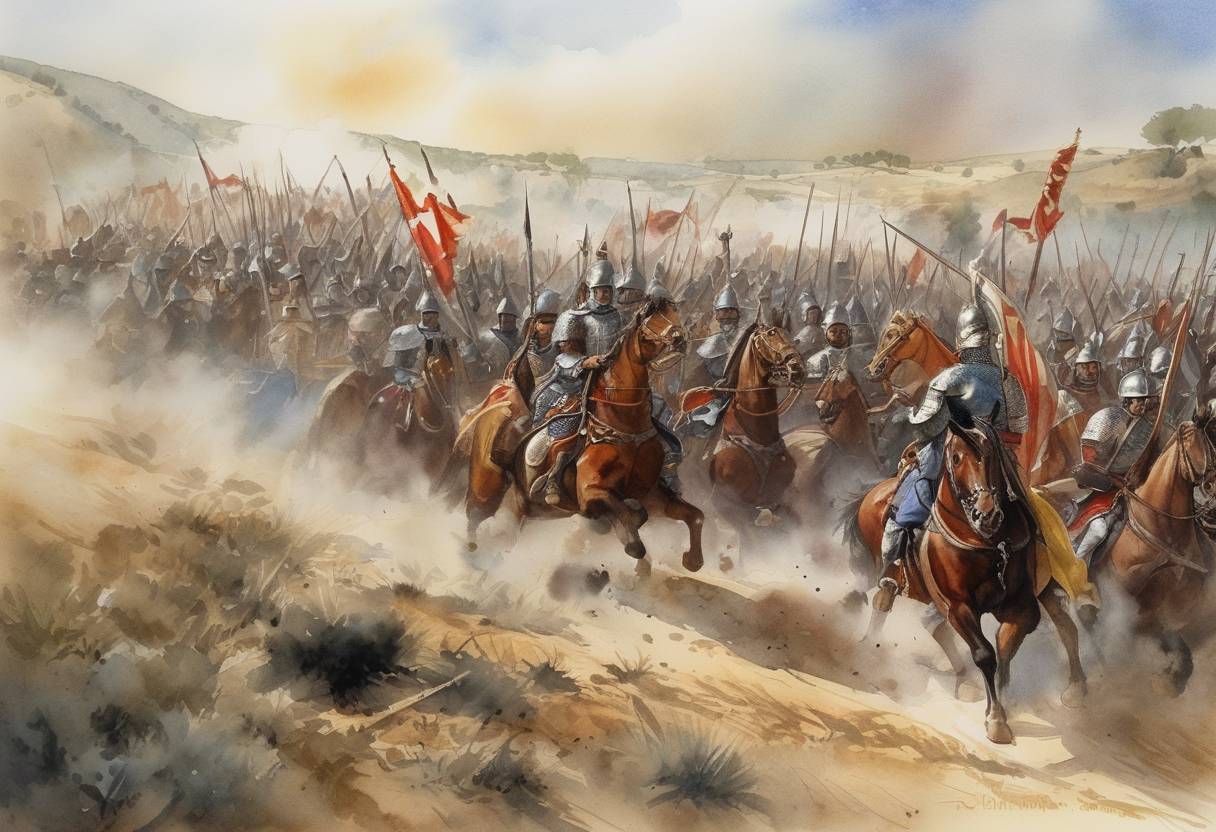
Error: Incorrect Date for the Battle of Alarcos
There seems to be a discrepancy in the date provided. The Battle of Alarcos, a significant military confrontation during the Almohad campaign against the Kingdom of Castile, took place on July 18, 1195, not September 11, 1185.
Background
- Almohad Caliphate: By the late 12th century, the Almohads, a North African Berber Muslim dynasty, had consolidated power in the Iberian Peninsula.
- Christian Kingdoms of Iberia: The Christian kingdoms, including Castile, were engaged in the Reconquista, an ongoing effort to reclaim territories from Muslim rule.
The Battle on July 18, 1195
- Location: The battle occurred near Alarcos, close to present-day Ciudad Real in central Spain.
- Combatants:
- Almohad Forces: Led by Caliph Abu Yusuf Yaqub al-Mansur.
- Castilian Forces: Led by King Alfonso VIII of Castile.
Course of the Battle
- Pre-Battle Movements: Alfonso VIII advanced south, intending to expand his kingdom’s territory.
- Engagement:
- Alfonso VIII’s forces were outnumbered by the seasoned Almohad troops.
- The Castilian forces, initially holding their ground, were overwhelmed by the Almohad cavalry and infantry.
Outcome
- Almohad Victory: The battle ended in a decisive victory for the Almohads.
- Consequences for Castile:
- The defeat weakened King Alfonso VIII’s position and forced a temporary retreat of Christian forces in Iberia.
Aftermath
- Strategic Implications: It temporarily halted the Reconquista momentum.
- Long-Term Effects: The defeat at Alarcos prompted the Christian kingdoms to unite more effectively, leading to the significant victory at the Battle of Las Navas de Tolosa in 1212, which turned the tide against the Almohads.
This battle illustrated the ebb and flow of power during the Reconquista, with shifting fortunes between the Muslim and Christian realms on the Iberian Peninsula.