1915 · off the coast of Ireland, United Kingdom
The British ocean liner RMS Lusitania was sunk by a German U-boat off the coast of Ireland, contributing to the United States' eventual entry into World War I.
October 9, 1907
The British passenger liner RMS Lusitania makes its maiden voyage from Liverpool to New York City. Known for its speed and luxury, the Lusitania eventually became a powerful symbol in World War I, after it was sunk by a German U-Boat in 1915, contributing to the United States' entry into the war.
Liverpool, United Kingdom | Cunard Line
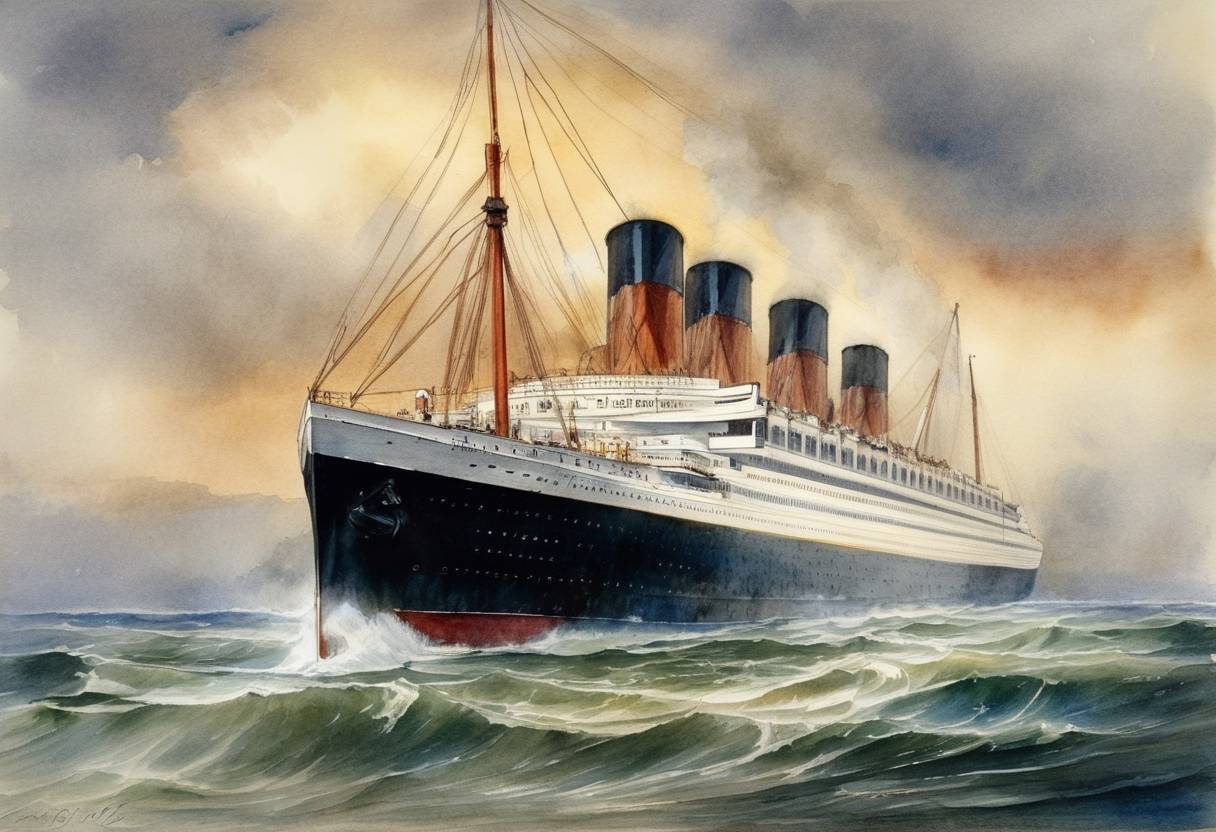
On September 10, 1907, the British passenger liner RMS Lusitania embarked on its maiden voyage from Liverpool to New York City, marking a significant moment in maritime history. Designed for speed and elegance, the Lusitania was one of the preeminent ocean liners of its time, representing the cutting-edge technology and luxury of early 20th-century transatlantic travel.
Constructed by John Brown & Co. of Clydebank, Scotland, the Lusitania was commissioned by the Cunard Line. It was designed to compete with Germany’s growing fleet of fast passenger ships and the anticipated future fleet of the White Star Line. The Lusitania boasted a gross tonnage of 31,550, a length of 787 feet, and a breadth of 87 feet, which made it one of the largest ships afloat at the time.
Innovations included:
The Lusitania’s maiden voyage from Liverpool began with much fanfare. Thousands gathered to witness the departure of the unprecedented vessel, highlighting Britain’s naval engineering capabilities and boosting national pride. The journey took about five days across the Atlantic, from September 10 to its arrival in New York Harbor.
The Lusitania’s successful introduction underscored the intense competition during the early 20th century among British, German, and other national shipping lines for control of the lucrative transatlantic passenger trade. It quickly became celebrated not only for its speed—winning the coveted Blue Riband award for the fastest Atlantic crossing—but also for providing a model of luxury and safety at sea.
While the Lusitania was initially famous for its cutting-edge design and luxury, it later became indelibly linked to World War I. In 1915, during the conflict, the Lusitania was torpedoed and sunk by a German U-Boat, resulting in significant loss of life. This event played a pivotal role in shifting public opinion in the United States against Germany and contributed to its eventual involvement in the war, although America would not enter the war until 1917.
The Lusitania thus remains a symbol of both the technological marvels and the tragic costs associated with maritime warfare in the modern era.
Source: www.thehistorypress.co.uk