Death of Louis X of France and the Succession Crisis
1316 · Vincennes, France
Louis X of France, known as Louis the Quarreler, died unexpectedly, leading to a succession crisis due to the lack of a male heir.
December 25, 1226
King Louis VIII of France died, leading to the accession of his 12-year-old son, Louis IX, who would later become known as Saint Louis. His reign marked a significant period in the consolidation of royal power in France.
Montpensier, France | French monarchy
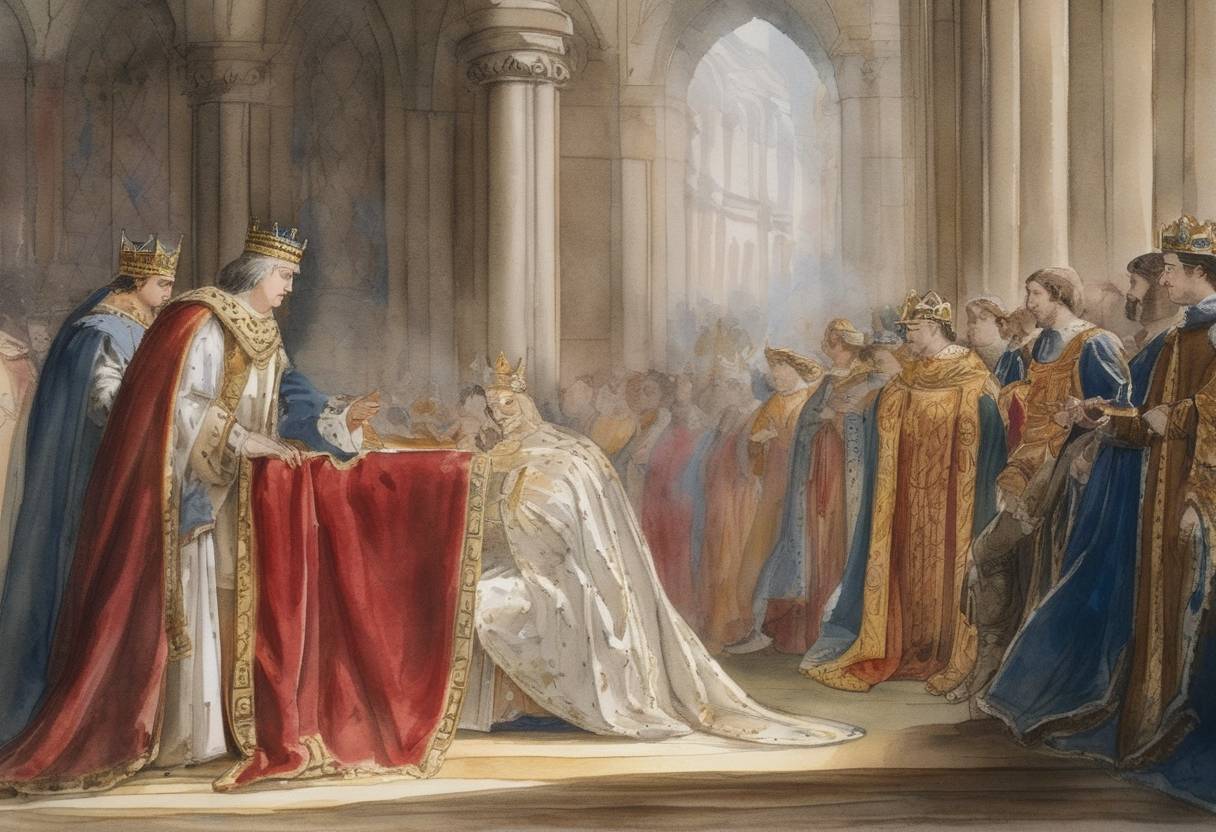
On December 25, 1226, King Louis VIII of France died, leading to the accession of his twelve-year-old son, Louis IX, who would later become canonized as Saint Louis. This transition marked a pivotal moment in the consolidation and expansion of royal power within France.
King Louis VIII, often referred to as Louis the Lion, reigned as King of France from 1223 until his untimely death in 1226. His reign, though brief, was marked by military campaigns intended to extend the boundaries of royal authority and diminish the power of England on the continent, especially following the chaotic period of the Angevin Empire.
One of his significant campaigns was the Albigensian Crusade against the Cathar heretics in Southern France, which aimed to reinforce royal dominance in the region. His unexpected death from dysentery at the age of 39 halted these efforts prematurely.
Following Louis VIII’s death, his son, Louis IX, ascended to the throne. The transition demonstrated the fragile nature of medieval monarchies, as young Louis was only twelve years old. This necessitated a regency, which was effectively managed by his mother, Blanche of Castile. Her adept stewardship was vital in maintaining stability during this vulnerable time for the French crown.
Consolidation of Power: Louis IX’s reign, which officially began in 1226 upon his father’s death, became synonymous with the strengthening of the centralized monarchy. Over his long reign, Louis came to epitomize the ideal Christian monarch. His piety, fairness, and strategic fortification of the kingdom’s legal and administrative structures laid crucial groundwork for subsequent French kings.
Administration and Reforms: One of the lasting impacts of his reign was the establishment of a more sophisticated judicial system, aiming to impart justice based on Christian beliefs and the royal prerogative. These reforms further reduced the influence of the feudal lords, solidifying the authority of the monarchy.
Religious and Cultural Influence: Louis IX was canonized as a saint in 1297, largely due to his devout Christian faith and two major Crusades he led in the Holy Land. His legacy, revered as that of an ideal Christian king, had a long-lasting influence on the cultural and religious identity of France.
Louis IX’s ascension following his father’s death marked a formative period in medieval France, a transition that under his leadership saw the French monarchy emerge with reinforced authority and a more unified national identity. Through his piety, governance, and reforms, Louis IX paved the way for the evolution of France into a centralized state, leaving an indelible mark on French and European history.
Source: www.britannica.com