Christopher Columbus Departs on His Fourth and Final Voyage
1502 · Cadiz, Spain
Christopher Columbus departs on his fourth and final voyage to the Americas.
July 25, 1498
Christopher Columbus, on his third voyage, reached the island of Trinidad.
Trinidad, Trinidad and Tobago
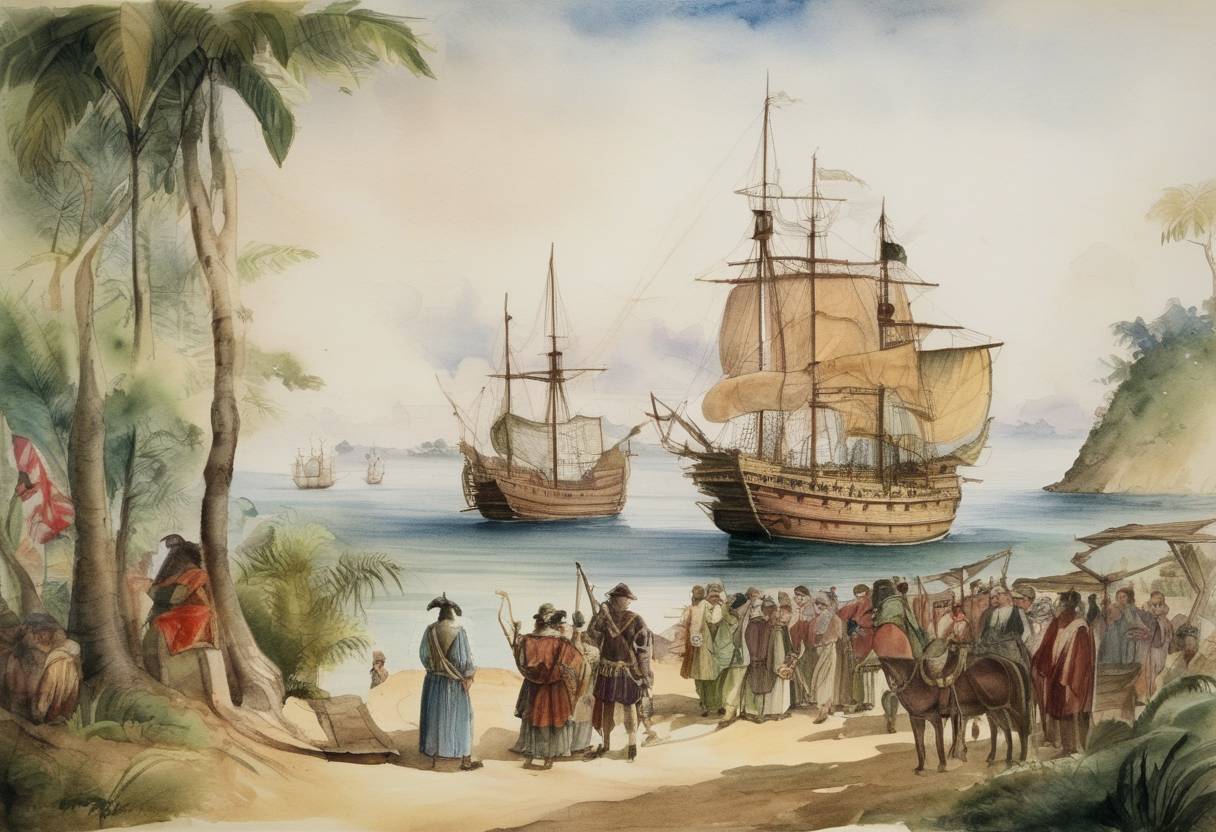
On July 25, 1498, during his third voyage to the New World, Christopher Columbus reached the island of Trinidad. This journey marked a significant episode in his exploration history as Columbus expanded the geographical knowledge of the Caribbean beyond his previous voyages.
The third voyage of Christopher Columbus began in 1498, tasked by the Spanish Crown to explore further territories southeast of the Caribbean islands he had already encountered. Departing from Spain, Columbus’s fleet aimed to find a new path to the riches of Asia and potentially discover new lands.
Aiming to avoid areas explored during his previous expeditions, Columbus set sail with a fleet of six ships, leaving the port of Sanlúcar, Spain, on May 30, 1498. His plan included a more southerly route across the Atlantic, which led him to the island of Trinidad. The fleet, divided into two squadrons, took slightly different routes, with Columbus commanding the northern route.
As they approached South America, Columbus encountered the large island of Trinidad off the northeastern coast of what is now Venezuela. This sighting of Trinidad marked Columbus’s first contact with the South American continent, although he did not fully appreciate the significance of this proximity to the South American mainland at the time.
Columbus named the island “La Isla de la Trinidad” in honor of the Holy Trinity, reflecting his devout religious beliefs and the practice of naming discoveries with religious significance. Upon landing, Columbus and his crew were struck by the lush landscape and the presence of numerous indigenous peoples, who were already inhabiting the island.
The discovery of Trinidad played a crucial role by establishing a link between the islands of the Caribbean and the South American mainland. This meeting point opened new possibilities for exploration and eventual colonization of the continent. Trinidad’s strategic location would later position it as a significant point of interest and conflict among European powers seeking control over the lucrative and resource-rich territories of the New World.
Columbus’s encounter with Trinidad, though less celebrated than his first voyage in 1492, expanded European understanding of the geography of the Americas and paved the way for further exploration and eventual colonization by European powers.
Following the sighting of Trinidad, Columbus continued his voyage along the coastlines of what are now Venezuela and other parts of South America. These explorations, however, did not yield the direct path to Asia that Columbus heavily sought. Nevertheless, the discoveries significantly added to the European maps of the New World and intensified Spanish interests in further exploration and colonization, setting the stage for the extensive overseas empire that Spain would eventually build.
Columbus’s third voyage, including his visit to Trinidad, underscores the complexities and enduring impacts of early European exploration in the Americas, shaping the historical trajectories of the continents and their peoples.