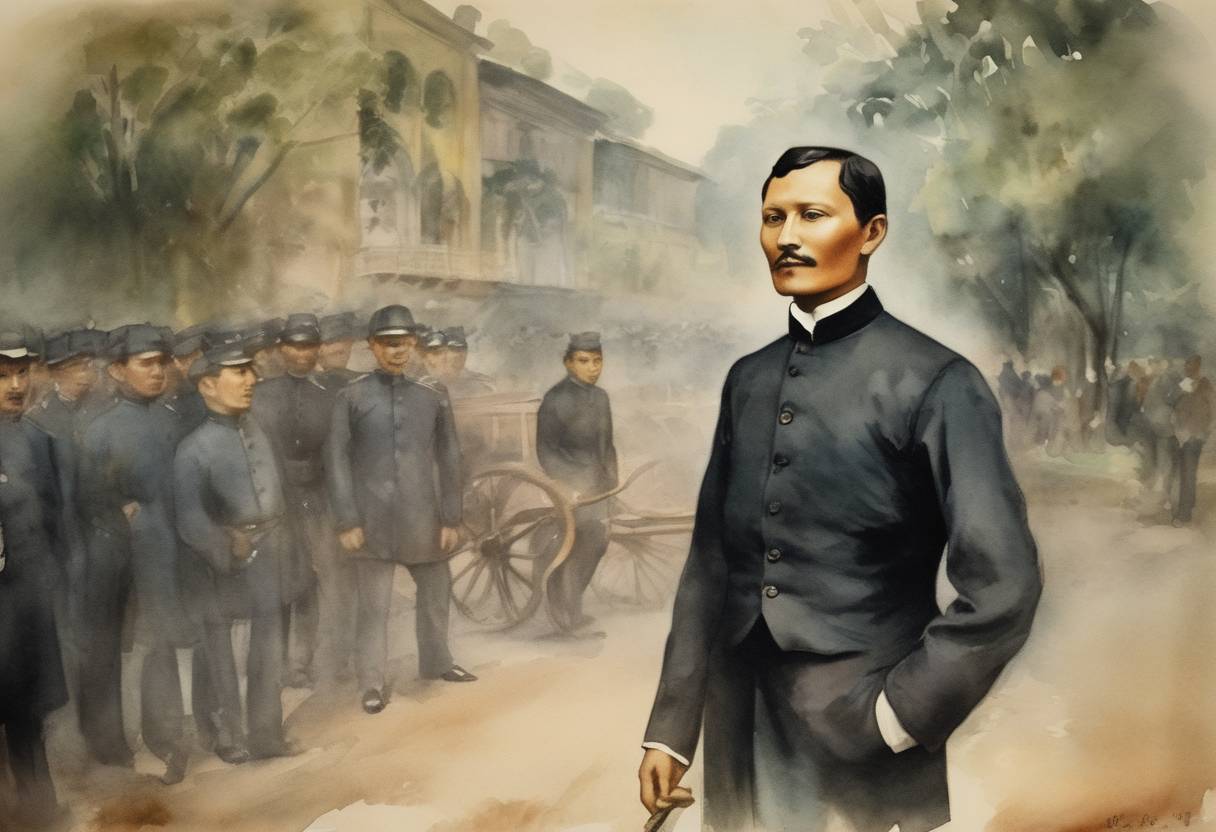
Execution of José Rizal on December 30, 1896
On December 30, 1896, José Rizal, the Filipino nationalist, reformist, and writer, was executed by a firing squad in Bagumbayan (now Rizal Park), Manila. His execution became a pivotal moment in the history of the Philippines, fueling further resistance against Spanish colonial rule and contributing significantly to the Philippine Revolution.
Background
José Rizal was born on June 19, 1861, in Calamba, Laguna. He emerged as a prominent advocate for reform within the Spanish administration in the Philippines through his writings and peaceful activism. Rizal’s novels, “Noli Me Tángere” and “El Filibusterismo,” were critical of Spanish colonial policies and abuses, sparking a surge of nationalist sentiment among Filipinos.
Rizal was a proponent of peaceful reform rather than violent revolution. However, his ideas inspired many Filipino revolutionaries, particularly the Katipunan, a secret society dedicated to Filipino independence.
Events Leading to Execution
Rizal’s growing influence and his calls for reform were perceived as threats by the Spanish authorities. After returning from exile in Dapitan in 1896, he was arrested en route to Cuba, where he intended to serve as a doctor for the Spanish colonial army. Rizal was charged with sedition, rebellion, and conspiracy.
At a military trial, he was found guilty of these charges and was sentenced to death. Despite international pleas for clemency, the Spanish colonial government decided to proceed with the execution.
The Execution and Its Aftermath
Rizal faced his execution with calm and dignity. He requested to be shot facing the firing squad, but this was denied. On the morning of December 30, 1896, he was executed with his back facing the squad as he fell to the ground turning the body around to face the sky, a final act of defiance.
Rizal’s martyrdom galvanized various Filipino groups, who saw his death as a symbol of the need for independence. The execution fueled the revolutionary fervor and unified Filipinos in their struggle against Spanish oppression. His writings and ideals continued to inspire efforts for reform and became essential readings for those fighting for independence.
Significance
José Rizal is revered as a national hero in the Philippines. His life and execution highlighted the systemic injustices of Spanish colonial rule and signaled the unrelenting pursuit of Filipino nationalism. His martyrdom played a significant role in the eventual success of the Philippine Revolution, leading to the declaration of Philippine independence in 1898.
Today, December 30 is commemorated as Rizal Day, a national holiday in the Philippines, to honor his contributions to the country’s fight for freedom and sovereignty. His legacy endures in Philippine history as a symbol of resistance against tyranny and as an advocate of peaceful reform.