Catherine the Great Becomes Empress of Russia
1762 · Saint Petersburg, Russia
Catherine the Great became the Empress of Russia following the assassination of her husband, Peter III.
December 12, 1781
Russian Empress Catherine the Great issued a decree allowing Jews to reside in Kyiv, officially recognizing their settlement in the city for the first time; this action was part of her broader administrative reforms.
Kyiv, Russian Empire (present-day Ukraine) | Russian Empire
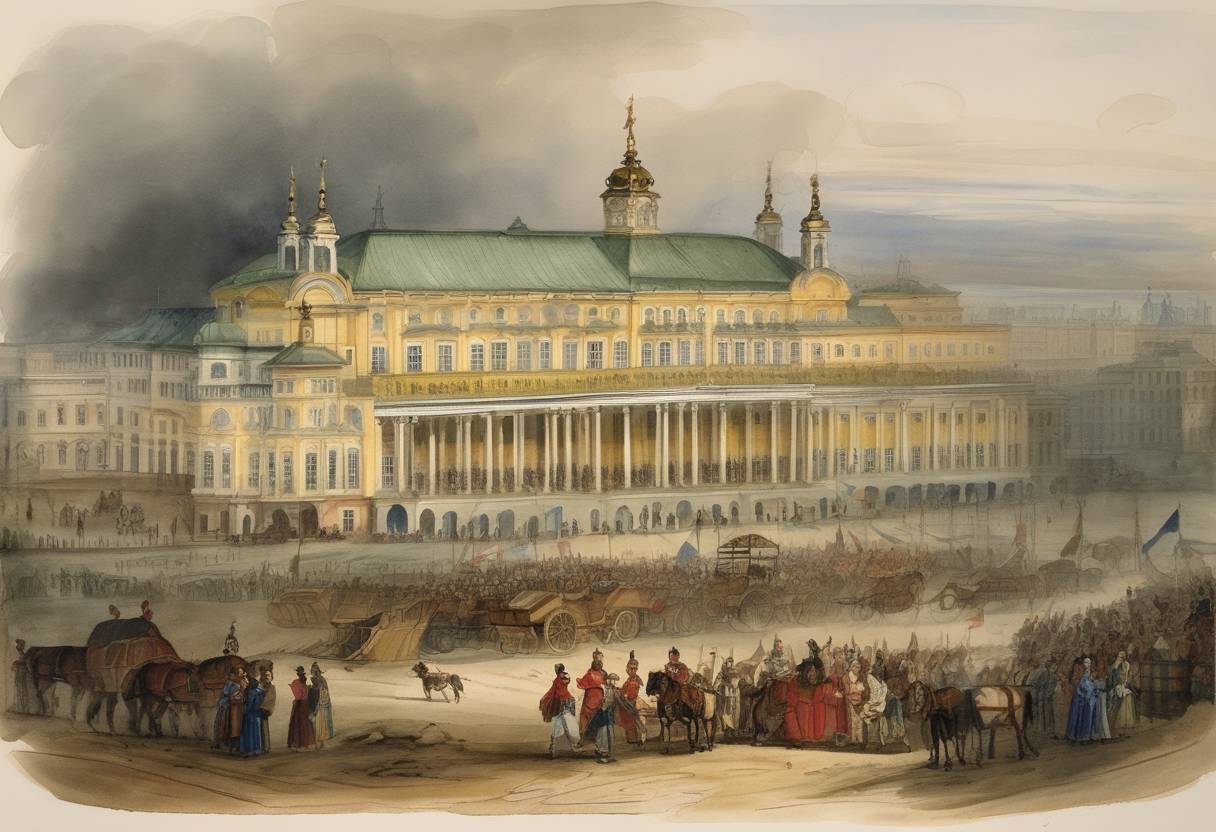
On December 12, 1781, Empress Catherine the Great of Russia issued a decree that allowed Jews to officially reside in Kyiv. This seminal moment marked the first formal recognition of Jewish settlement in the city, reflecting broader efforts by Catherine to reform administrative practices and integrate various ethnic and religious groups within the Russian Empire.
During Catherine the Great’s reign, Russia was rapidly expanding its territories and consolidating its power. The acquisition of lands from Poland and the remnants of the Crimean Khanate brought a diverse population into the empire, including significant Jewish communities. The Russian Empire had generally excluded Jewish settlement from key cities and interior provinces until that point.
Catherine’s decrees were part of a strategic expansion of Russian influence and control, as they aimed to regulate and accommodate the diverse populations under her rule. This approach was not merely about tolerance but rather part of her vision for a cohesive and administratively efficient empire.
Recognition and Integration: The 1781 decree specifically allowed Jews to live in Kyiv, officially recognizing their presence and facilitating their integration into the socio-economic fabric of the region. This was a departure from policies of exclusion practiced in other parts of the empire.
Economic Implications: By permitting Jewish residency, Catherine aimed to harness the economic potential of Jewish merchants, artisans, and professionals, which could contribute to the regional economy of Kyiv and the empire at large.
Cultural Impact: This decree laid groundwork for the growth of Jewish culture and society in Kyiv, which would develop significantly over the ensuing century.
The decree was a milestone in Russian policy, marking the beginning of a more structured approach to managing the diverse populations within the empire. Although restrictions on Jews persisted in many areas, Catherine’s policies inaugurated a period of gradual change in the official stance towards Jewish communities.
In the long term, this policy helped shape the demographic and cultural landscape of Kyiv, contributing to its reputation as a diverse and multi-ethnic city. However, periods of tension and restriction continued throughout the Russian Empire, particularly with the introduction of the Pale of Settlement in 1791, which confined many Jews to specific regions.
Catherine’s administrative reforms, including this decree, illustrate the complex balance between control and integration that defined her governance strategy and played a crucial role in the evolution of the Russian Empire.
Source: www.jewishvirtuallibrary.org