The Treaty of Cambrai: The Ladies' Peace
1529 · Cambrai, France
The Treaty of Cambrai, also known as the Ladies' Peace, was signed by Margaret of Austria and Louise of Savoy, ending one of the conflicts in the Italian Wars.
October 2, 1514
The Treaty of Saint-Germain-en-Laye was signed, ending the War of the League of Cambrai and restoring peace between France and Venice.
Saint-Germain-en-Laye, France | France and Venice
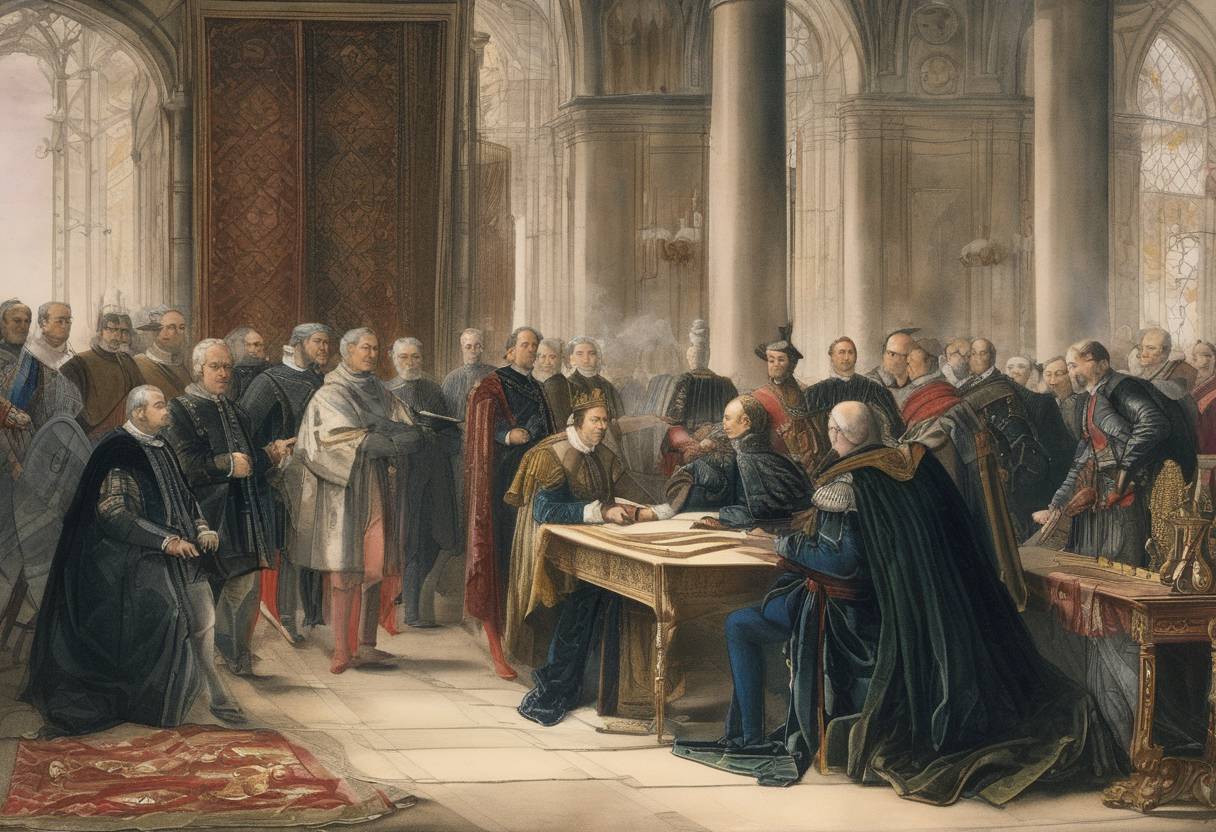
On October 2, 1514, the Treaty of Saint-Germain-en-Laye was signed, marking the end of the War of the League of Cambrai and restoring peace between the Kingdom of France and the Republic of Venice. This treaty not only concluded hostilities between these two significant powers but also had lasting implications for European political dynamics in the early 16th century.
War of the League of Cambrai (1508–1516): This conflict was part of a series of wars known as the Italian Wars, involving major European powers vying for control and influence in Italy. The League of Cambrai was initially formed under the auspices of Pope Julius II and included France, the Holy Roman Empire, Spain, and the Papal States, targeting Venice to curb its territorial expansion.
Shifting Alliances: As the war progressed, alliances changed. Pope Julius II, initially an ally against Venice, eventually turned against France, seeking to repel French influence from the Italian Peninsula.
Venetian Resilience: Despite initial setbacks, Venice managed to retain much of its territory and influence, largely due to a combination of military resilience and strategic diplomacy.
French Involvement: France, under King Louis XII, sought to consolidate its power in Italy as part of its expansive foreign policy, which led to prolonged involvement in the Italian Wars.
Peace and Restoration: The Treaty of Saint-Germain-en-Laye facilitated the normalization of diplomatic relations between France and Venice. Territories captured during the hostilities were returned, and mutual recognition of independence and sovereignty was affirmed.
Impact on Alliances: The treaty marked a temporary stabilization in Italian affairs but did not end the broader conflict of the Italian Wars, as hostilities continued with other league members.
Shift in Power Dynamics: The resolution between France and Venice exemplified the shifting alliances typical of this period, influencing future diplomatic strategies.
Prelude to Further Conflict: While the treaty temporarily relieved France and Venice from direct conflict, it laid the groundwork for ongoing disputes in Italy, as new coalitions continued to emerge.
Legacy: The continual Italian Wars altered the political landscape of Europe, illustrating the complexities of Renaissance statecraft and the volatility of international relations during this era.
The Treaty of Saint-Germain-en-Laye serves as a significant example of diplomacy overcoming prolonged military conflict, addressing the specific needs of the parties involved while fitting into the larger and tumultuous context of European power struggles in the Renaissance.
Source: en.wikipedia.org