Nelson Mandela's Inauguration: May 9, 1994
1994 · Pretoria, South Africa
Nelson Mandela was inaugurated as South Africa's first black president, marking the end of apartheid.
June 12, 1964
Nelson Mandela was sentenced to life imprisonment for sabotage against the apartheid government of South Africa.
Pretoria, South Africa | South African Government
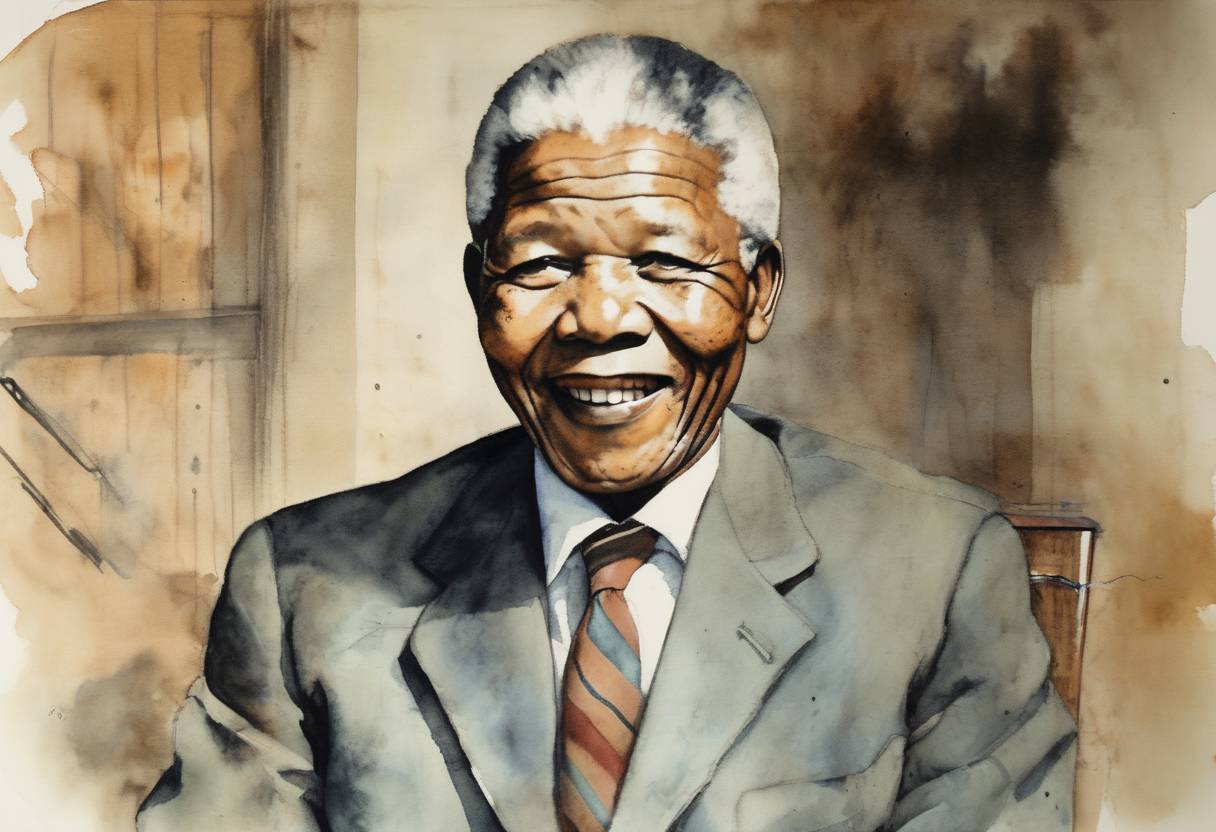
On June 12, 1964, Nelson Mandela, along with seven other defendants, was sentenced to life imprisonment by the Supreme Court of South Africa. This event marked a pivotal moment in the struggle against apartheid, the institutionalized racial segregation and discrimination enforced by the South African government.
Apartheid Regime: The apartheid system, established in 1948, enforced racial discrimination and segregation, severely limiting the rights of the non-white population in South Africa.
African National Congress (ANC): Mandela was a prominent leader in the ANC, which was at the forefront of the anti-apartheid movement. Initially advocating for non-violent resistance, the ANC shifted to armed struggle following the Sharpeville Massacre in 1960, where police killed 69 peaceful protesters.
Umkhonto we Sizwe (MK): In response to increasing repression, Mandela co-founded MK, the armed wing of the ANC, in 1961. MK aimed to sabotage government infrastructure to weaken the apartheid regime without causing loss of life.
Arrest and Charges: Mandela was arrested in 1962 and initially sentenced to five years for inciting strikes and leaving the country illegally. While serving this sentence, he was charged again in the Rivonia Trial, named after the suburb where key leaders were arrested.
Charges: The defendants were charged with sabotage, a capital offense, for their roles in planning acts of sabotage against government facilities.
Defense and Verdict: Mandela and his co-defendants used the trial as a platform to highlight the injustices of apartheid. In his famous speech from the dock, Mandela declared his willingness to die for the ideal of a democratic and free society. Despite international pressure for leniency, the court sentenced Mandela and his co-defendants to life imprisonment on June 12, 1964.
Robben Island: Mandela spent 18 of his 27 years in prison on Robben Island, where he endured harsh conditions but remained a symbol of resistance against apartheid.
International Pressure: Mandela’s imprisonment drew global condemnation and increased international pressure on the South African government to reform.
Release and Presidency: Mandela was released on February 11, 1990, as apartheid began to crumble. He played a crucial role in the peaceful transition to majority rule and was elected South Africa’s first black president in 1994.
Symbol of Resistance: Mandela’s life sentence and subsequent imprisonment became a powerful symbol of the struggle for freedom and equality in South Africa and worldwide.
End of Apartheid: His eventual release and leadership were instrumental in dismantling apartheid and establishing a democratic South Africa.
Nelson Mandela’s sentencing on June 12, 1964, was a turning point in the fight against apartheid, highlighting the resilience and determination of those who opposed racial injustice. His legacy continues to inspire movements for justice and equality across the globe.
Source: en.wikipedia.org