The Beginning of the War of the Pacific: April 5, 1879
1879 · Santiago, Chile
Chile declared war on Bolivia and Peru, marking the beginning of the War of the Pacific.
February 12, 1818
Chile formally declares its independence from Spain, solidifying its status as a sovereign nation.
Santiago, Chile | Chilean Government
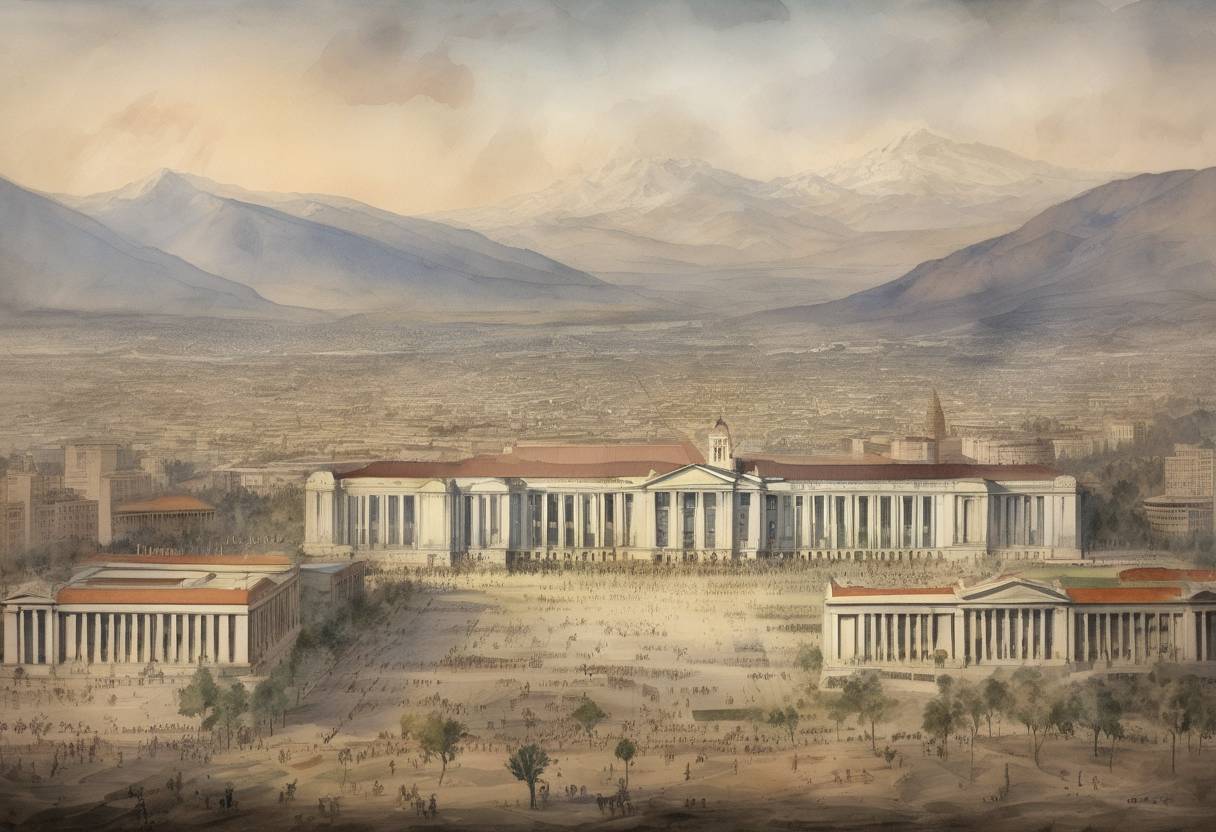
On February 12, 1818, Chile formally declared its independence from Spanish rule, marking a pivotal moment in its history as it solidified its status as a sovereign nation. This declaration was the culmination of a lengthy struggle for independence that had begun several years earlier.
The movement for Chilean independence was part of a broader wave of independence movements across Latin America in the early 19th century. These movements were inspired by Enlightenment ideas and the successful American and French revolutions. The Napoleonic Wars in Europe, which weakened Spain’s control over its colonies, also played a crucial role in igniting the desire for independence in the region.
1810: The process began with the establishment of a national junta in Santiago on September 18, 1810, following the capture of the Spanish King Ferdinand VII by Napoleon. This junta was initially intended to govern in the king’s name but gradually moved towards independence.
1814: The struggle faced setbacks, notably the Spanish reconquest of Chile in 1814, which led to the restoration of royalist control.
1817: The tide turned with the Battle of Chacabuco on February 12, 1817, where the Army of the Andes, led by Argentine General José de San Martín and Chilean leader Bernardo O’Higgins, defeated the Spanish forces. This victory was crucial in re-establishing the independence movement.
The formal declaration on February 12, 1818, was a decisive step in affirming Chile’s autonomy. It was proclaimed in Talca, and Bernardo O’Higgins, a key figure in the independence movement, was appointed as the Supreme Director of Chile. The declaration was a symbolic and practical assertion of Chile’s break from Spanish colonial rule.
Battle of Maipú: The declaration was soon followed by the Battle of Maipú on April 5, 1818, where Chilean forces secured a decisive victory against the Spanish, effectively ending major hostilities and ensuring the country’s independence.
Consolidation of Independence: Following the declaration, Chile focused on consolidating its independence, establishing a stable government, and fostering economic development.
Influence on Latin America: Chile’s successful bid for independence inspired other Latin American countries in their struggles against colonial powers, contributing to the broader wave of independence across the continent.
The declaration of independence on February 12, 1818, remains a significant event in Chilean history, celebrated annually as a testament to the country’s enduring spirit and quest for self-determination.
Source: en.wikipedia.org