Adoption of the Gregorian Calendar
1582 · Rome, Italy
The Gregorian calendar was adopted by Pope Gregory XIII, replacing the Julian calendar. This day was followed by October 15, 1582, in countries that adopted the new calendar immediately.
February 24, 1582
Pope Gregory XIII issued the papal bull 'Inter gravissimas,' announcing the Gregorian calendar reform, which adjusted the calendar to better align with the solar year.
Rome, Papal States | Catholic Church
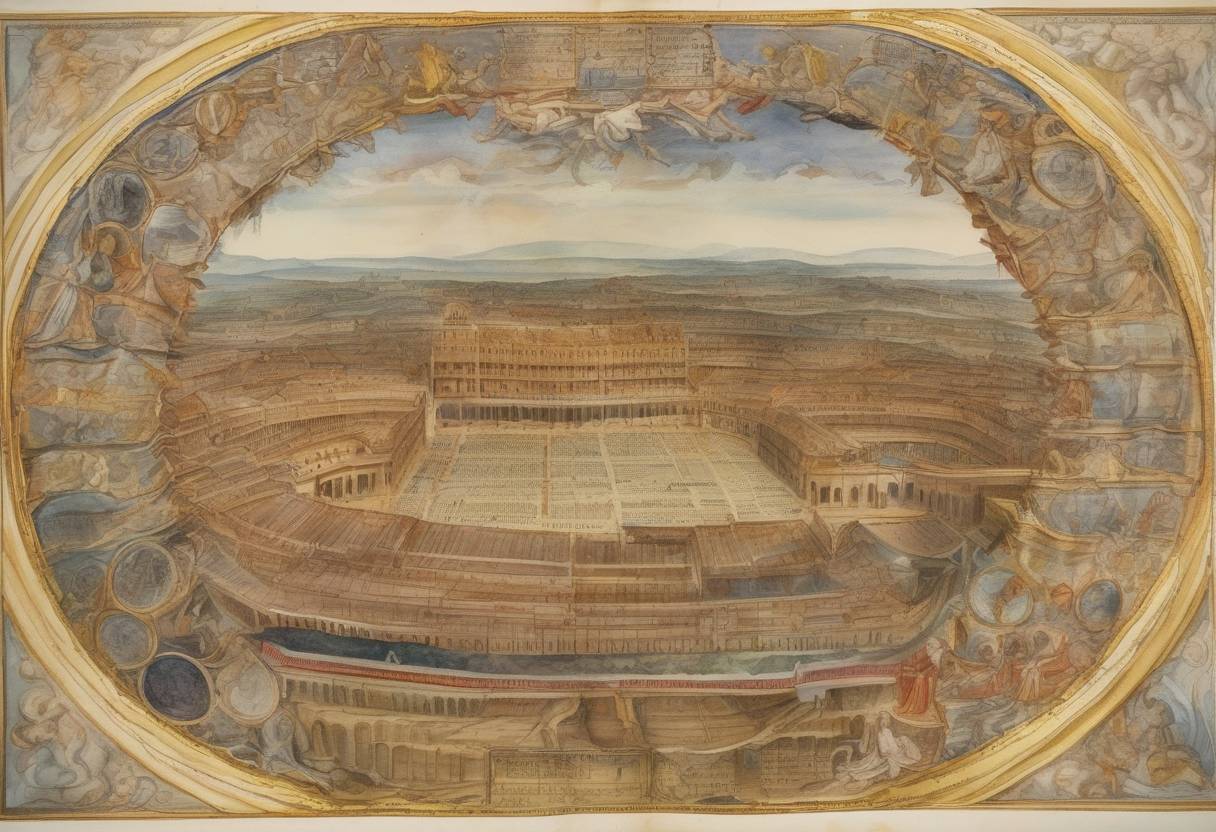
On February 24, 1582, Pope Gregory XIII issued the papal bull Inter gravissimas, which introduced the Gregorian calendar reform. This significant change aimed to correct inaccuracies in the Julian calendar, which had been in use since 45 BCE.
The Julian calendar, established by Julius Caesar, had a year length of 365.25 days, achieved by adding a leap day every four years. However, the actual solar year is approximately 365.2425 days long. This discrepancy of about 11 minutes per year resulted in a drift of approximately one day every 128 years. By the 16th century, this drift had accumulated to about 10 days, affecting the timing of the equinoxes and, consequently, the date of Easter, which was crucial for the liturgical calendar.
Pope Gregory XIII, advised by astronomers and mathematicians, including Aloysius Lilius and Christopher Clavius, sought to realign the calendar with the solar year and the seasons. The Inter gravissimas outlined several key changes:
Leap Year Adjustment: The Gregorian calendar retained the leap year system but refined it by making only century years divisible by 400 leap years. Thus, 1600 was a leap year, but 1700, 1800, and 1900 were not.
Calendar Realignment: To correct the accumulated drift, 10 days were removed from the calendar. The day following October 4, 1582, was designated as October 15, 1582.
Easter Calculation: The reform also included adjustments to the method of calculating the date of Easter, ensuring it remained close to the spring equinox.
The Gregorian calendar was initially adopted by Catholic countries such as Italy, Spain, Portugal, and Poland. Protestant and Orthodox countries were slower to adopt the reform, with some, like Great Britain, not switching until 1752, and others, like Russia, waiting until after the Bolshevik Revolution in 1917.
The Gregorian calendar is now the most widely used civil calendar worldwide. Its introduction was a crucial step in aligning human timekeeping with astronomical observations, facilitating international communication and trade.
The adoption of the Gregorian calendar marked a significant moment in the history of science and religion, demonstrating the Catholic Church’s role in scientific advancement during the Renaissance. It also highlighted the challenges of implementing widespread reform across diverse political and religious landscapes.
The Gregorian calendar remains a testament to the enduring need for precision in timekeeping and the complex interplay between science, religion, and society.
Source: en.wikipedia.org