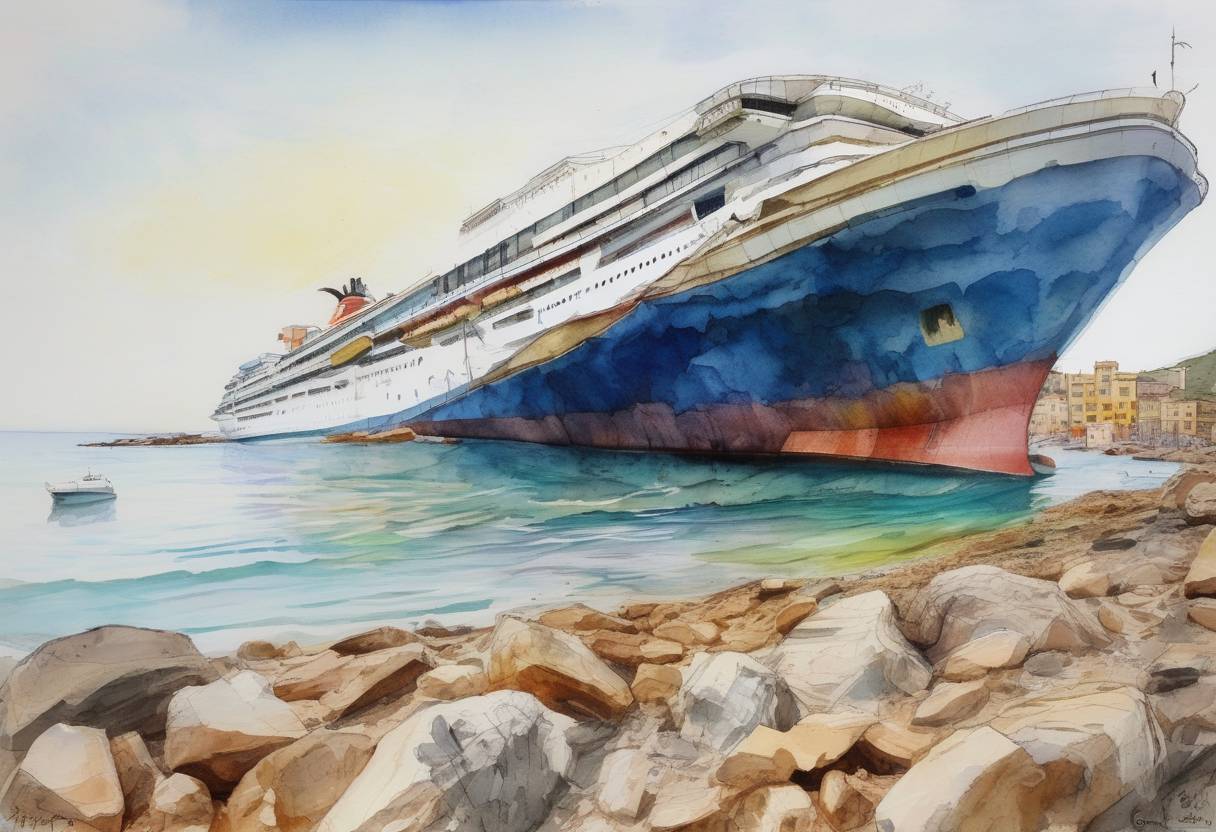
The Costa Concordia Disaster: January 13, 2012
On January 13, 2012, the cruise ship Costa Concordia ran aground off the coast of Isola del Giglio, Italy, resulting in a tragic maritime disaster that claimed the lives of 32 people. This event is one of the most infamous maritime incidents in recent history, drawing significant attention to cruise ship safety and operational protocols.
Background
The Costa Concordia was a Concordia-class cruise ship operated by Costa Crociere, a subsidiary of Carnival Corporation. Launched in 2005, the ship was one of the largest in the Costa fleet, with a capacity of over 4,200 passengers and crew. On the night of the disaster, the ship was on the first leg of a Mediterranean cruise, having departed from Civitavecchia, Italy, earlier that day.
The Incident
- Time and Location: The disaster occurred at approximately 9:45 PM local time near the island of Giglio, part of the Tuscan Archipelago.
- Cause: The ship struck a submerged rock formation known as Le Scole, which tore a 160-foot gash in its hull. This breach led to the rapid flooding of the engine room and other critical areas, causing the ship to lose power and eventually capsize.
- Evacuation: The evacuation process was chaotic and poorly managed. Many passengers reported confusion and a lack of clear instructions from the crew. The ship listed heavily to one side, complicating evacuation efforts.
- Captain Francesco Schettino: The ship’s captain faced intense scrutiny and was later found guilty of manslaughter, causing a maritime accident, and abandoning ship. His decision to perform a “salute” maneuver, bringing the ship dangerously close to shore, was a critical factor in the disaster.
Aftermath
- Rescue Operations: Italian authorities, along with local residents, conducted extensive rescue operations. The majority of the 4,229 passengers and crew were safely evacuated, but 32 lives were lost.
- Environmental Impact: The ship’s position posed a significant environmental threat due to potential fuel leaks. Salvage operations were conducted to remove the ship, which was eventually refloated and dismantled for scrap.
- Legal and Regulatory Changes: The disaster prompted widespread criticism of cruise ship safety standards and led to changes in international maritime regulations, including stricter safety drills and operational procedures.
Broader Significance
The Costa Concordia disaster highlighted the vulnerabilities in cruise ship safety and emergency preparedness. It served as a catalyst for reforms in the industry, emphasizing the importance of rigorous safety protocols and the need for effective leadership during emergencies.
The incident remains a somber reminder of the potential dangers of maritime travel and the critical importance of adhering to safety regulations to protect lives at sea.