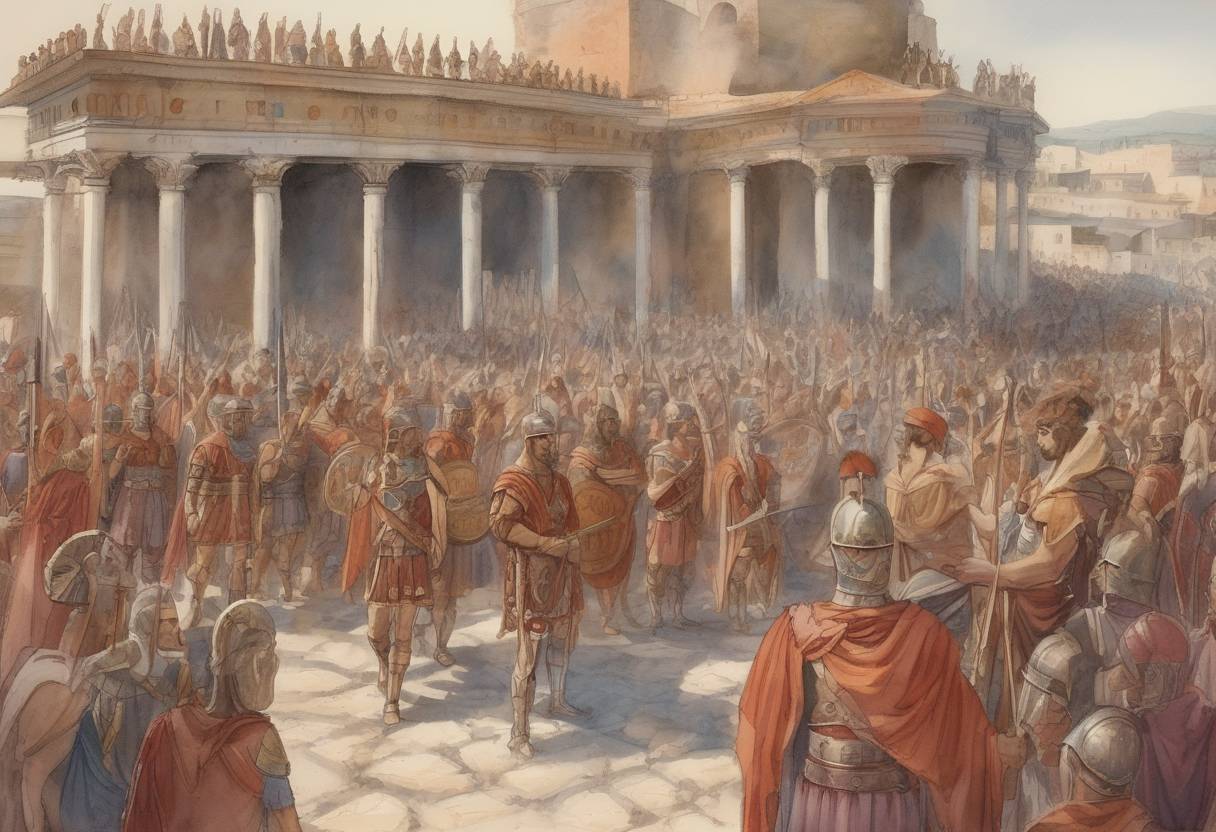
Julian the Apostate Enters Antioch - July 4, 362
On July 4, 362, the Roman Emperor Julian, often referred to as Julian the Apostate, entered the city of Antioch as part of his military campaign against the Sassanid Empire. Julian’s reign, though brief, was marked by significant religious and military endeavors that left a lasting impact on the Roman Empire.
Background
Julian ascended to the throne in 361 after the death of his cousin, Emperor Constantius II. Unlike his predecessors, Julian was a staunch advocate of paganism and sought to restore traditional Roman religious practices. His efforts to diminish the influence of Christianity, which had been on the rise since the reign of Constantine the Great, earned him the moniker “the Apostate.”
Campaign Against the Sassanid Empire
Julian’s entry into Antioch was a strategic move in his broader campaign against the Sassanid Empire, a powerful Persian dynasty that posed a significant threat to Rome’s eastern borders. The campaign was part of Julian’s ambition to secure and expand Roman territories in the east, a region that had seen fluctuating control between the Romans and Persians.
Key Events Leading to Antioch
- Preparation for War: Julian spent considerable time preparing for the campaign, gathering troops and resources. His military acumen, honed during his earlier successes in Gaul, was crucial for the impending confrontation with the Sassanids.
- Religious Policies: Concurrently, Julian was implementing policies to revive paganism. He reopened pagan temples, restored traditional rituals, and attempted to curtail the privileges of the Christian clergy.
Significance of Antioch
Antioch was a major city in the Roman Empire, serving as a crucial logistical and cultural hub. Julian’s arrival in Antioch was not only a military maneuver but also a symbolic gesture of his commitment to his religious and political reforms.
- Military Strategy: Antioch provided a strategic base for launching further operations into Persian territory. It was essential for securing supply lines and coordinating the movements of Roman legions.
- Religious Tensions: Julian’s presence in Antioch highlighted the religious tensions of the time. The city had a significant Christian population, and Julian’s policies often met with resistance from local Christian communities.
Aftermath and Consequences
Julian’s campaign against the Sassanid Empire ultimately ended in failure. In 363, during a battle near the city of Ctesiphon, Julian was mortally wounded and died shortly thereafter. His death marked the end of his attempts to restore paganism, as his successor, Jovian, quickly re-established Christianity as the dominant religion of the empire.
Broader Historical Impact
- Religious Legacy: Julian’s efforts to revive paganism were largely reversed after his death, but his reign remains a significant chapter in the history of religious conflict within the Roman Empire.
- Military Lessons: The campaign against the Sassanids demonstrated the challenges of sustaining long-term military operations in hostile territories, influencing future Roman military strategies.
Julian’s entry into Antioch on July 4, 362, thus stands as a pivotal moment in his reign, encapsulating his dual focus on military conquest and religious reform.