The Supreme Court Upholds Timothy McVeigh's Conviction
1999 · Washington, D.C., United States
The Supreme Court of the United States upheld the conviction of Timothy McVeigh for the Oklahoma City bombing.
June 17, 2008
The United States Supreme Court ruled in the case of Boumediene v. Bush that detainees at Guantanamo Bay have the right to challenge their detention in U.S. courts, a landmark decision on the rights of detainees.
Washington, D.C., United States | United States Supreme Court
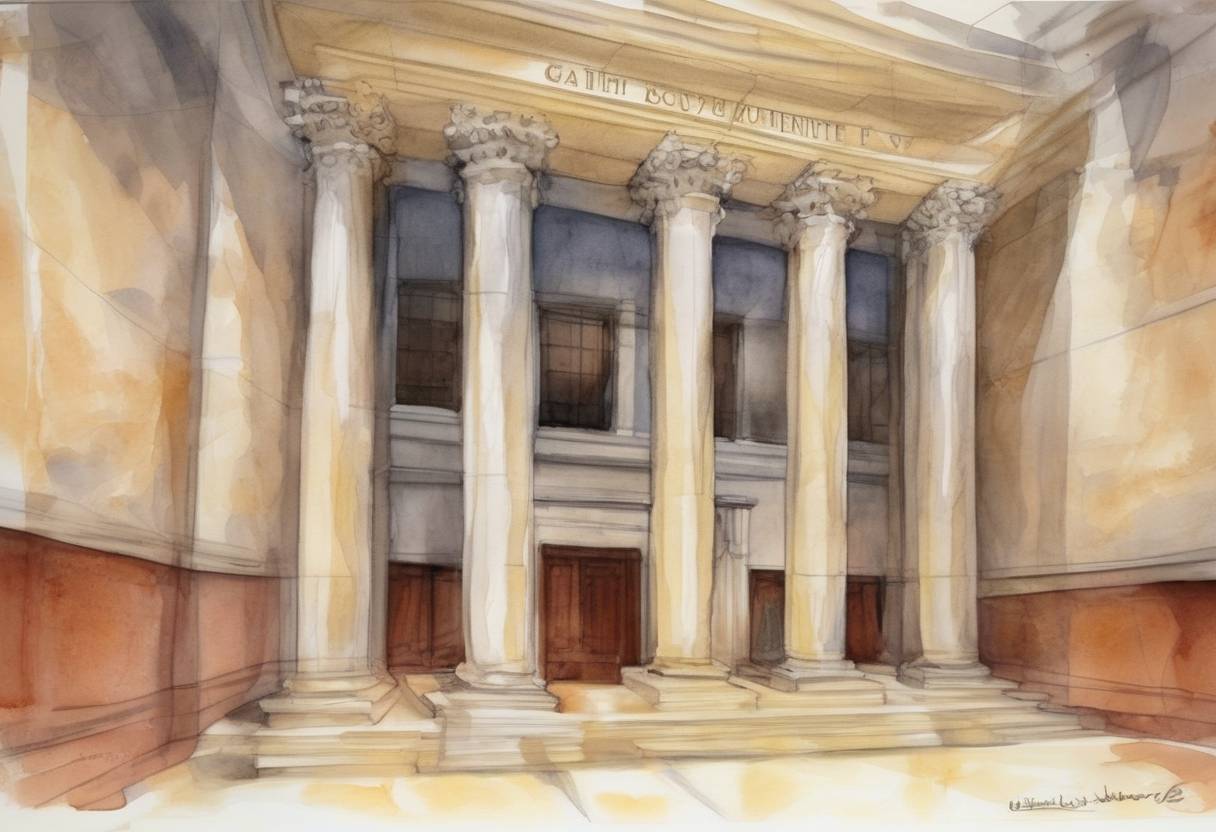
On June 12, 2008, the United States Supreme Court delivered a landmark decision in the case of Boumediene v. Bush, ruling that detainees at Guantanamo Bay have the constitutional right to challenge their detention in U.S. federal courts. This decision was pivotal in affirming the habeas corpus rights of foreign detainees held by the United States.
Following the September 11, 2001, terrorist attacks, the U.S. government established the Guantanamo Bay detention camp in Cuba to hold suspected terrorists. The detainees were classified as “enemy combatants,” and the U.S. government argued that they were not entitled to the same legal rights as prisoners held on U.S. soil.
In 2006, Congress passed the Military Commissions Act, which aimed to strip federal courts of jurisdiction to hear habeas corpus petitions from Guantanamo detainees. This legislation was part of a broader effort to streamline the process of detaining and trying suspected terrorists.
Lakhdar Boumediene, a Bosnian-Algerian citizen, was one of the detainees held at Guantanamo Bay. He, along with other detainees, filed a petition challenging the legality of their detention without trial. The case eventually reached the Supreme Court, which had to decide whether the detainees had the right to seek habeas corpus relief under the U.S. Constitution.
In a 5-4 decision, the Supreme Court ruled in favor of Boumediene and the other detainees. Justice Anthony Kennedy wrote the majority opinion, asserting that the right to habeas corpus is a fundamental constitutional guarantee that extends to all individuals under U.S. control, regardless of their location. The Court held that the procedures established by the Military Commissions Act were inadequate substitutes for habeas corpus and violated the Suspension Clause of the Constitution.
The Boumediene v. Bush decision was significant for several reasons:
Affirmation of Habeas Corpus: The ruling reinforced the principle that habeas corpus rights are a fundamental aspect of American law, even for non-citizens held outside the U.S. mainland.
Judicial Oversight: The decision underscored the role of the judiciary in reviewing the executive branch’s actions, particularly concerning national security and individual rights.
Impact on Guantanamo Bay: The ruling opened the door for detainees at Guantanamo Bay to challenge their detention in federal courts, leading to subsequent legal proceedings and reviews of individual cases.
Following the decision, several detainees successfully challenged their detention, resulting in releases and transfers. The ruling also prompted discussions about the future of Guantanamo Bay and the legal framework for handling terrorism suspects.
In summary, Boumediene v. Bush was a landmark Supreme Court decision that reaffirmed the importance of constitutional protections and judicial oversight, even in the context of national security and foreign detainees.
Source: www.supremecourt.gov