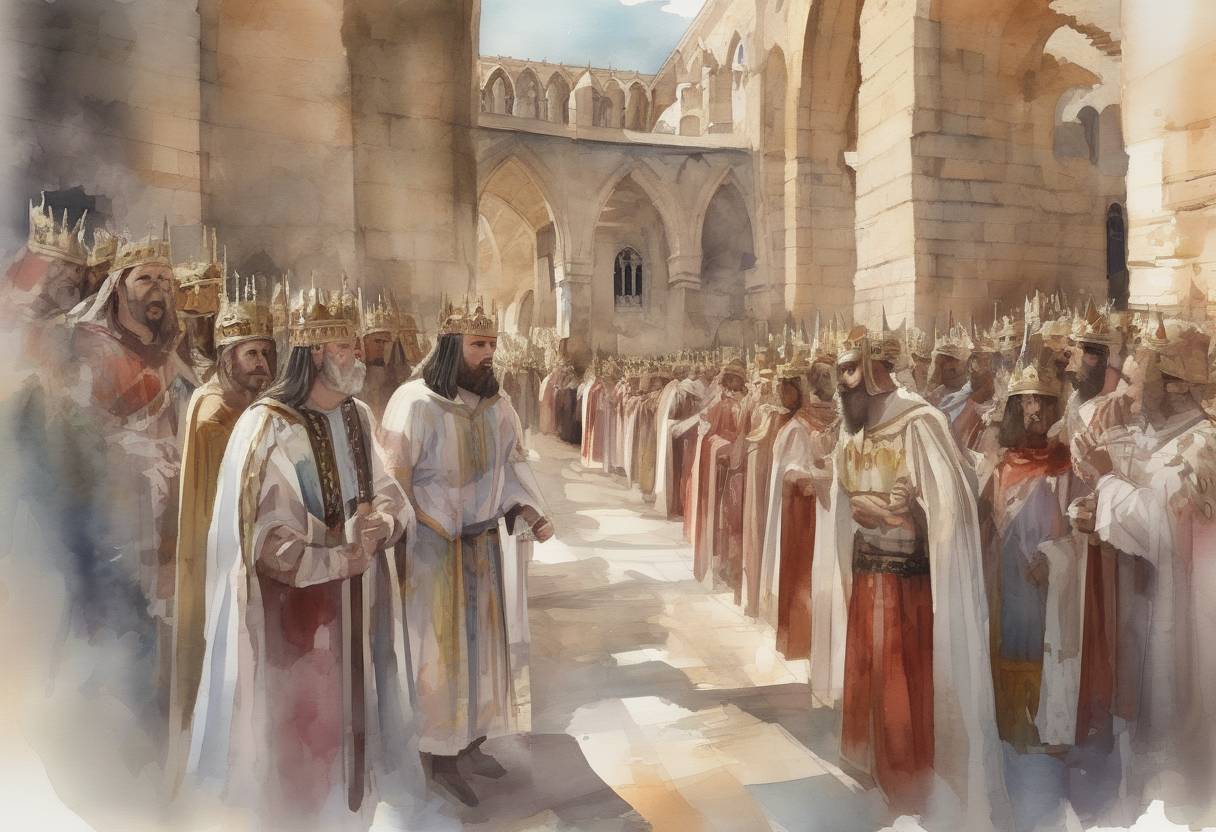
The Third Council of Toledo: A Turning Point in Visigothic Spain
On May 15, 589, the Third Council of Toledo commenced, marking a pivotal moment in the religious and political landscape of Visigothic Spain. This council was instrumental in the conversion of King Reccared I from Arianism to Catholicism, a shift that had profound implications for the region.
Historical Context
The Visigothic Kingdom
- Arianism vs. Catholicism: The Visigoths, originally a Germanic tribe, had settled in Hispania (modern-day Spain) and were predominantly Arian Christians. Arianism, a branch of Christianity that denied the full divinity of Jesus Christ, was at odds with the Catholic doctrine upheld by the Roman Church.
- Religious Tensions: The religious divide between the Arian Visigothic rulers and the largely Catholic Hispano-Roman population created significant social and political tensions.
King Reccared I
- Reign: Reccared I ascended to the throne in 586, following the death of his father, King Leovigild, who was a staunch Arian.
- Motivations for Conversion: Reccared’s decision to convert to Catholicism was influenced by a desire to unify his kingdom under a single religious doctrine, thereby strengthening his rule and reducing internal strife.
The Third Council of Toledo
Key Events
- Opening: The council was convened by Reccared I and presided over by Leander, the Archbishop of Seville, a prominent Catholic figure.
- Declaration of Faith: Reccared publicly renounced Arianism and declared his conversion to Catholicism, a move that was supported by many of his nobles and clergy.
- Canons and Decrees: The council issued several canons aimed at consolidating Catholic orthodoxy, including the condemnation of Arianism and the establishment of Catholic practices and liturgies throughout the kingdom.
Significance
- Religious Unification: The conversion of the Visigothic monarchy to Catholicism helped to unify the diverse populations of the kingdom under a single religious identity.
- Political Stability: By aligning with the Catholic Church, Reccared strengthened his political position, gaining the support of the influential Catholic clergy and the Romanized populace.
- Cultural Integration: The council facilitated the integration of Visigothic and Hispano-Roman cultures, paving the way for a more cohesive society.
Aftermath and Consequences
- End of Arianism: The council marked the decline of Arianism in the region, as subsequent Visigothic rulers continued to support Catholicism.
- Legacy: The Third Council of Toledo is often seen as a crucial step in the Christianization of the Iberian Peninsula, influencing the religious landscape of Spain for centuries to come.
In conclusion, the Third Council of Toledo was a landmark event that not only transformed the religious orientation of the Visigothic kingdom but also contributed to the broader historical trajectory of Spain, setting the stage for its future as a bastion of Catholicism in Europe.