2023 · Freetown, Sierra Leone
The military in Sierra Leone enacts a nationwide curfew following deadly protests fueled by citizens' economic grievances.
April 19, 1971
Sierra Leone becomes a republic, with Siaka Stevens as its first president.
Freetown, Sierra Leone | Government of Sierra Leone
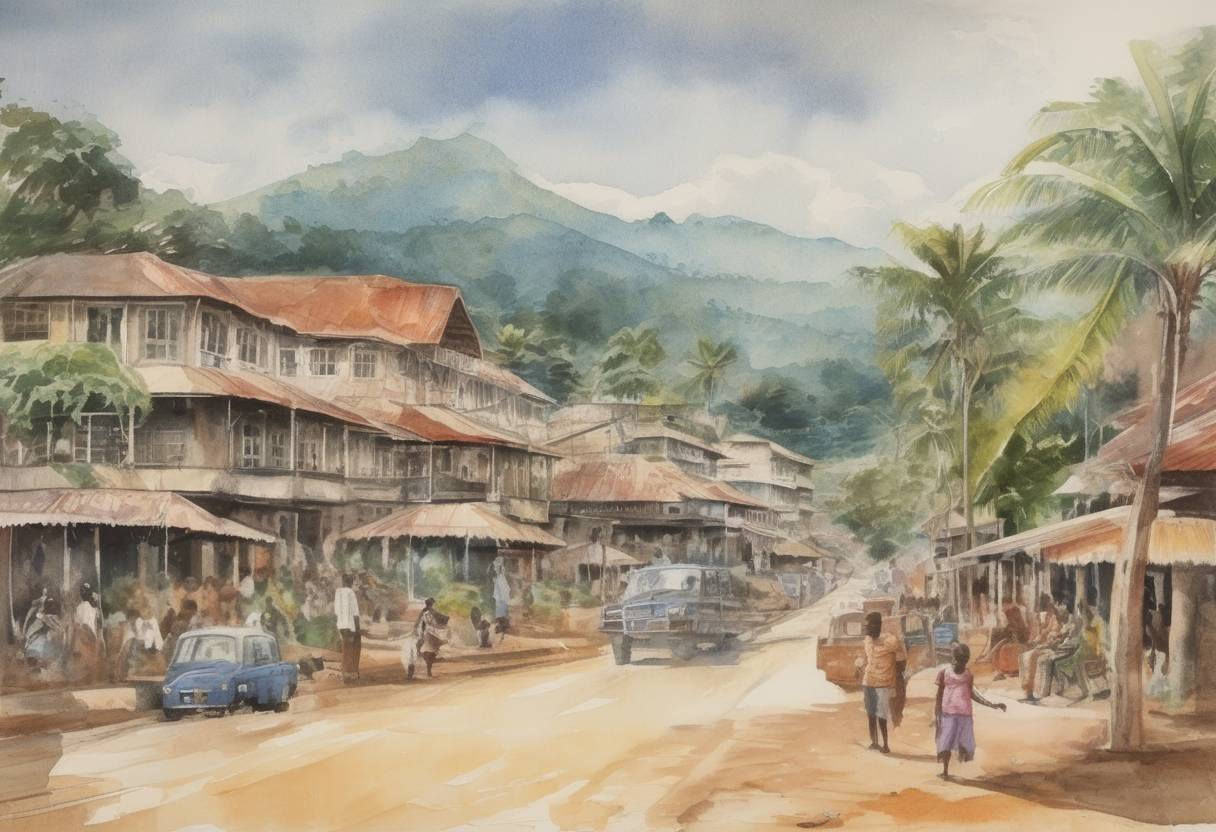
On April 19, 1971, Sierra Leone transitioned from a constitutional monarchy to a republic, marking a significant shift in its political landscape. This change was spearheaded by Siaka Stevens, who became the country’s first president.
Independence: Sierra Leone gained independence from British colonial rule on April 27, 1961. Initially, it retained a parliamentary system with Queen Elizabeth II as the head of state, represented by a Governor-General.
Political Climate: The post-independence period was marked by political instability and power struggles. Siaka Stevens, leader of the All People’s Congress (APC), became Prime Minister in 1967 but was soon ousted in a military coup. After a series of coups and counter-coups, Stevens was reinstated as Prime Minister in 1968.
Constitutional Change: Under Stevens’ leadership, the government moved to abolish the monarchy and establish a republic. This required amending the constitution to replace the Governor-General with a President as the head of state.
Siaka Stevens: On April 19, 1971, Siaka Stevens was sworn in as the first President of Sierra Leone. His presidency marked the beginning of a new era, as he sought to consolidate power and implement his vision for the country.
Political Impact: The establishment of a republic was a pivotal moment in Sierra Leone’s history, symbolizing a break from colonial influence and a step towards self-governance. However, Stevens’ tenure was characterized by authoritarian rule, with increasing centralization of power and suppression of political opposition.
Economic and Social Challenges: Despite the political changes, Sierra Leone faced significant economic challenges, including poverty and underdevelopment. Stevens’ government struggled to address these issues effectively.
Legacy: Stevens remained in power until 1985, when he retired and handed over to his chosen successor, Joseph Saidu Momoh. The period of Stevens’ rule is often critiqued for its corruption and the entrenchment of a one-party state, which set the stage for future conflicts, including the devastating civil war in the 1990s.
In summary, the transition to a republic on April 19, 1971, was a landmark event in Sierra Leone’s history, reflecting both the aspirations and challenges of post-colonial governance.
Source: en.wikipedia.org