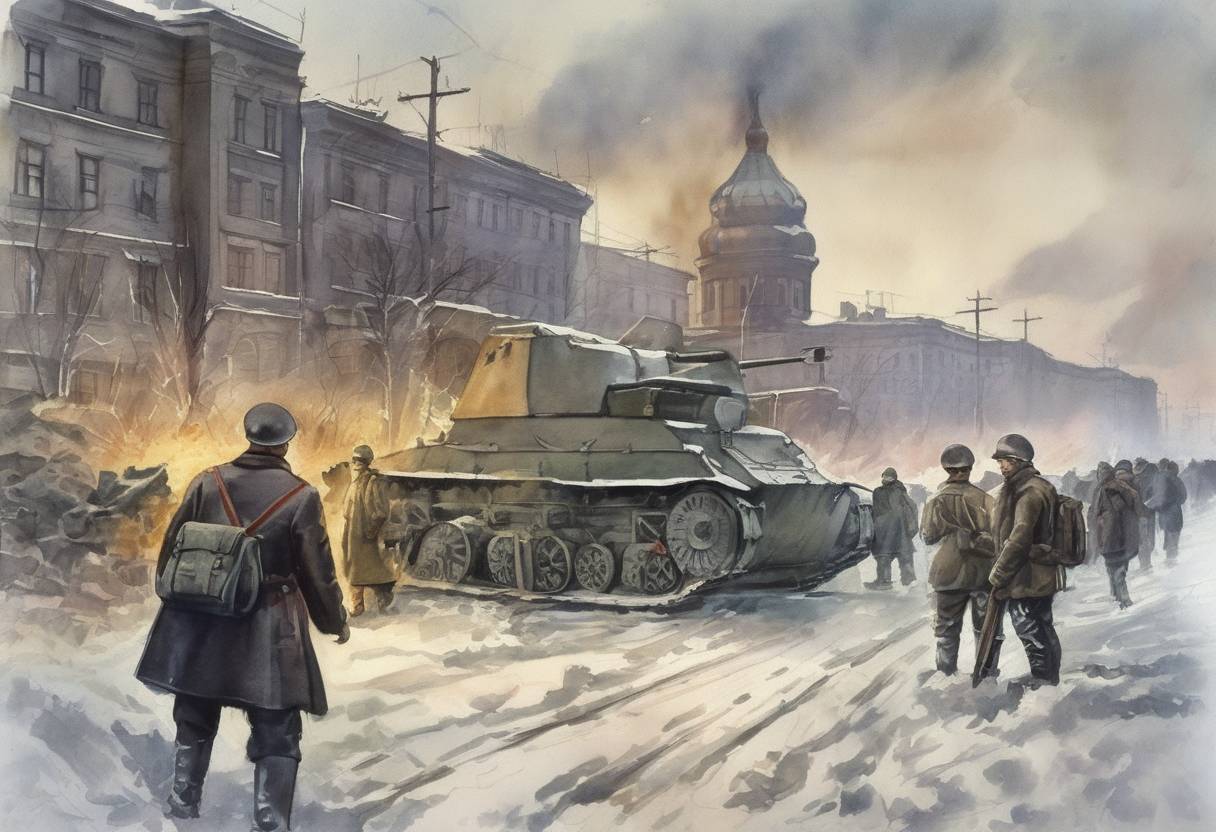
The Siege of Leningrad Begins - August 22, 1941
On August 22, 1941, during World War II, German troops reached the outskirts of Leningrad (now Saint Petersburg, Russia), marking the beginning of one of the longest and most devastating sieges in history. The Siege of Leningrad would last for 872 days, from September 8, 1941, to January 27, 1944, resulting in immense human suffering and loss.
Context and Prelude
Operation Barbarossa: The siege was part of Operation Barbarossa, the code name for Nazi Germany’s invasion of the Soviet Union, which began on June 22, 1941. The operation aimed to conquer the western Soviet Union and defeat the Red Army quickly.
Strategic Importance: Leningrad was a significant industrial center and the symbolic heart of the Russian Revolution. Capturing it was crucial for the Germans to secure the northern front and cut off Soviet access to the Baltic Sea.
Approach to Leningrad: By late August 1941, German Army Group North, commanded by Field Marshal Wilhelm Ritter von Leeb, had advanced through the Baltic States and reached the outskirts of Leningrad. Finnish forces, allied with Germany, also advanced from the north, further encircling the city.
The Siege
Encirclement: By September 8, 1941, German and Finnish forces had effectively surrounded Leningrad, cutting off all land routes to the city. This marked the official start of the siege.
Conditions in the City: The siege led to severe shortages of food, fuel, and other essential supplies. The harsh Russian winters exacerbated the situation, leading to widespread starvation and suffering among the civilian population.
Civilian and Military Efforts: Despite the dire conditions, the city’s defenders and residents showed remarkable resilience. The Soviet military and civilians worked tirelessly to maintain defenses and keep vital industries operating.
Aftermath and Consequences
Human Cost: The siege resulted in the deaths of an estimated 1 million civilians, primarily due to starvation, exposure, and bombardment. It is considered one of the deadliest sieges in history.
Lifting the Siege: The siege was finally lifted on January 27, 1944, following a successful Soviet offensive that pushed German forces away from the city.
Legacy: The endurance and suffering of Leningrad’s residents became a symbol of Soviet resilience and determination. The city’s defense played a crucial role in the eventual Soviet victory over Nazi Germany.
The Siege of Leningrad remains a poignant reminder of the horrors of war and the resilience of the human spirit in the face of adversity.