The Siege of Jerusalem: October 2, 1187
1187 · Jerusalem, Kingdom of Jerusalem
The Siege of Jerusalem ended with the city being captured by Saladin, the Sultan of Egypt and Syria, marking a significant event in the Crusades.
February 18, 1229
The Sixth Crusade: Frederick II, Holy Roman Emperor, signs a ten-year truce with Al-Kamil, the Ayyubid Sultan of Egypt, allowing Christians to regain control of Jerusalem, Nazareth, and Bethlehem without military conflict.
Jerusalem, Kingdom of Jerusalem | Holy Roman Empire
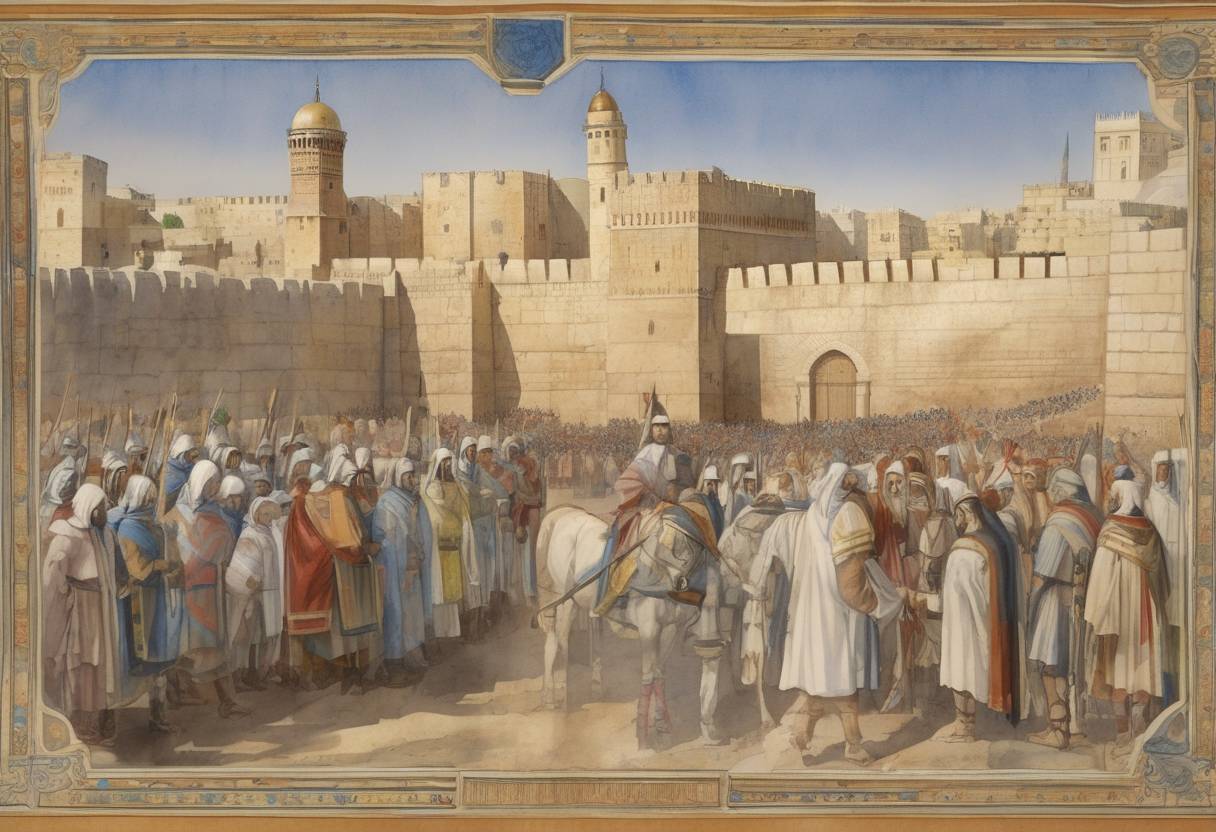
The Sixth Crusade, led by Frederick II, Holy Roman Emperor, is notable for its diplomatic rather than military resolution. On February 18, 1229, Frederick II signed a ten-year truce with Al-Kamil, the Ayyubid Sultan of Egypt, known as the Treaty of Jaffa. This agreement allowed Christians to regain control of Jerusalem, Nazareth, and Bethlehem without engaging in battle.
The Sixth Crusade was part of the broader series of religious and military campaigns known as the Crusades, which aimed to reclaim the Holy Land from Muslim control. Frederick II had vowed to lead a crusade as part of his coronation as Holy Roman Emperor, but his involvement was delayed due to political and personal reasons, including conflicts with the Papacy and internal issues within the Holy Roman Empire.
Frederick’s Delayed Departure: Initially, Frederick II was excommunicated by Pope Gregory IX for failing to embark on the crusade promptly. Despite this, he set sail for the Holy Land in 1228.
Diplomatic Approach: Unlike previous crusades, Frederick II opted for negotiation over warfare. His diplomatic skills and understanding of the political landscape in the Middle East were instrumental in reaching a peaceful resolution.
Al-Kamil’s Position: Sultan Al-Kamil, facing threats from rival Muslim factions and internal strife, was open to negotiation. He sought to stabilize his rule and saw the truce as a means to secure his position without further conflict.
Terms of the Agreement: The treaty granted Christians control over Jerusalem, Nazareth, and Bethlehem, along with a corridor to the coast. However, the Muslims retained control over the Temple Mount and the Al-Aqsa Mosque, ensuring continued Muslim presence and religious practice in the city.
Significance: The treaty marked a rare instance where a major territorial gain was achieved through diplomacy rather than warfare during the Crusades. It demonstrated Frederick II’s pragmatic approach and his ability to navigate complex political landscapes.
Temporary Peace: The truce brought a temporary peace to the region, allowing Christian pilgrims access to holy sites without fear of conflict. However, the agreement was fragile and dependent on the goodwill of both parties.
Frederick’s Return and Legacy: Frederick II returned to Europe in 1229, having achieved his objectives without military engagement. His actions were met with mixed reactions; while some praised his diplomatic success, others, particularly within the Church, viewed his methods with suspicion.
Long-term Impact: The treaty’s ten-year duration meant that tensions would eventually resurface, leading to further conflicts in the region. Nonetheless, the Sixth Crusade stands out as a unique example of achieving crusader goals through negotiation rather than force.
In summary, the Sixth Crusade and the Treaty of Jaffa highlight the potential for diplomacy in resolving conflicts, even in an era dominated by military campaigns. Frederick II’s approach set a precedent for future negotiations in the volatile political landscape of the medieval Middle East.
Source: en.wikipedia.org