Constantius II Enters Rome: April 28, 357
357 · Rome, Roman Empire
The Roman Emperor Constantius II enters Rome for the first time to celebrate his victory over the usurper Magnentius.
June 3, 0350
Nepotianus, a member of the Constantinian dynasty, proclaims himself Roman Emperor, entering Rome with a group of gladiators.
Rome, Roman Empire | Roman Empire
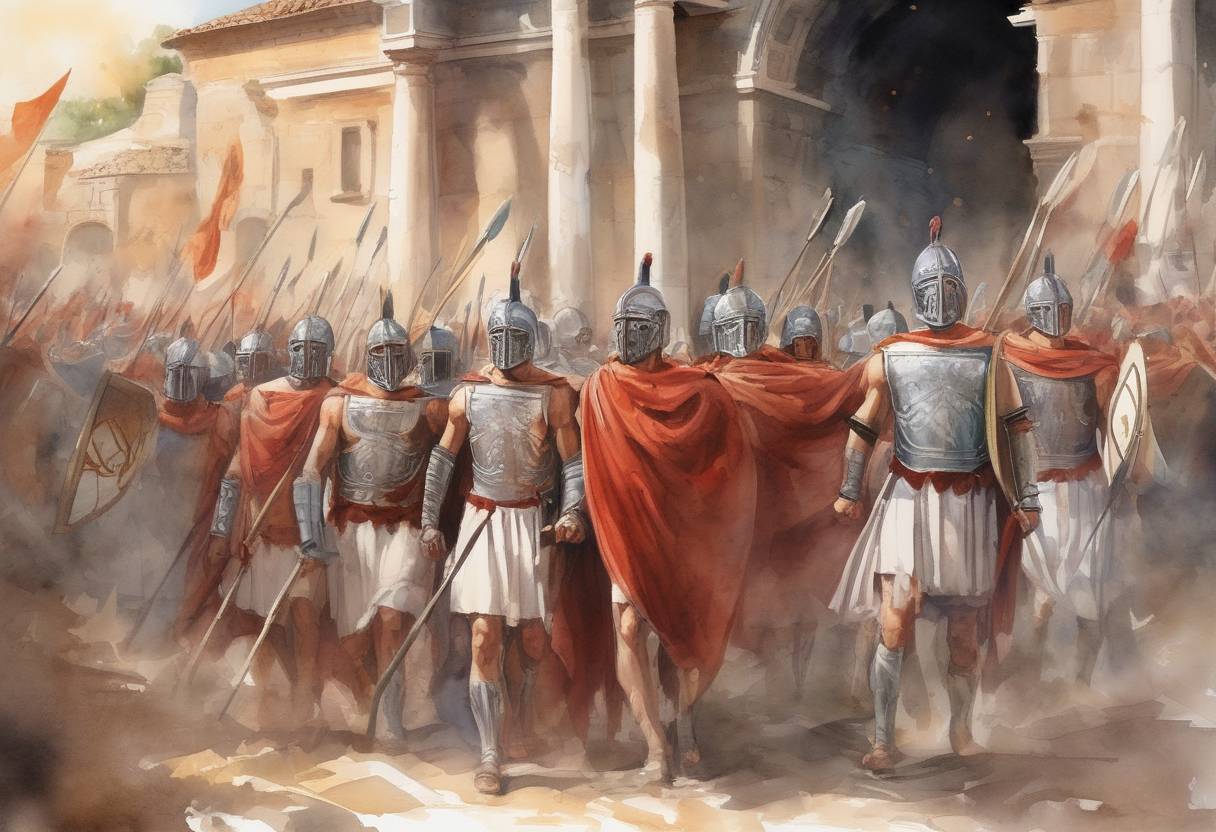
On June 3, 350, Nepotianus, a member of the Constantinian dynasty, made a bold and dramatic move by proclaiming himself Roman Emperor. This event took place during a period of significant instability and power struggles within the Roman Empire, following the assassination of Constans, the Western Roman Emperor, earlier that year.
Nepotianus was the son of Eutropia, who was the half-sister of Constantine the Great, thus linking him to the prestigious Constantinian dynasty. The Constantinian dynasty had been a dominant force in the Roman Empire since Constantine the Great’s rise to power in the early 4th century. However, by 350, the empire was experiencing internal turmoil, with various factions vying for control.
The immediate catalyst for Nepotianus’s claim to the throne was the usurpation of power by Magnentius, a Roman general who had declared himself emperor after orchestrating the assassination of Constans. Magnentius’s rise to power was not universally accepted, leading to a fragmented political landscape.
On June 3, 350, Nepotianus entered Rome with a group of gladiators and other supporters, seizing control of the city. His entry into Rome was marked by a combination of audacity and desperation, as he sought to capitalize on the chaos and dissatisfaction with Magnentius’s rule.
Nepotianus’s claim to the throne was short-lived. Despite his connection to the Constantinian dynasty, he lacked significant military support and political backing. His reliance on gladiators and a small band of followers underscored the precariousness of his position.
Nepotianus’s reign lasted only 28 days. Magnentius, determined to consolidate his power, quickly responded to this challenge. He dispatched his trusted general, Marcellinus, to deal with the usurper. Marcellinus’s forces swiftly defeated Nepotianus’s supporters, and Nepotianus himself was killed in the ensuing conflict.
The aftermath of Nepotianus’s brief rule was brutal. Magnentius ordered a purge of Nepotianus’s supporters and family members, including his mother, Eutropia. This violent suppression further solidified Magnentius’s control over the Western Roman Empire, albeit temporarily, as he continued to face challenges from other claimants and the Eastern Roman Emperor, Constantius II.
Nepotianus’s attempt to seize power highlights the volatility and fragmentation of the Roman Empire during the mid-4th century. It underscores the challenges faced by the Constantinian dynasty in maintaining its legacy amidst internal strife and external threats. Although his reign was brief and ultimately unsuccessful, Nepotianus’s actions reflect the broader context of political instability that characterized this period in Roman history.
Source: en.wikipedia.org