Operation Iraqi Freedom: The Beginning of the Iraq War
2003 · Baghdad, Iraq
The United States launched Operation Iraqi Freedom, marking the beginning of the Iraq War, with a coalition of forces invading Iraq to overthrow Saddam Hussein's regime.
March 27, 2001
The United States and the United Kingdom launched Operation Southern Focus, a series of airstrikes in Iraq aimed at degrading Iraqi air defenses in the southern no-fly zone.
Baghdad, Iraq | United States Air Force, Royal Air Force
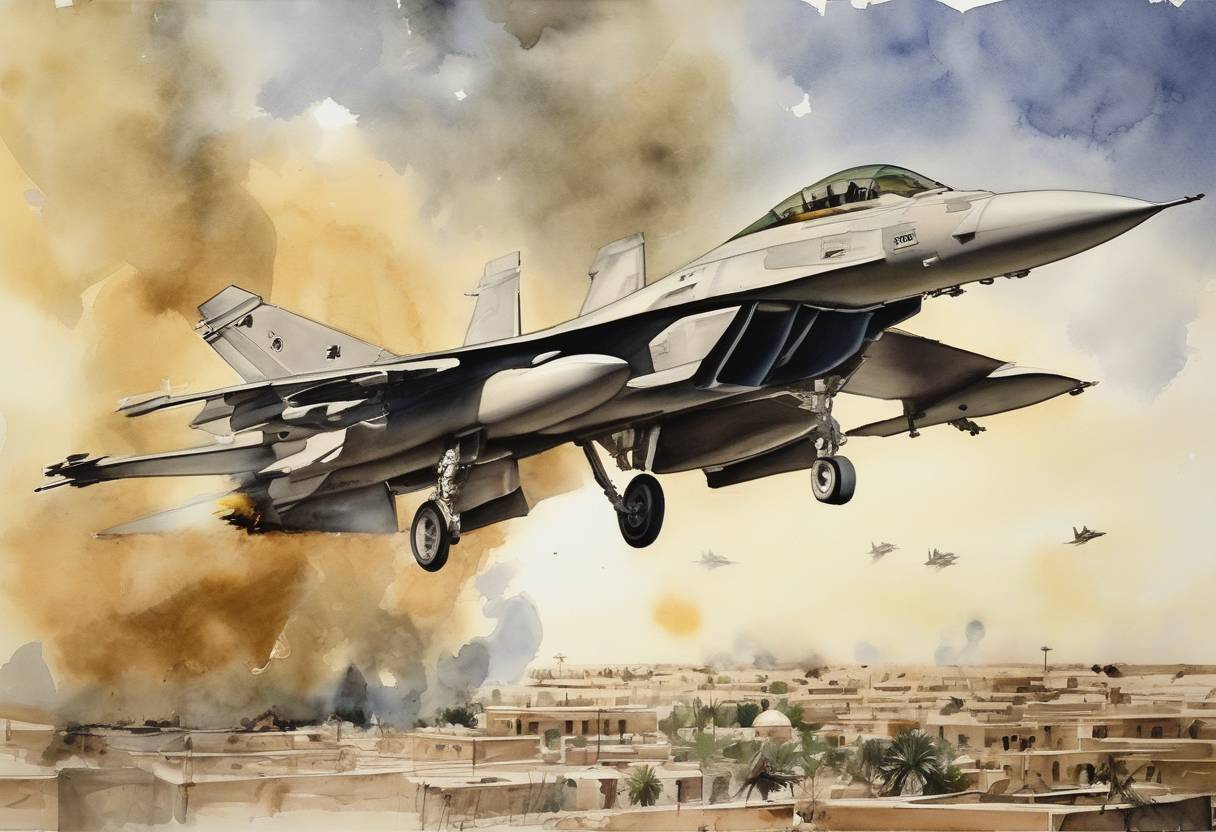
On March 27, 2001, the United States and the United Kingdom initiated Operation Southern Focus, a series of airstrikes targeting Iraqi air defenses within the southern no-fly zone. This operation was part of a broader strategy to maintain pressure on the regime of Saddam Hussein and ensure the enforcement of United Nations Security Council resolutions following the Gulf War.
Post-Gulf War Sanctions and No-Fly Zones: After the Gulf War in 1991, the United Nations imposed sanctions on Iraq and established no-fly zones in the north and south of the country. These zones were intended to protect ethnic and religious minorities from the Iraqi military and to limit Saddam Hussein’s ability to project power internally.
Continued Tensions: Throughout the 1990s, Iraq frequently challenged the enforcement of these no-fly zones, leading to periodic military engagements between Iraqi forces and coalition aircraft. The zones were patrolled by the United States, the United Kingdom, and France (until 1998).
Objective: The primary aim of Operation Southern Focus was to degrade Iraq’s air defense capabilities in the southern no-fly zone. This was intended to reduce the threat to coalition aircraft patrolling the area and to maintain the integrity of the no-fly zone enforcement.
Execution: The operation involved a series of targeted airstrikes against radar installations, surface-to-air missile sites, and other military infrastructure that supported Iraq’s air defense network.
Strategic Impact: Operation Southern Focus was part of a sustained effort to weaken Iraq’s military capabilities and to apply pressure on Saddam Hussein’s regime. It demonstrated the coalition’s commitment to enforcing the no-fly zones and maintaining regional stability.
Prelude to Broader Conflict: The operation can be seen as a precursor to the more extensive military actions that would follow, particularly the 2003 invasion of Iraq. It highlighted the ongoing tensions and the challenges of containing Saddam Hussein’s regime.
International Reactions: The operation was met with mixed reactions internationally. While some countries supported the enforcement of UN resolutions, others criticized the continued military actions as exacerbating the humanitarian situation in Iraq.
Operation Southern Focus exemplifies the complex geopolitical dynamics of the early 2000s, as the United States and its allies navigated the challenges of enforcing international mandates while managing the broader implications for regional and global security.
Source: www.globalsecurity.org