The Portella della Ginestra Massacre
1947 · Portella della Ginestra, Italy
The Portella della Ginestra massacre occurred in Sicily, Italy, when bandits opened fire on a May Day labor festival, killing 11 people.
February 3, 1377
More than 2,000 people of Cesena, Italy, were slaughtered by Papal Troops under the command of Cardinal Robert of Geneva, who later became Antipope Clement VII.
Cesena, Italy | Papal Troops
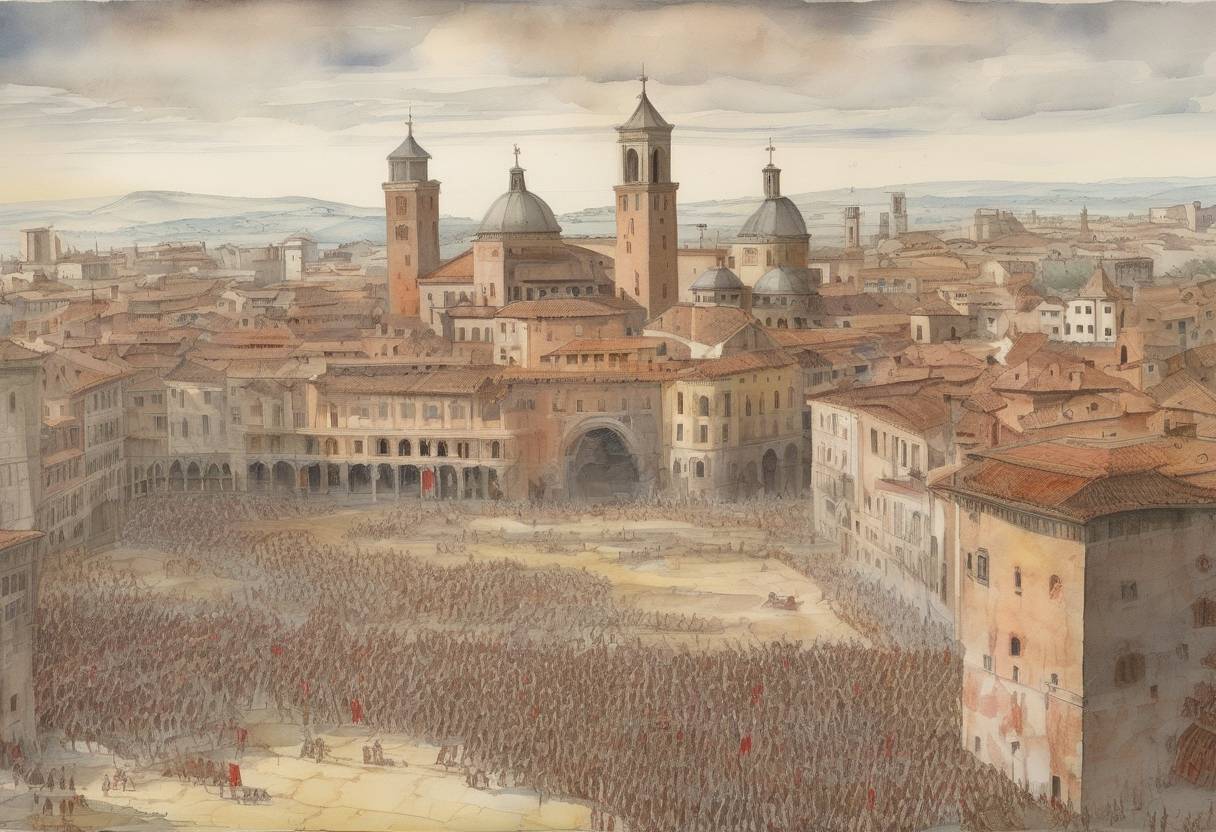
On February 3, 1377, a tragic and brutal event unfolded in the town of Cesena, Italy, known as the Massacre of Cesena. This event was orchestrated by Papal troops under the command of Cardinal Robert of Geneva, who would later become Antipope Clement VII.
The massacre occurred during a turbulent period in the history of the Papal States, marked by the War of the Eight Saints (1375-1378). This conflict was primarily between the Papal States and a coalition of Italian city-states led by Florence. The war was fueled by opposition to the Papacy’s temporal power and its heavy-handed governance.
Cardinal Robert of Geneva, a key figure in this conflict, was appointed as a papal legate by Pope Gregory XI. He was tasked with quelling the rebellion against papal authority in the Romagna region, which included Cesena.
The situation in Cesena escalated when the town, initially under papal control, revolted against the harsh rule imposed by the Papal States. In response, Cardinal Robert of Geneva, alongside the Breton mercenary commander John Hawkwood, led a force to suppress the rebellion.
On February 3, 1377, the papal troops, primarily composed of Breton mercenaries, entered Cesena. Under orders from Cardinal Robert, they unleashed a violent assault on the town’s inhabitants. Reports suggest that more than 2,000 people were slaughtered during this brutal crackdown. The massacre was characterized by indiscriminate killing, looting, and destruction, leaving a lasting scar on the community.
The Massacre of Cesena had significant repercussions:
Cardinal Robert of Geneva’s Reputation: The event earned Cardinal Robert the moniker “Butcher of Cesena,” reflecting the widespread condemnation of his actions. Despite this, he continued to rise in ecclesiastical ranks and was later elected as Antipope Clement VII during the Western Schism, a period of division within the Catholic Church.
Impact on the Papal States: The massacre further fueled resentment against the Papal States and contributed to the ongoing instability in the region. It highlighted the challenges faced by the Papacy in maintaining control over its territories.
Legacy: The event remains a stark reminder of the violence and turmoil that characterized the late Middle Ages in Italy. It serves as an example of the extreme measures employed by authorities to maintain power and control.
In summary, the Massacre of Cesena on February 3, 1377, stands as a dark chapter in the history of the Papal States, illustrating the complex interplay of power, rebellion, and violence during this era.
Source: en.wikipedia.org