NASA's Phoenix Spacecraft Lands on Mars - May 25, 2008
2008 · Mars, None
NASA's Phoenix spacecraft lands on Mars to study the planet's arctic soil.
March 10, 2006
NASA's Mars Reconnaissance Orbiter successfully entered orbit around Mars, beginning its mission to study the planet's atmosphere and terrain from orbit.
Mars, Space | NASA
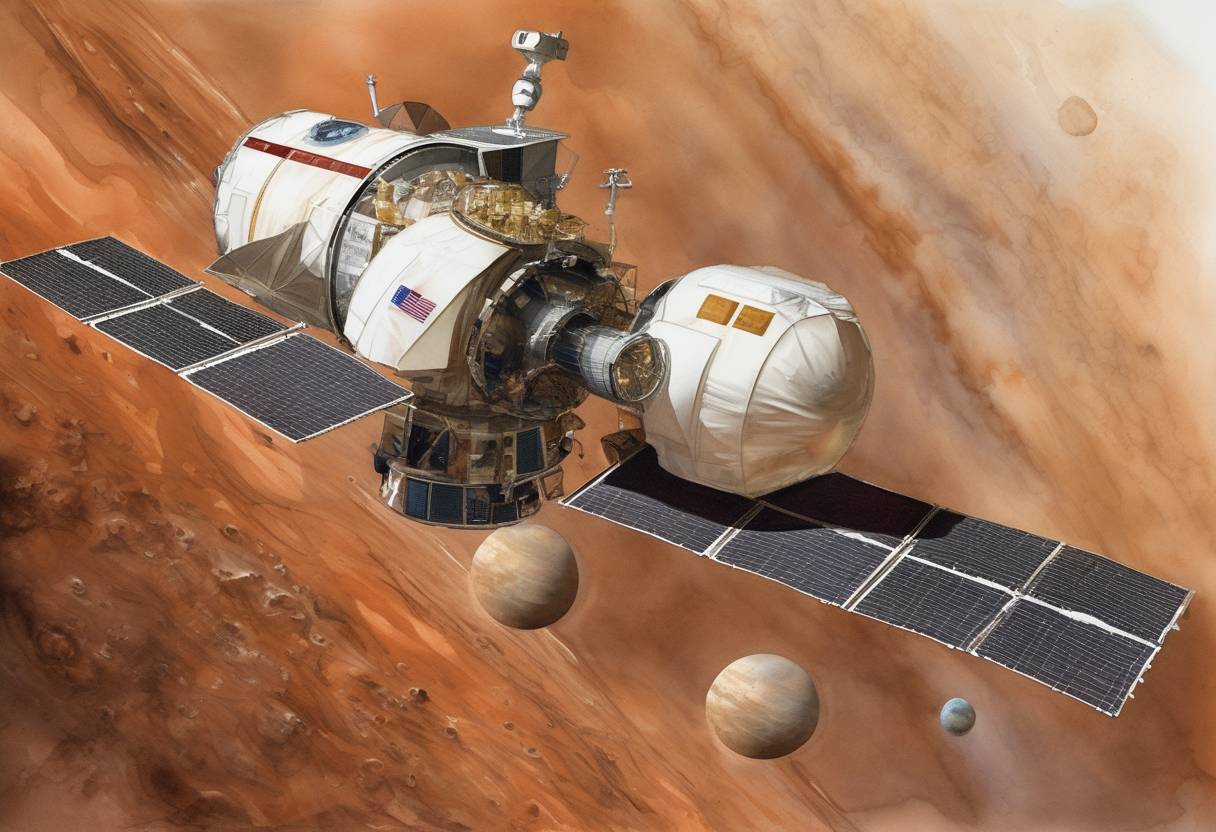
On March 10, 2006, NASA’s Mars Reconnaissance Orbiter (MRO) successfully entered orbit around Mars, marking a significant milestone in the exploration of the Red Planet. This event was a pivotal moment in NASA’s Mars Exploration Program, aimed at understanding Mars’ atmosphere, terrain, and potential for past or present life.
The Mars Reconnaissance Orbiter was launched on August 12, 2005, from Cape Canaveral Air Force Station in Florida. The mission was designed to conduct a detailed reconnaissance of Mars, providing high-resolution imagery and data to support future missions, both robotic and human. The orbiter was equipped with a suite of scientific instruments, including:
Upon reaching Mars, the MRO executed a critical maneuver known as Mars Orbit Insertion (MOI). This involved firing its main engines for approximately 27 minutes to slow down the spacecraft, allowing it to be captured by Mars’ gravity and enter an elliptical orbit. This maneuver was crucial for transitioning the orbiter from its interplanetary trajectory into a stable orbit around Mars.
The primary objectives of the MRO mission included:
Since entering orbit, the MRO has achieved numerous milestones:
The successful orbit insertion of the Mars Reconnaissance Orbiter marked a significant advancement in Mars exploration. It has greatly enhanced our understanding of the planet’s geology, climate, and potential habitability. The data collected by MRO continues to inform and guide future missions, contributing to the broader goal of human exploration of Mars.
The MRO’s success exemplifies the collaborative efforts of scientists and engineers and underscores the importance of robotic exploration in paving the way for human missions to Mars.
Source: www.nasa.gov