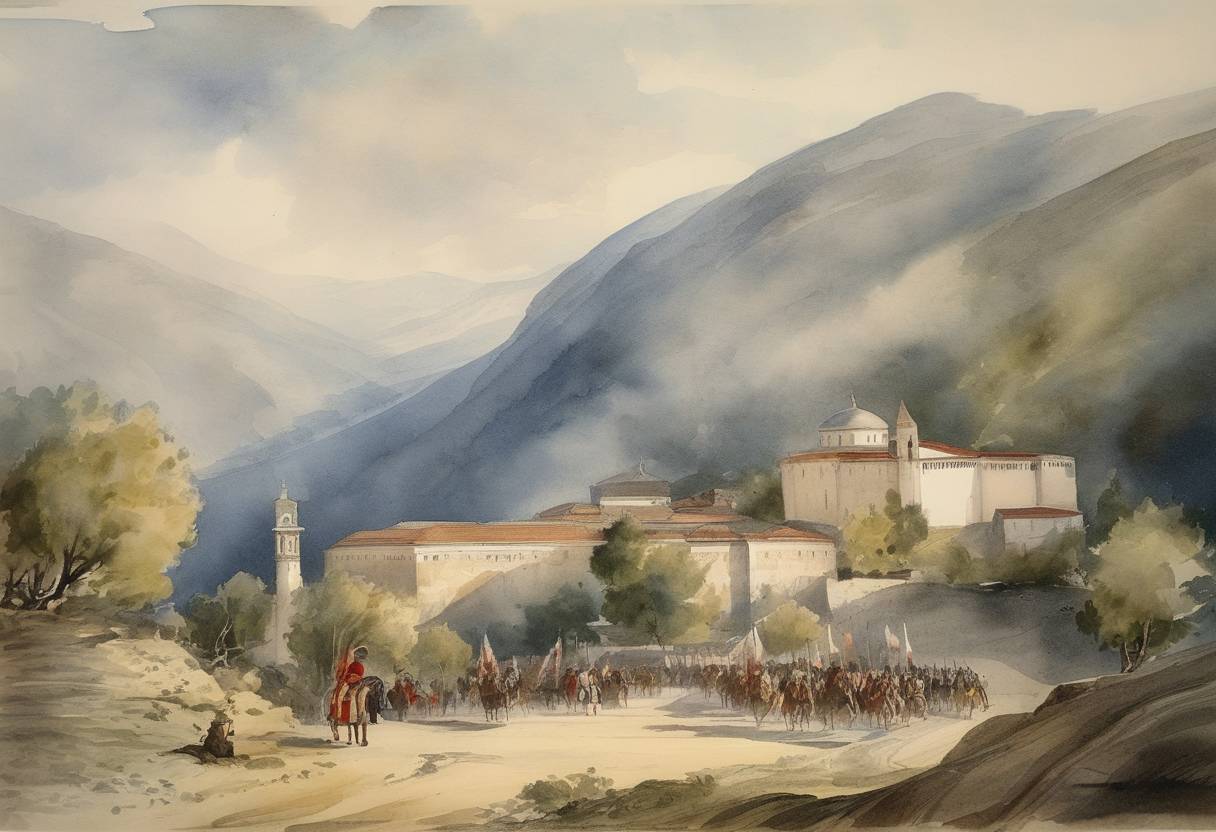
Greek War of Independence - March 25, 1821
The Greek War of Independence against Ottoman rule is widely considered to have officially begun on March 25, 1821, marked by the symbolic raising of the banner of the cross at the Monastery of Agia Lavra in the Peloponnese by Bishop Germanos of Patras. This act signified the Greeks’ rally for freedom from centuries of Ottoman domination and ignited a widespread revolution.
Context Leading up to the Revolution
For almost 400 years, Greece had been under Ottoman control, during which the Greek people endured economic hardship, cultural suppression, and political disenfranchisement. However, by the early 19th century, a sense of national revival, fueled by the Enlightenment and the decline of the Ottoman Empire, spurred nationalist and independence movements across Europe, including among the Greeks.
Key Events on March 25, 1821
Symbolic Beginning of the Revolution: On this date, Bishop Germanos of Patras is said to have raised the Greek flag and proclaimed a call to arms against the Ottomans, invoking both religious and patriotic fervor among the Greek population. This act took place in the historic Monastery of Agia Lavra, an emblematic site for Orthodox Christianity in Greece.
Declaration of Independence: Although the exact details and timeline of the declaration vary in historical accounts, March 25 soon became enshrined as a pivotal moment for Greek nationalism and is commemorated annually as Greek Independence Day.
Widespread Rebellion: Following the events at Agia Lavra, insurrections quickly spread across the Greek mainland and islands. Cities such as Kalamata were liberated, and revolutionary fervor swept regions like Central Greece and the Aegean islands.
International Involvement: Over the following years, the Greek struggle attracted attention from abroad. Intellectuals and philhellenes in Europe sympathized with the Greek cause, and eventually, significant military and diplomatic support came from key powers like Britain, France, and Russia.
Broader Historical Significance
The Greek War of Independence was a crucial chapter in the decline of the Ottoman Empire and inspired subsequent independence movements throughout the Balkans. Greece’s emergence as an independent nation in 1830 underlines the transformative wave of nationalism and self-determination that marked the 19th century.
The legacy of this beginning is celebrated annually in Greece and the Greek diaspora, symbolizing a triumphant assertion of cultural identity and a pivotal stride toward modern statehood.