Women of Greece Granted the Right to Vote in National Elections
1952 · Athens, Greece
The women of Greece are granted the right to vote in national elections, marking a significant step in the country's progress towards gender equality.
August 13, 1905
Norway's government of Christian Michelsen gave Norway's women the right to vote in municipal elections.
Oslo, Norway | Norwegian government
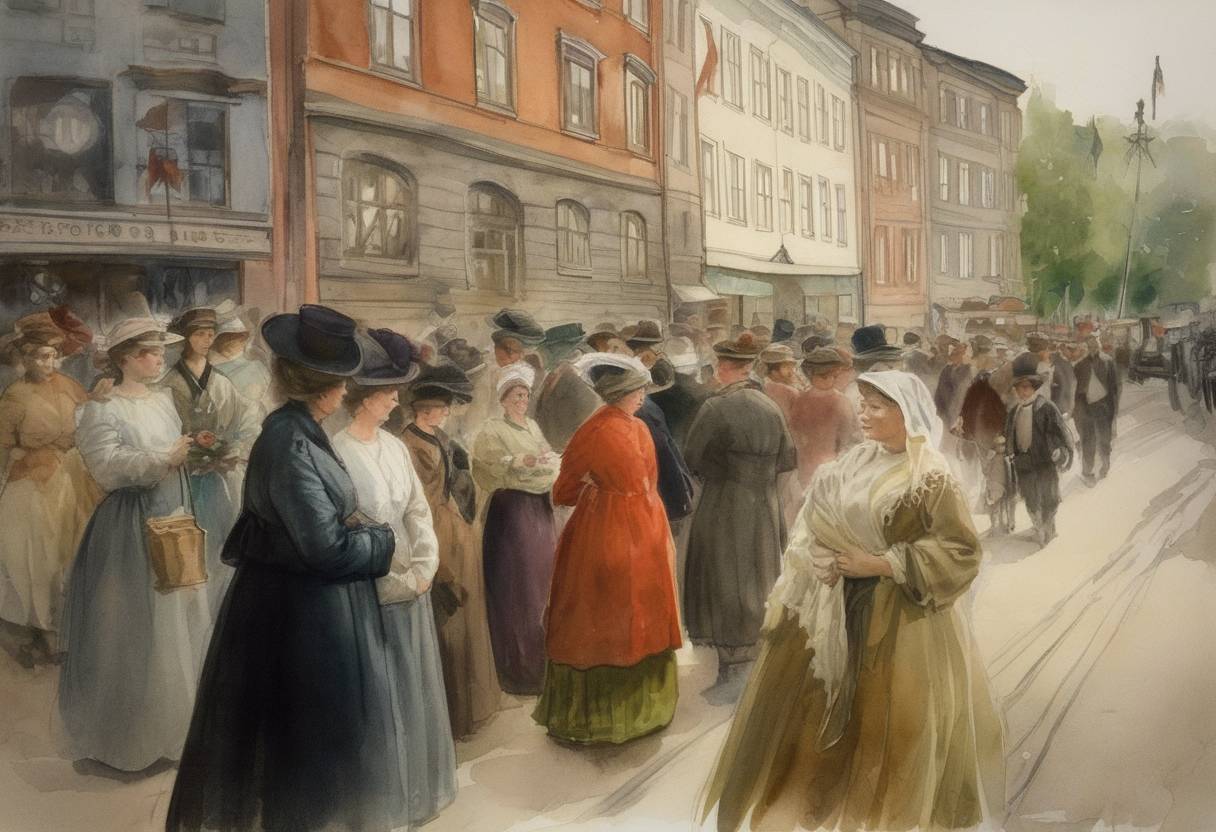
On August 13, 1905, Norway took a pivotal step towards gender equality when Christian Michelsen’s government enacted legislation granting women the right to vote in municipal elections. This significant event marked an essential milestone in Norway’s journey toward universal suffrage and women’s broader participation in public life.
In the late 19th and early 20th centuries, women’s suffrage was gaining momentum worldwide, with countries like New Zealand and Australia leading by granting voting rights to women. In Norway, the suffrage movement began gaining traction in the early 1880s, with women’s rights organizations advocating for political representation.
The push for women’s suffrage in Norway intertwined with the national movement for independence. By the turn of the 20th century, the issue had garnered considerable support among Norway’s progressive political parties, including the Liberal Party and the Labour Party.
Christian Michelsen became Prime Minister of Norway in 1905, a year that was critically significant due to Norway achieving full independence following the dissolution of its union with Sweden. Michelsen’s government was already supportive of democratic reforms, which included expanding voting rights as part of its broader agenda for an independent and egalitarian society.
On August 13, 1905, a major legislative development granted Norwegian women the right to vote in municipal elections. This decision enabled women to have a say in local governance, marking a crucial step in the path toward full suffrage. The approval of this right underscored the government’s recognition of women’s voices in shaping their communities.
The introduction of municipal suffrage for women in 1905 set a historical precedent and energized the women’s suffrage movement in Norway. This momentum ultimately led to women achieving full suffrage in national elections in 1913. Norway became one of the earliest nations to embrace gender equality in its electoral process.
The decision in 1905 was not only a victory for women’s rights within Norway but also served as an inspiration for suffrage movements across the globe. The new legislation reinforced the notion of equality in civic participation and laid the groundwork for subsequent social and civic advancements.
The granting of municipal voting rights to women in Norway on August 13, 1905, was a transformative event that advanced both women’s rights and democracy in the country. This milestone is celebrated as a significant step towards gender equality and demonstrates the profound societal changes catalyzed by inclusive governance.
Source: www.norwegianhistory.no