The Longest Solar Eclipse of the 21st Century: July 22, 2009
2010 · Various, Various
The longest solar eclipse of the 21st century occurs, lasting up to 6 minutes and 39 seconds.
May 4, 1315
The Great Famine of 1315–1317 began as Europe experienced prolonged cold and rainy weather leading to crop failures.
Various, Europe | None
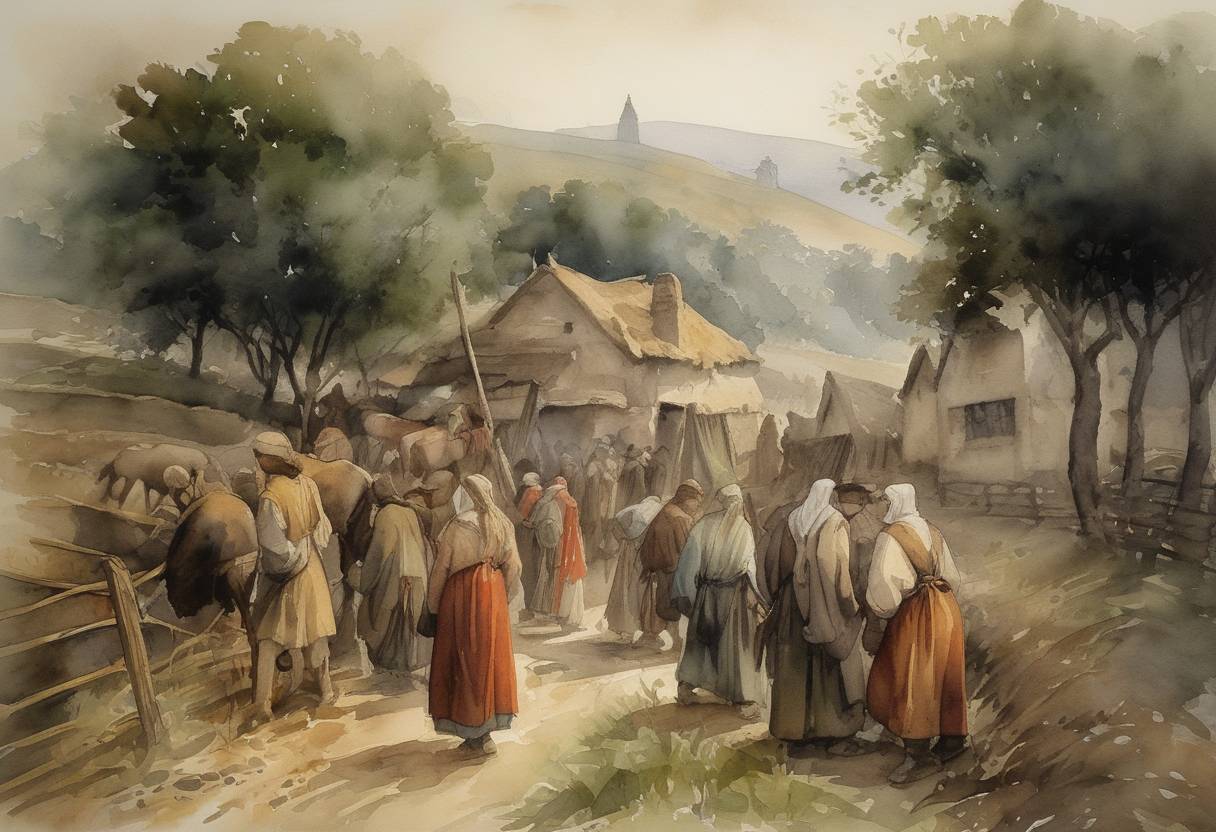
The onset of the Great Famine in Europe is generally traced to the spring of 1315, with significant recognition of May 4th as a markable point when unmistakable signs of environmental change became evident.
The late Middle Ages in Europe were characterized by a medieval climate anomaly that resulted in cooler and wetter conditions. This shift marked the end of relatively warmer temperatures during the Medieval Warm Period, leading to climatic disturbances.
May 1315 heralded continuous periods of heavy rains. Beginning in this month, Europe, particularly regions like England, Ireland, and Flanders, experienced incessant rainfall that lasted through the summer and autumn. The rainfall was such that it hindered the crucial agricultural processes of planting and harvesting. Consequently, massive crop failures ensued as farmlands became waterlogged, greatly reducing yields of staple grains such as wheat, oats, and barley.
The immediate aftermath of crop failures saw a drastic reduction in food availability. Food prices soared due to scarcity, which meant that many peasants could not afford to purchase what little food was available. By the winter of 1315–1316, the growing food shortage led to starvation and death among the poorest populations. Reports of abandoned children and widespread malnutrition became prevalent, signaling the deepening humanitarian crisis.
The Great Famine was not merely a natural disaster but triggered socio-economic turmoil across the continent. It weakened the agrarian economy, strained feudal systems, and incited social unrest. As communities were pushed to the brink, incidences of crime, such as grain theft and violence, reportedly increased.
The long-term ramifications of the famine included exacerbated vulnerability to future plagues, notably the Black Death, due to weakened population health and resiliency. European society’s demographic and cultural shifts over subsequent centuries can, in part, be traced back to the trials of the early 14th century famine and its persistence until 1317.
While May 4, 1315, does not mark a singular event of the famine, it was a critical juncture. It represents the broader environmental and societal changes that defined this period, setting the stage for one of medieval Europe’s most severe natural calamities.
Source: en.wikipedia.org