Treaty Between Bolsheviks and Armenian Republic - December 28, 1920
1920 · Yerevan, Armenia
The Bolsheviks sign a treaty with the Armenian Republic in Yerevan, ending hostilities.
April 15, 1071
Armenia formally ceded to the Byzantines, marking a significant moment in Byzantine expansion and Armenian history.
Ani, Byzantine Empire | Byzantine Empire Government
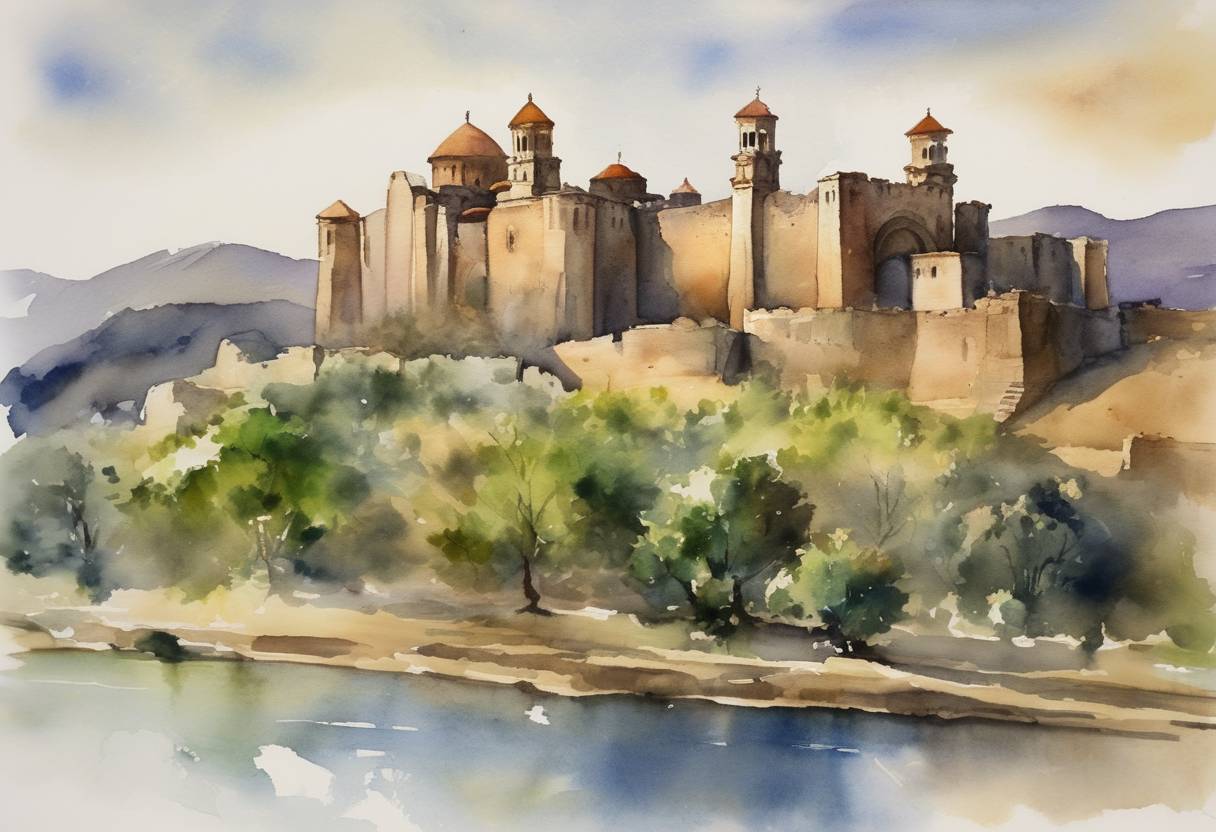
On April 15, 1071, Armenia was formally ceded to the Byzantine Empire, a pivotal moment in both Byzantine expansion and Armenian history. This event marked the culmination of a series of political maneuvers and military engagements within the region.
The cession of Armenia to the Byzantines occurred during a period of Byzantine resurgence under the rule of Emperor Romanos IV Diogenes. The Byzantine Empire, recovering from previous territorial losses, sought to solidify its eastern frontiers and reassert control over regions previously part of the empire. Armenia, located strategically on the border between Byzantine and Seljuk Turkish territories, was of considerable interest due to its geopolitical significance.
Prior to the cession, Armenia had been under the autonomy of various Armenian nakharar noble families. During this period, these noble families had fluctuating alliances with surrounding powers, navigating between the influence of the Byzantine Empire and the rising Seljuk power.
By 1071, negotiations intensified between the Byzantine imperial authorities and key Armenian leaders. The treaty ceding Armenia to Byzantium was part of a broader Byzantine effort to secure its eastern frontier. Romanos IV aimed to establish a defensive buffer against the Seljuks, who were increasingly encroaching into Byzantine lands from the east.
The formal cession of Armenia to the Byzantines temporarily advanced Byzantine interests in the region. However, this consolidation was short-lived due to the defeat of Romanos IV at the Battle of Manzikert later in 1071, only a few months after the cession. This decisive battle against the Seljuq Empire significantly weakened Byzantine influence, leading to the empire’s loss of most of Anatolia in the subsequent years.
For Armenia, the cession led to increased Byzantine administrative control, impacting the traditional autonomy of Armenian nobility and altering the region’s socio-political structure. This period also preluded subsequent incursions and migrations that would shift the demographic and cultural landscape of the Armenian Highlands.
The cession is significant in indicating the complex relations between the Byzantines, Armenians, and Seljuks, foreshadowing the impending shifts in power dynamics. Furthermore, it highlights the broader theme of the struggle for control between Christian Byzantium and the expanding Islamic Seljuks—a crucial element that shaped medieval geopolitics in the Near East.
This moment, a relatively brief assertion of Byzantine control, underscores the fragile and contested nature of territorial control in medieval Anatolia and the Caucasus. It serves as a precursor to the tectonic changes the region would experience in the wake of Manzikert and the ensuing Crusades.
Source: www.worldhistory.org