Guglielmo Marconi and the First Transatlantic Radio Signal
1901 · St. John's, Canada
Guglielmo Marconi receives the first transatlantic radio signal in St. John's, Newfoundland, marking a significant milestone in wireless communication.
July 2, 1897
Italian scientist Guglielmo Marconi received a patent for radio (then known as 'wireless telegraph') in London.
London, United Kingdom
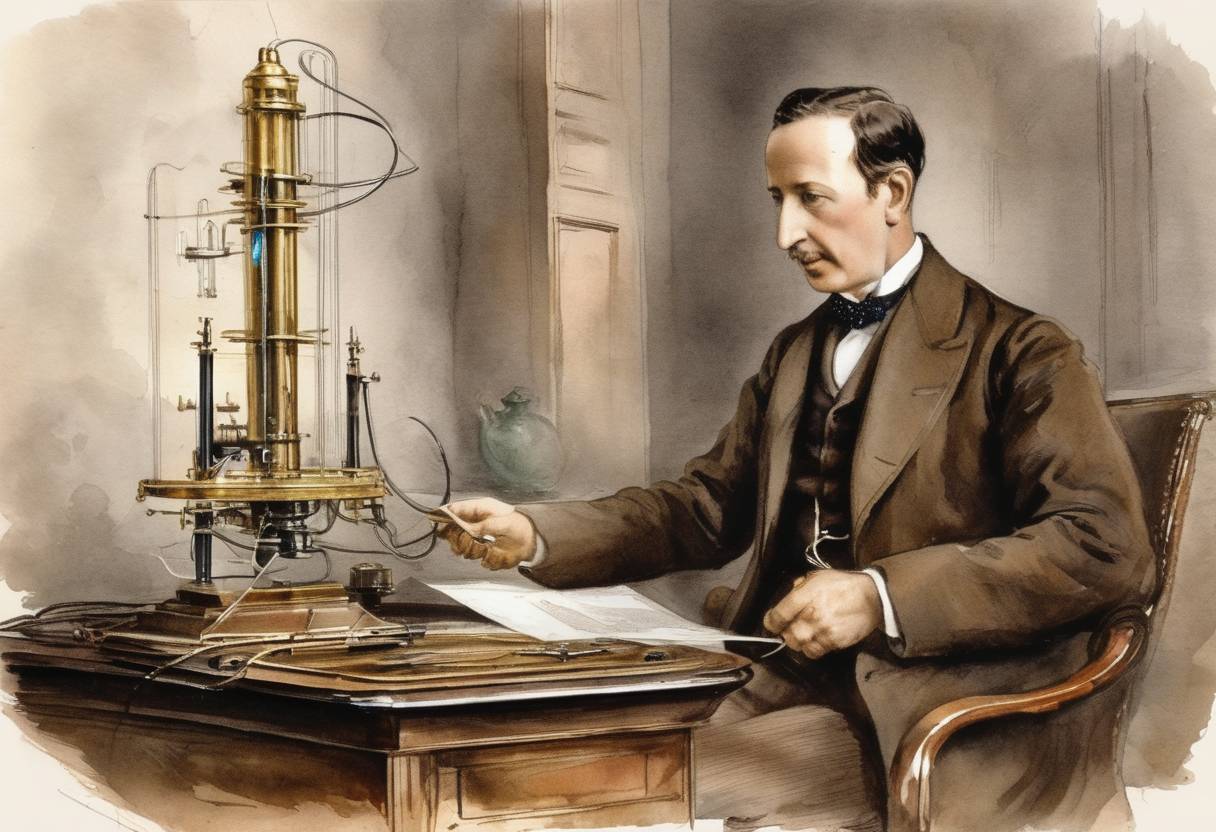
On July 2, 1897, Italian inventor Guglielmo Marconi was granted a patent for his “wireless telegraphy” system in London, marking a pivotal moment in the development of radio communication. Marconi’s patent was officially recognized as British Patent No. 12,039, which laid the groundwork for innovations in wireless communication and eventually radio broadcasting.
Guglielmo Marconi, born in Bologna, Italy, in 1874, showed early interest in the works of Heinrich Hertz and sought to build upon them. Hertz’s discovery of radio waves in the late 19th century provided a foundation for Marconi, who aspired to transmit signals over long distances without the need for physical wires.
Marconi’s work was distinguished by its practical application, setting apart his inventions from those of contemporaries who focused primarily on scientific theory. By 1895, he had successfully demonstrated the sending of wireless signals over a distance of about two kilometers.
The 1897 patent specified advancements in using radio waves for communication, detailing a method and apparatus for transmitting electrical signals without the need for wires. Marconi’s system employed a transmitter and receiver capable of sending Morse code signals. This innovation effectively transformed the way messages were transmitted, particularly given the limitations and vulnerabilities of cable telegraphy.
Notably, this patent was a critical step for Marconi in securing support and credibility. It enabled him to establish the Wireless Telegraph & Signal Company Ltd., which later became known as the Marconi Company. This venture was pivotal in commercializing the technology and expanding its usage beyond military and maritime applications.
The patent’s significance extended beyond Marconi’s personal achievements, as it set in motion developments that would revolutionize global communication networks. In the years following, Marconi’s technology facilitated more reliable marine communication, enhancing safety at sea and eventually leading to the rescue of passengers during maritime disasters, such as the Titanic’s sinking in 1912.
Moreover, Marconi’s innovations laid the foundational technologies for the future of radio broadcasting and communication, influencing areas such as entertainment, journalism, and emergency systems worldwide.
The evolution of wireless telegraphy into what we now recognize as radio and telecommunications can largely be attributed to the breakthroughs initiated by Marconi and solidified through this pivotal patent granted on July 2, 1897.
Source: en.wikipedia.org