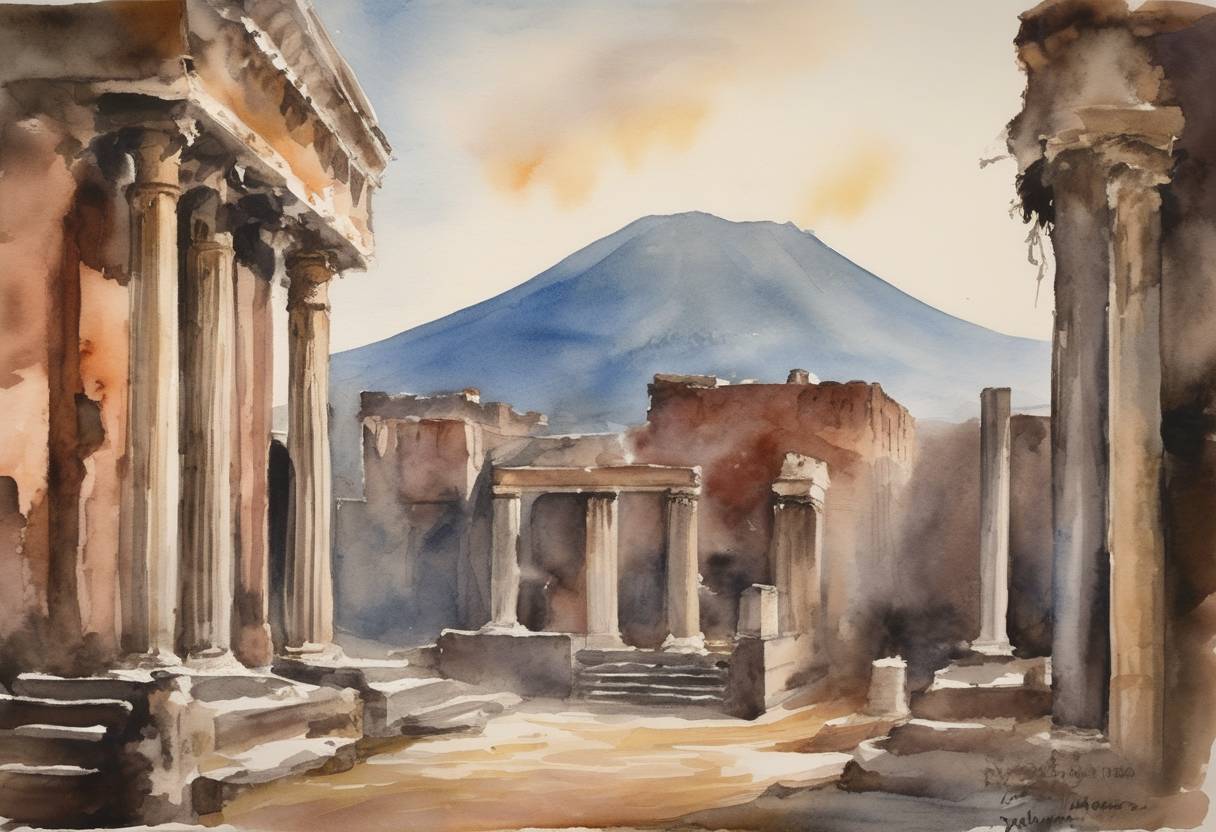
Eruption of Mount Vesuvius: August 23, 79 CE
On August 23, 79 CE, the seismic activity around Mount Vesuvius marked the onset of a catastrophic volcanic eruption that would devastate the Roman cities of Pompeii and Herculaneum. Known for its sudden and violent eruption, Vesuvius significantly reshaped the surrounding landscape and permanently altered the lives of countless individuals in its proximity. While the actual eruption’s most destructive phase is historically documented as occurring on August 24 and 25, the preceding day set the scene for this catastrophic event.
Seismic Precursors and Initial Activity
In the days leading up to August 23, there were warning signs, including earth tremors, although these were not uncommon in the region and thus often overlooked by the local population. Ancient records, such as those from Pliny the Younger, imply some activity suggesting the volcano’s awakening, although they didn’t document the precise movements on August 23. The tremors likely contributed to growing unrest among residents, unaware of the catastrophe awaiting them.
Regional Context
The area surrounding Mount Vesuvius was fertile and densely populated, thanks to the rich volcanic soil. Pompeii was a vibrant Roman city, an essential hub for commerce, culture, and the arts, with a population estimated at around 11,000. Herculaneum, smaller but wealthier, was renowned for its lavish villas and advanced urban development.
Geological Background
Mount Vesuvius is part of the Campanian volcanic arc, a region prone to eruptions due to the subduction of the African plate beneath the Eurasian plate. The volcano’s last significant eruption before 79 CE was believed to have occurred centuries earlier, around the 4th century BCE. This long dormancy contributed to the residents’ lack of preparation for the seismic activity that began in the days before the catastrophic eruption.
Key Developments on August 23
While August 23 did not witness the ash plumes and pyroclastic flows that marked the event’s climax, it was nonetheless pivotal. Historians and volcanologists speculate that minor venting of gases and possible steam explosions could have occurred. These activities, rooted in mounting internal pressure, would inevitably lead to the opening of Vesuvius’ upper vents, setting the stage for the explosive events that unfolded in the following days.
Historical Significance
The eruption of Mount Vesuvius and its precursors, including the events of August 23, have provided immense insights into ancient Roman life. The ash and pumice that buried Pompeii and Herculaneum preserved buildings, artifacts, and even the unfortunate victims in remarkable detail, enabling archaeologists to reconstruct much about daily existence and culture in the 1st century Roman Empire.
The eruption signaled one of the earliest scientifically recorded volcanic disasters, prompting modern volcanology’s birth. The preserved sites continue to offer important lessons in both historical inquiry and disaster preparedness.