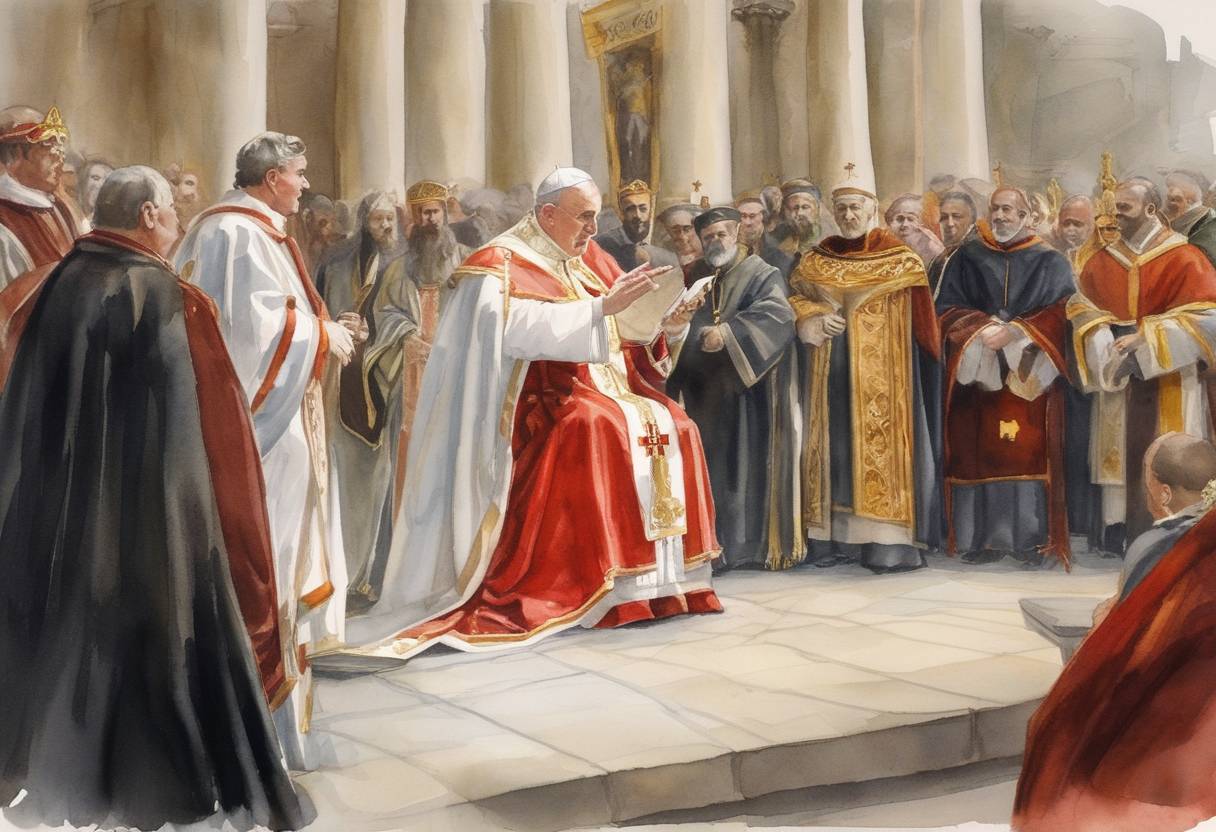
Election of Pope Anastasius I on November 27, 399
On November 27, 399, Anastasius I was elected as the Bishop of Rome, marking the beginning of his papacy, which lasted until his death in 401. His tenure as Pope is noted for his firm stance against the teachings of Origen, an early Christian theologian whose writings had become subjects of controversy within the Church.
Context and Background
Anastasius I ascended to the papacy during a period characterized by theological debates and power struggles within the early Christian Church. His election followed the papacy of Siricius, who had been focused on consolidating the authority of the Bishop of Rome over the broader Christian world. The theological landscape during this period was highly dynamic, with many doctrinal issues being actively discussed and debated.
Opposition to Origenism
One of the most significant aspects of Anastasius I’s papacy was his opposition to the teachings of Origen. Origen was an influential theologian and scholar of the early 3rd century whose works had both inspired and divided early Christians. His allegorical interpretations of Scripture and speculations about the pre-existence of souls were particularly contentious.
Anastasius I condemned Origen’s writings, reflecting a broader Church movement to delineate orthodox beliefs from what were increasingly seen as heterodox teachings. It is worth noting that while Origen himself had been respected by many early Christians, debates over his orthodoxy intensified over the centuries, eventually leading to widespread condemnation of some of his more controversial ideas.
Historical Significance
Anastasius I’s actions against Origenism exemplify the early Church’s efforts to establish clear and orthodox doctrinal teachings. His papacy highlights the critical role of the Bishop of Rome in guiding theological discourse and establishing ecclesiastical authority.
This period also set a precedent for later debates on orthodoxy within Christianity, demonstrating the complexities involved in balancing diverse theological ideas with the need for unified teachings. Additionally, it laid groundwork for future Councils and papal decisions that would continue to shape the doctrine of the Church.
Aftermath and Legacy
Anastasius I’s reign was brief, but his influence persisted in the continuing rejection of Origenistic teachings. After his death in 401, he was succeeded by Pope Innocent I, under whom these doctrinal clarifications continued.
Anastasius I’s papacy is often remembered for its defense of orthodoxy, reflecting the broader historical trend in which the Church sought to define and protect its foundational doctrines, setting a course for its development in the subsequent centuries.