The Berlin Airlift Begins: June 26, 1948
1948 · Berlin, Germany
The Berlin Airlift began as the Western Allies organized a massive airlift to supply West Berlin amidst a Soviet blockade.
September 30, 1949
The Berlin Airlift officially ended after 15 months.
Berlin, Germany | Allied Forces
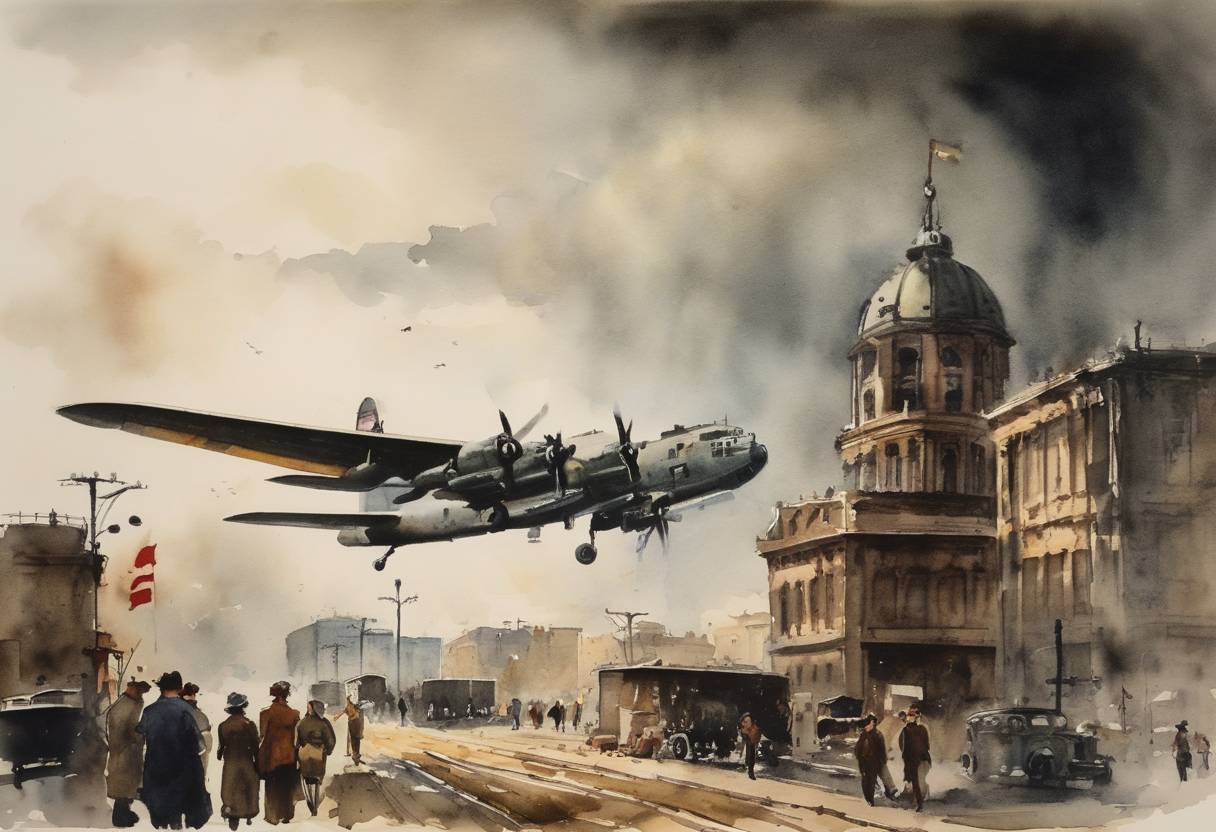
On September 30, 1949, the Berlin Airlift officially concluded after over a year of operation. This significant event marked the end of an intensive Allied effort to supply West Berlin amid a Soviet blockade, which had begun on June 24, 1948. The airlift was a strategic response to the Soviet Union’s attempt to exert control over the divided city by cutting off all land and water routes to the Western-held sectors.
Post-World War II, Germany was divided into occupation zones managed by the Allied Powers: the United States, the United Kingdom, France, and the Soviet Union. Berlin, although located deep within the Soviet-controlled Eastern zone, was similarly divided into four sectors. Tensions between the Soviet Union and the Western Allies escalated into a Cold War standoff, resulting in the Soviets imposing a blockade in an attempt to force the Western Allies out of Berlin.
In response to the Soviet blockade, the Western Allies initiated “Operation Vittles,” commonly known as the Berlin Airlift. This immense logistical campaign saw the use of hundreds of aircraft to deliver food, fuel, and other essential supplies to sustain the residents of West Berlin. At its peak, the airlift saw planes landing at Tempelhof Airport as frequently as every 30 seconds.
The airlift involved significant coordination and effort. More than 278,000 flights delivered in excess of 2.3 million tons of supplies, effectively demonstrating the Allies’ commitment to maintaining their presence in Berlin and supporting its citizens. The success of the operation not only alleviated the immediate crisis but also symbolized the determination of the Western powers against Soviet pressure.
The blockade was lifted by the Soviets on May 12, 1949, after they realized the airlift was effectively undermining their strategy. However, the airlift continued for several more months to build up a reserve of supplies in Berlin, culminating in its official end on September 30, 1949.
The conclusion of the Berlin Airlift was a significant event in the early Cold War era. It underscored the geopolitical rift between the Soviet Union and the Western Allies and solidified Berlin’s status as a focal point of Cold War tensions. Additionally, the airlift set a precedent for Allied cooperation and resolve, contributing to the formation of NATO in April 1949, an alliance aimed at collective defense against potential aggressions.
The Berlin Airlift remains a testament to ingenuity and human spirit, highlighting the role of air power in overcoming logistical challenges and underscoring the Allies’ commitment to defending democratic values during a period of profound global tension.
Source: en.wikipedia.org