The Paris Peace Conference: Opening on January 18, 1919
1919 · Paris, France
The Paris Peace Conference opened to negotiate peace treaties ending World War I, leading to the Treaty of Versailles.
December 13, 1918
President Woodrow Wilson arrives in France to participate in the World War I peace negotiations and the Versailles Treaty discussions.
Paris, France | United States Government
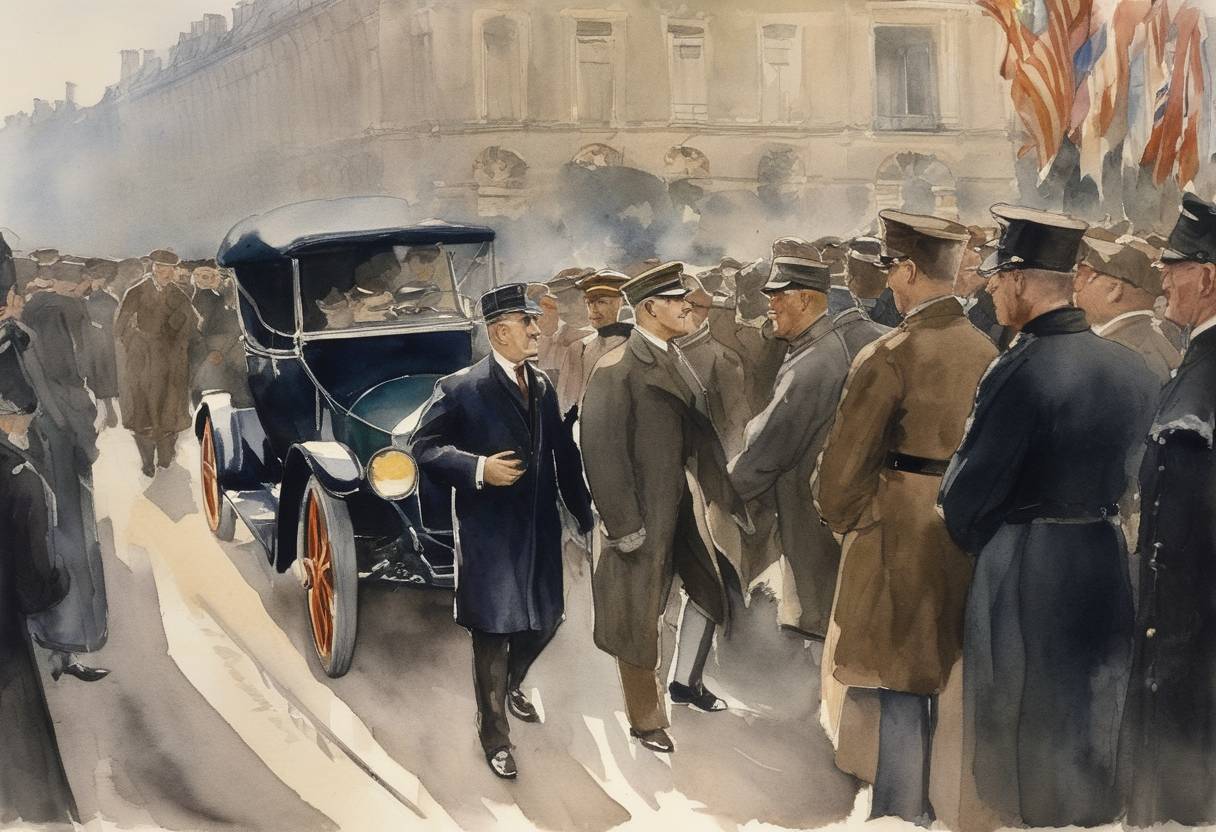
On December 13, 1918, President Woodrow Wilson disembarked in France, marking a pivotal moment in the post-World War I peace process. This event was significant as Wilson became the first sitting U.S. president to travel to Europe while in office, reflecting the importance and international focus on the peace negotiations following the end of World War I.
World War I had concluded on November 11, 1918, with the signing of the Armistice. As Europe transitioned from warfare to diplomacy, the Allied powers prepared for the peace conference intended to address the reconfiguration of European borders and the establishment of lasting peace. President Wilson’s arrival in France was particularly noteworthy due to his role in advocating for the League of Nations—a central element in his famous “Fourteen Points” speech, which outlined his vision for global peace and cooperation.
Wilson arrived aboard the USS George Washington, receiving an enthusiastic welcome at the port of Brest. His presence signified a new hope and a diplomatic shift as he was not merely a representative of the United States but a key figure in reshaping international relations post-war. Wilson’s arrival was met with cheering crowds, reflecting the optimistic view many Europeans held of his leadership and ideals at that time.
The main event following Wilson’s arrival was the Paris Peace Conference, which took place from January 1919 to January 1920. Wilson was a dominant force during the negotiations, focusing on promoting his vision of no secret treaties, reduction of arms, and most importantly, the formation of the League of Nations. These discussions eventually led to the drafting of the Treaty of Versailles.
Wilson’s participation in the peace negotiations underscored the United States’ emerging role as a significant world power involved in European affairs. While the Treaty of Versailles, signed in June 1919, eventually concluded World War I, it is important to note that Wilson faced challenges at home. The U.S. Senate ultimately rejected the treaty, mainly due to objections concerning the League of Nations, and the U.S. established separate peace treaties with the Central Powers later.
Wilson’s trip to France on December 13, 1918, thus represents a key moment not only in diplomatic history but also in the growing involvement of the United States in global peacekeeping efforts and international relations.
Source: www.history.com