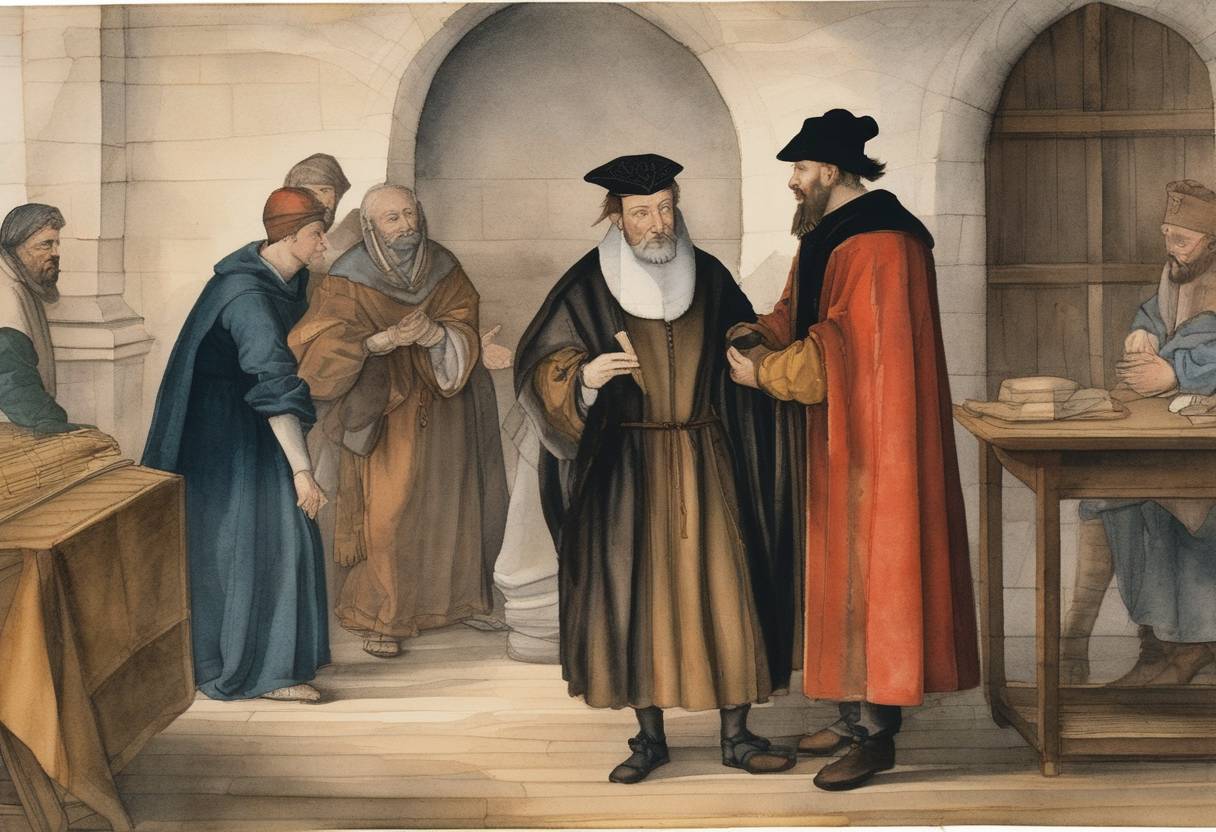
Arrest of Michael Servetus on September 13, 1553
Michael Servetus, a Spanish theologian, physician, and Renaissance humanist, was arrested in Geneva on September 13, 1553, by the Protestant reformer John Calvin. This arrest marked a significant episode in the history of the Protestant Reformation and the broader discourse on religious tolerance and doctrinal orthodoxy during the 16th century.
Background
Servetus had a contentious history with religious authorities due to his radical theological views. Educated in Catholic institutions, he rejected the doctrine of the Trinity, a core Christian belief, which he publicly criticized in his work De Trinitatis Erroribus (On the Errors of the Trinity) published in 1531. This publication, among others, earned him the ire of both Catholic and Protestant leaders.
Despite being condemned by the Inquisition in Spain, Servetus continued to disseminate his unconventional beliefs. He sought refuge and anonymity but remained engaged in theological debates, notably corresponding with Calvin. These correspondences eventually contributed to his downfall, as Servetus’s critiques and assertions were seen as heretical by the mainstream Protestant establishment.
The Arrest
In 1553, Servetus had already been tried and condemned to death for heresy in absentia by the Catholic Inquisition in France, but he escaped from incarceration. Fleeing towards Italy, he passed through Geneva, where his presence was discovered. Understanding the volatile religious climate, his choice to enter Geneva, a stronghold of Calvinism under the stringent leadership of Calvin, was perilous.
Upon arrival in Geneva, Servetus attended a sermon led by Calvin at St. Pierre’s Cathedral, where he was recognized. Calvin, who had warned the city authorities of Servetus’s presence, ensured his arrest. The charges leveled against Servetus included heresy and blasphemy, specifically due to his denial of the Trinity and his attacks on infant baptism.
Trial and Aftermath
Servetus’s trial in Geneva was a watershed moment, as it pitted the ideals of religious reform against the entrenched institutional power held by reformist authorities like Calvin. Despite the efforts of friends and advocates, Servetus was convicted and sentenced to death by burning, a common penalty for heresy at the time.
This event has since been a focal point for discussions on religious intolerance during the Reformation. It illustrated the limits of doctrinal tolerance among the leaders of the Protestant Reformation, underscoring the dynamics of power, belief, and punishment that shaped religious discourse in early modern Europe.
Servetus’s execution was controversial, even among early Protestants, reflecting broader tensions between the pursuit of religious truth and the prerogatives of religious authority. This incident continues to be analyzed by historians as a critical junction in the history of religious freedom and the complex legacy of the Reformation era.