Dwight D. Eisenhower Appointed Supreme Allied Commander in Europe
1943 · Washington D.C., United States
Dwight D. Eisenhower was appointed Supreme Allied Commander in Europe during World War II.
January 14, 1943
The Casablanca Conference began during World War II, where Allied leaders planned the next phase of the war.
Casablanca, Morocco | Allied Forces
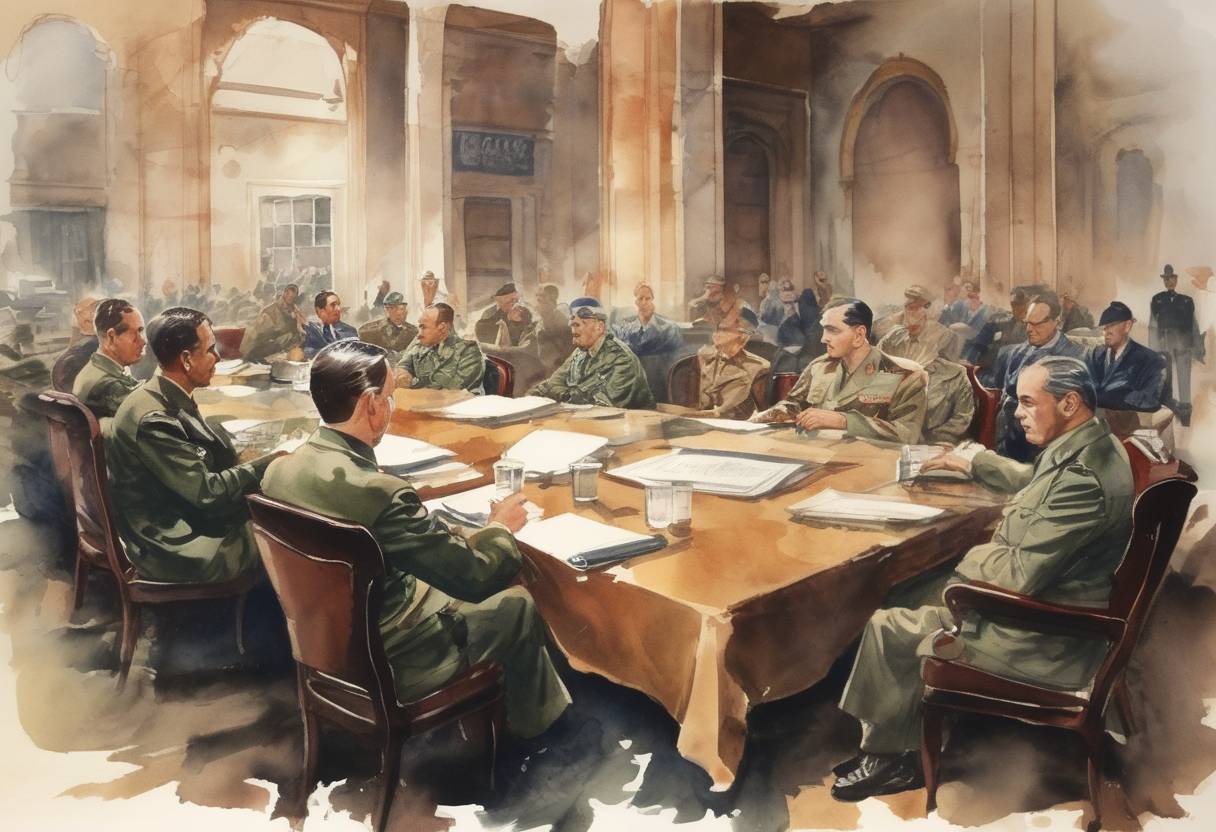
The Casablanca Conference, held from January 14 to January 24, 1943, was a pivotal meeting during World War II where Allied leaders gathered to strategize the next phase of the war against the Axis powers. The conference took place in Casablanca, Morocco, and was attended by key figures such as U.S. President Franklin D. Roosevelt and British Prime Minister Winston Churchill. Notably, Soviet Premier Joseph Stalin was invited but did not attend due to the ongoing Battle of Stalingrad.
By early 1943, the Allies had achieved significant victories in North Africa, and the tide of the war was beginning to turn in their favor. The Casablanca Conference was convened to capitalize on these successes and to coordinate the military efforts of the Allies more effectively. The meeting aimed to address strategic military operations and to discuss political and diplomatic issues related to the war.
Unconditional Surrender: One of the most significant outcomes of the Casablanca Conference was the announcement of the policy of “unconditional surrender.” This declaration, primarily advocated by Roosevelt, meant that the Allies would not negotiate separate peace terms with the Axis powers. The policy was intended to reassure the Soviet Union of the Allies’ commitment and to prevent any Axis power from seeking a separate peace.
Strategic Military Planning: The conference focused on the next steps in the European and Pacific theaters. The leaders agreed to prioritize the defeat of Nazi Germany before focusing on Japan. Plans were made for the invasion of Sicily (Operation Husky), which would later lead to the Allied invasion of Italy.
Coordination of Resources: The conference also addressed the allocation of resources and the coordination of military production among the Allies. This included discussions on the deployment of forces and the sharing of intelligence.
Support for Resistance Movements: The Allies agreed to increase support for resistance movements in occupied Europe, recognizing their role in undermining Axis control and gathering intelligence.
The Casablanca Conference marked a turning point in World War II, as it solidified the Allied commitment to a unified strategy and set the stage for future military operations. The policy of unconditional surrender would later shape the post-war landscape, influencing the terms of peace and the reconstruction of Europe.
The decisions made at Casablanca demonstrated the growing cooperation between the United States and the United Kingdom, laying the groundwork for future Allied conferences, such as those in Tehran and Yalta. The conference also highlighted the complexities of Allied diplomacy, particularly in balancing the interests of the major powers involved in the war effort.
In summary, the Casablanca Conference was a crucial moment in World War II, reflecting the Allies’ determination to achieve total victory and shaping the strategic direction of the war in the years to come.
Source: en.wikipedia.org