Construction of the Golden Gate Bridge Begins
1933 · San Francisco, United States
Construction of the Golden Gate Bridge begins.
May 27, 1937
The Golden Gate Bridge in San Francisco, California, is opened to pedestrian traffic.
San Francisco, United States | Golden Gate Bridge, Highway and Transportation District
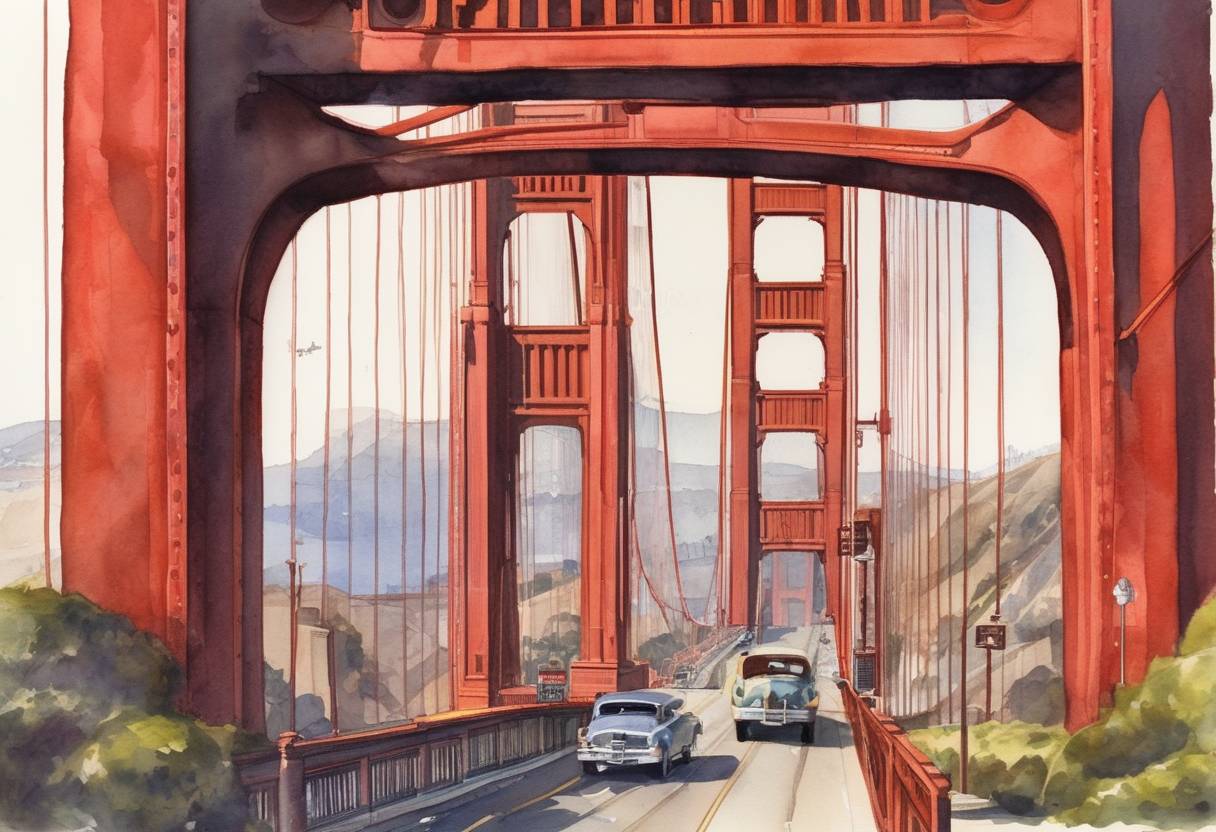
On May 27, 1937, the Golden Gate Bridge in San Francisco, California, was opened to pedestrian traffic, marking a significant milestone in American engineering and infrastructure. This event was part of a week-long celebration known as “Golden Gate Bridge Fiesta,” which culminated in the official opening to vehicular traffic the following day, May 28, 1937.
The idea for the Golden Gate Bridge emerged in the early 20th century as a solution to the transportation challenges posed by the natural barrier of the Golden Gate Strait, which separates San Francisco from Marin County. Prior to the bridge’s construction, ferries were the primary means of crossing the strait.
Joseph Strauss: The chief engineer of the project, Strauss was instrumental in the bridge’s design and construction. Although initially proposing a hybrid cantilever-suspension design, he eventually adopted a full suspension design with input from other engineers and architects.
Irving Morrow: An architect who contributed to the Art Deco styling of the bridge, including its iconic International Orange color, which was chosen for visibility in San Francisco’s frequent fog.
Leon Moisseiff: A consulting engineer who played a crucial role in refining the suspension design.
Construction of the bridge began on January 5, 1933, and faced numerous challenges, including strong tides, deep water, and frequent fog. Despite these obstacles, the project was completed ahead of schedule and under budget, costing approximately $35 million.
On May 27, 1937, the bridge was opened exclusively to pedestrians. An estimated 200,000 people walked across the 1.7-mile span, taking in the breathtaking views of the San Francisco Bay. The event was a festive occasion, with bands, parades, and various celebrations marking the achievement.
The Golden Gate Bridge quickly became an iconic symbol of San Francisco and an engineering marvel of its time. At the time of its completion, it was the longest and tallest suspension bridge in the world, with a main span of 4,200 feet and towers reaching 746 feet above the water.
The successful completion of the Golden Gate Bridge had a profound impact on the region, facilitating economic growth and development in the Bay Area. It remains a vital transportation link and a popular tourist attraction, drawing millions of visitors each year.
The Golden Gate Bridge is celebrated not only for its engineering achievements but also for its aesthetic appeal and cultural significance. It stands as a testament to human ingenuity and perseverance, continuing to inspire awe and admiration nearly a century after its opening.
The bridge’s opening to pedestrian traffic on May 27, 1937, remains a landmark event in the history of American infrastructure, symbolizing progress and the unyielding spirit of innovation.
Source: www.history.com