The Indictment of John T. Scopes: May 25, 1925
1925 · Dayton, United States
John T. Scopes is indicted for teaching evolution in violation of Tennessee's Butler Act, leading to the famous Scopes Trial.
March 13, 1925
The Tennessee General Assembly passed the Butler Act, prohibiting public school teachers from denying the Biblical account of mankind's origin, setting the stage for the Scopes Trial.
Nashville, United States | Tennessee General Assembly
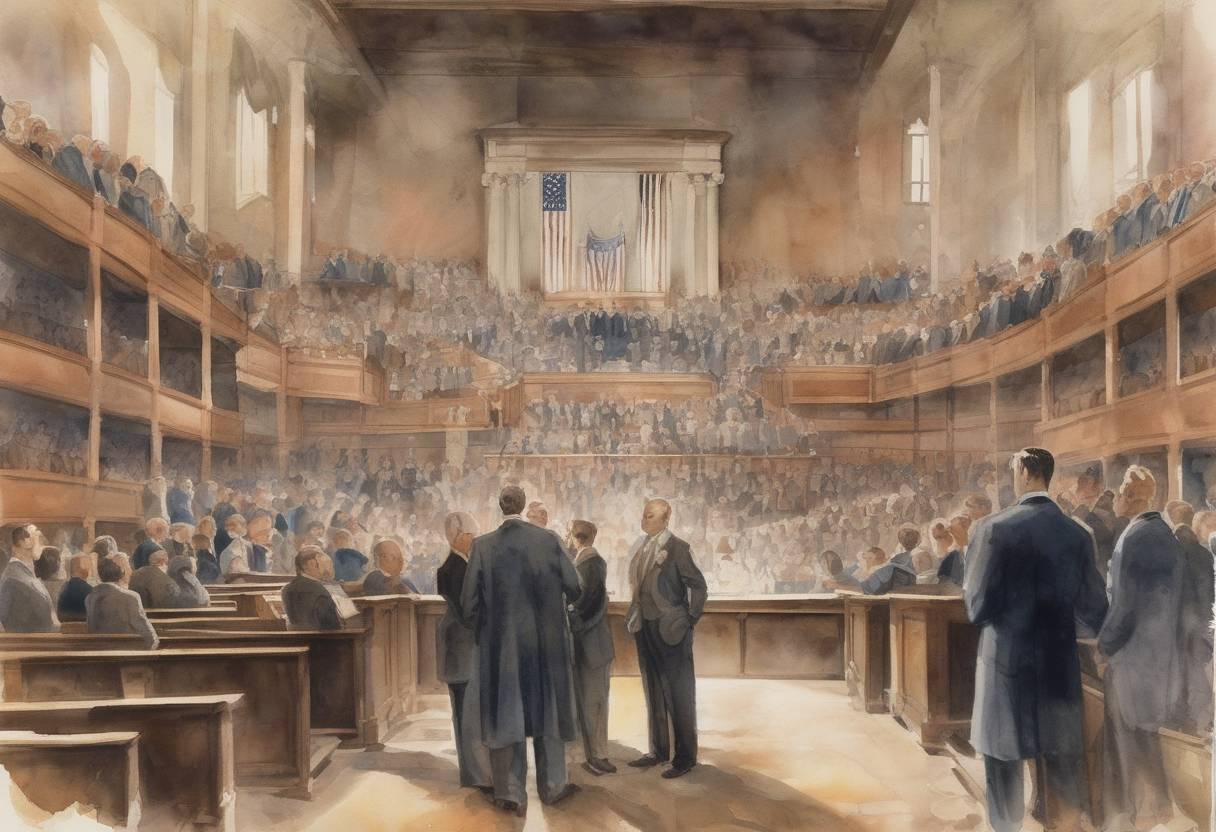
On March 13, 1925, the Tennessee General Assembly passed the Butler Act, a significant piece of legislation that would later become the focal point of the famous Scopes Trial. This act prohibited public school teachers in Tennessee from denying the Biblical account of mankind’s origin, specifically targeting the teaching of evolution as proposed by Charles Darwin.
The early 20th century in the United States was a period marked by cultural and intellectual shifts. The theory of evolution, first articulated by Charles Darwin in the 19th century, had gained substantial traction in scientific communities and educational institutions. However, it faced strong opposition from religious groups who viewed it as contradictory to the Biblical creation narrative.
The rise of fundamentalist Christianity during this era led to increased efforts to maintain religious teachings in public education. The Butler Act, named after its sponsor, State Representative John Washington Butler, was a direct response to these tensions. It reflected the broader cultural clash between modernist and traditionalist perspectives.
The Butler Act made it unlawful for public school teachers “to teach any theory that denies the story of the Divine Creation of man as taught in the Bible, and to teach instead that man has descended from a lower order of animals.” The law was part of a broader movement to legislate morality and religious beliefs into public policy.
The passage of the Butler Act set the stage for the Scopes Trial, also known as the “Scopes Monkey Trial,” which took place in 1925. The trial was a pivotal moment in the debate over science and religion in American public life. John T. Scopes, a high school teacher in Dayton, Tennessee, was charged with violating the Butler Act by teaching evolution in his classroom.
The trial attracted national attention, featuring prominent figures such as Clarence Darrow, who defended Scopes, and William Jennings Bryan, who argued for the prosecution. The trial was not only a legal battle but also a public spectacle, symbolizing the broader conflict between science and religion.
Although Scopes was found guilty and fined $100, the trial had far-reaching implications. It sparked a nationwide debate on the role of science and religion in education and highlighted the tension between progressive and conservative values in American society.
The Butler Act remained in effect until 1967 when it was repealed. The Scopes Trial, however, left a lasting legacy, influencing future discussions on educational curricula and the separation of church and state.
In conclusion, the passage of the Butler Act on March 13, 1925, was a critical moment in American history, reflecting the cultural and ideological battles of the time. It set the stage for the Scopes Trial, a landmark event that continues to resonate in discussions about education, science, and religion.
Source: en.wikipedia.org