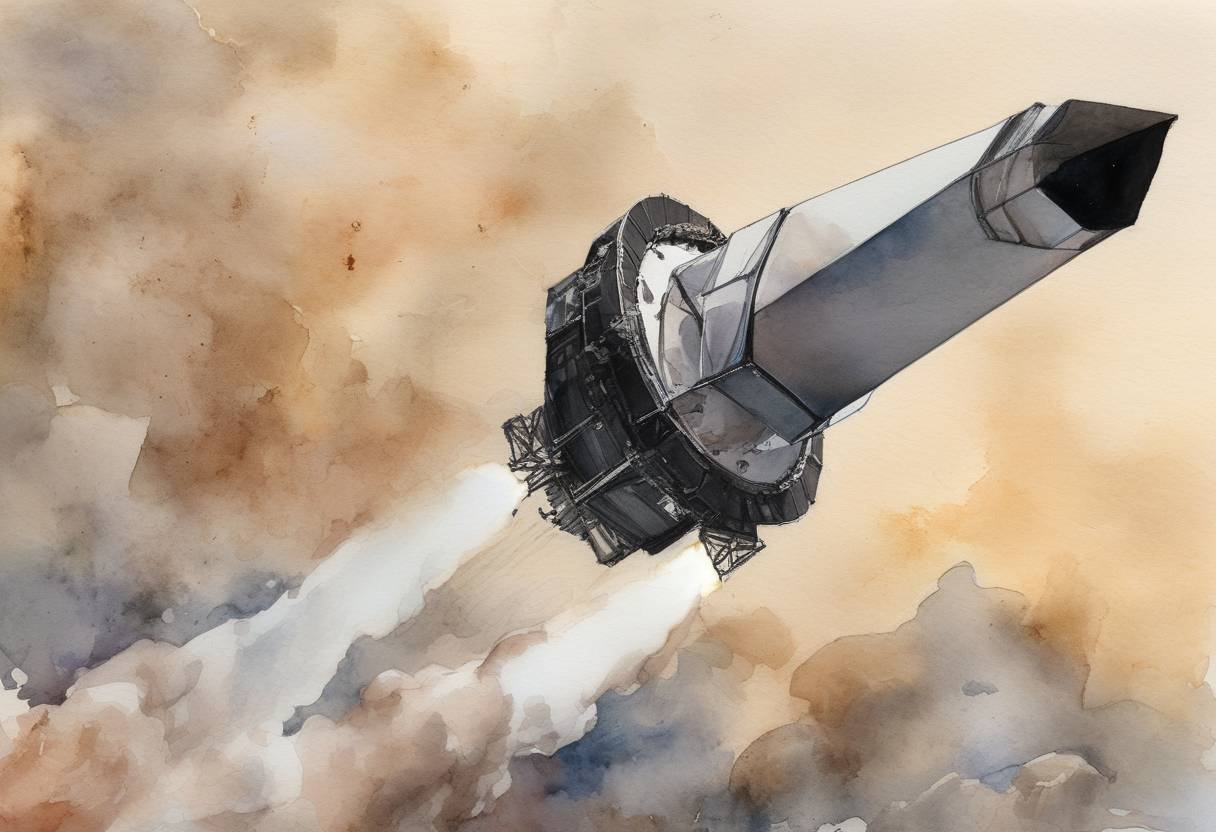
NASA’s OSIRIS-REx Mission Launch on September 8, 2016
On September 8, 2016, NASA successfully launched the OSIRIS-REx spacecraft from Cape Canaveral Air Force Station in Florida. This marked a significant milestone as NASA’s first mission aimed at returning samples from an asteroid to Earth. The target of this ambitious mission was the near-Earth asteroid Bennu.
Background and Objectives
The OSIRIS-REx mission, which stands for Origins, Spectral Interpretation, Resource Identification, Security, Regolith Explorer, was designed with several key objectives:
- Sample Collection: The primary goal was to collect at least 60 grams (2.1 ounces) of surface material from Bennu and return it to Earth for detailed analysis.
- Understanding Asteroids: By studying Bennu, scientists aimed to gain insights into the early solar system’s formation and the organic compounds that may have contributed to the origin of life on Earth.
- Resource Identification: The mission sought to identify resources such as water and organic materials that could be useful for future space exploration.
- Security: Bennu is classified as a potentially hazardous asteroid, and understanding its orbit and properties could help in developing strategies to mitigate potential future impacts with Earth.
Key Events Leading to the Launch
- Mission Planning: The mission was conceptualized in the early 2000s, with NASA selecting it as part of its New Frontiers program in 2011.
- Development and Construction: Lockheed Martin Space Systems was contracted to build the spacecraft, which was equipped with a suite of scientific instruments designed to map Bennu’s surface, analyze its composition, and collect samples.
The Launch
- Launch Vehicle: OSIRIS-REx was launched aboard an Atlas V rocket, a reliable vehicle known for its capability to deliver payloads to a variety of orbits.
- Launch Time: The launch occurred at 7:05 PM EDT, and the spacecraft was successfully placed on a trajectory towards Bennu.
Mission Timeline and Achievements
- Approach and Survey: OSIRIS-REx arrived at Bennu in December 2018, beginning a detailed survey of the asteroid to select a suitable site for sample collection.
- Sample Collection: On October 20, 2020, the spacecraft successfully performed a touch-and-go (TAG) maneuver, collecting samples from Bennu’s surface.
- Return Journey: After completing its mission objectives, OSIRIS-REx began its return journey to Earth in May 2021, with the sample capsule expected to land in September 2023.
Broader Historical Significance
The OSIRIS-REx mission represents a significant advancement in planetary science and exploration. By returning samples from Bennu, scientists hope to unlock secrets about the building blocks of our solar system and the potential for life beyond Earth. Additionally, the mission’s success paves the way for future asteroid exploration and resource utilization, which could be crucial for long-term human presence in space.
In summary, the launch of OSIRIS-REx on September 8, 2016, was a pivotal moment in space exploration, setting the stage for groundbreaking discoveries and technological advancements in the study of asteroids.