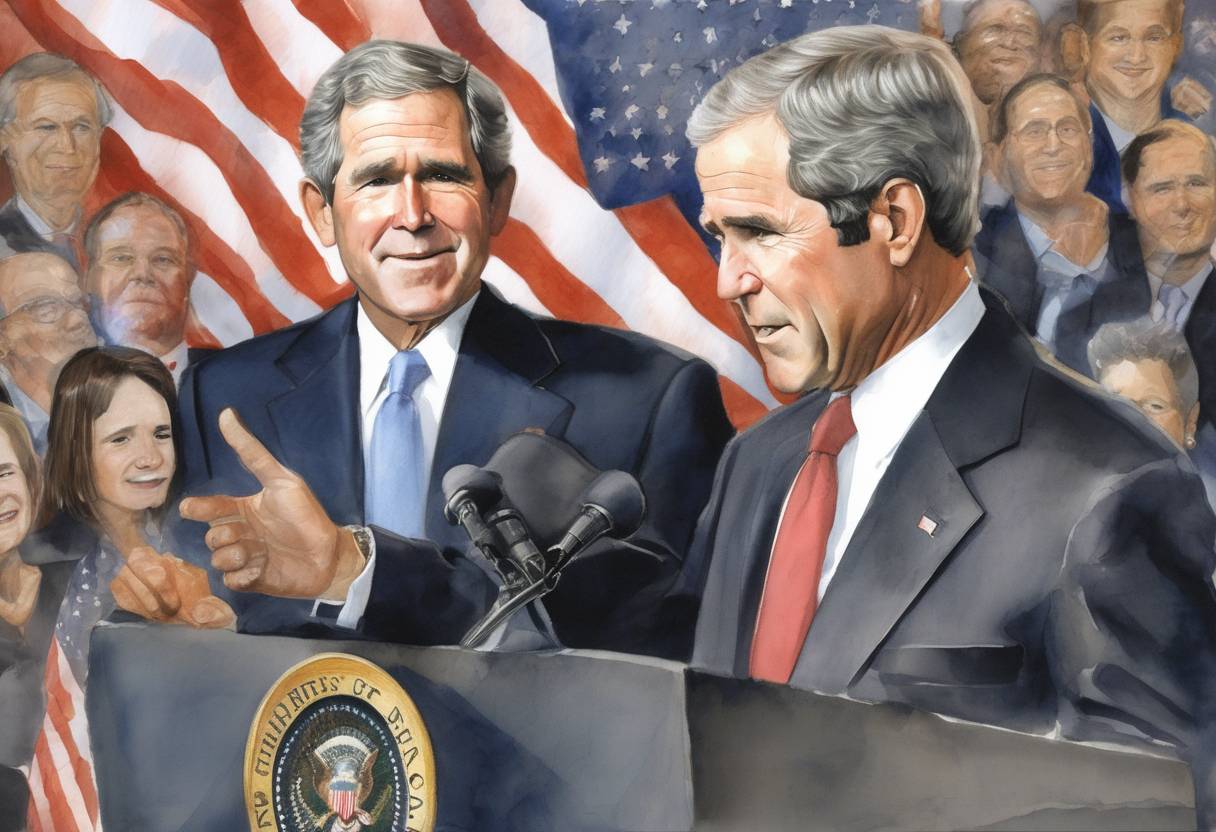
George W. Bush’s Re-election: November 2, 2004
On November 2, 2004, George W. Bush was re-elected as the President of the United States, defeating Democratic candidate John Kerry in a closely contested presidential election. This election was significant for several reasons, reflecting the political climate of the early 21st century and the issues that dominated American discourse at the time.
Context Leading Up to the Election
Post-9⁄11 America: The election took place in the shadow of the September 11, 2001, terrorist attacks. National security and the ongoing War on Terror were central themes in the campaign.
Iraq War: The U.S. invasion of Iraq in 2003 and the subsequent occupation were contentious issues. Bush’s administration faced criticism over the justification for the war and its handling.
Economic Concerns: The economy was recovering from the early 2000s recession, but issues like job outsourcing and healthcare were significant concerns for voters.
Key Events of the Election
Campaign Strategies: Bush’s campaign focused on his leadership during the War on Terror and his tax cuts, which he argued were stimulating economic growth. Kerry, a senator from Massachusetts, criticized Bush’s foreign policy and promised to improve healthcare and reduce the deficit.
Debates: The presidential debates were pivotal, with Kerry often seen as the more effective debater. However, Bush’s message of steadfast leadership resonated with many voters.
Voter Turnout: The 2004 election saw a high voter turnout, with over 120 million Americans casting their votes, reflecting the polarized nature of the electorate.
Election Results
Electoral College: Bush secured 286 electoral votes to Kerry’s 251. The key battleground state of Ohio, with its 20 electoral votes, was crucial to Bush’s victory.
Popular Vote: Bush won the popular vote with approximately 62 million votes (50.7%), while Kerry received about 59 million votes (48.3%).
Aftermath and Significance
Second Term Challenges: Bush’s second term was marked by continued challenges in Iraq, Hurricane Katrina, and the financial crisis of 2007-2008.
Political Landscape: The election underscored the deep political divisions in the United States, a trend that would continue in subsequent elections.
Legacy: Bush’s re-election solidified his administration’s policies on national security and tax cuts, influencing American politics and policy for years to come.
The 2004 election remains a critical moment in U.S. history, illustrating the complexities of post-9⁄11 America and the enduring impact of domestic and international policies on presidential politics.