1993 · Palermo, Italy
In an effort to curb the rising power of organized crime, the Italian police arrested Salvatore Riina, one of the most powerful Mafia bosses in Sicily.
July 19, 1992
A car bomb exploded in the city of Milan, Italy, killing Judge Paolo Borsellino and five members of his police escort, an event that was part of the larger Mafia-related violence in Italy.
Milan, Italy | Mafia
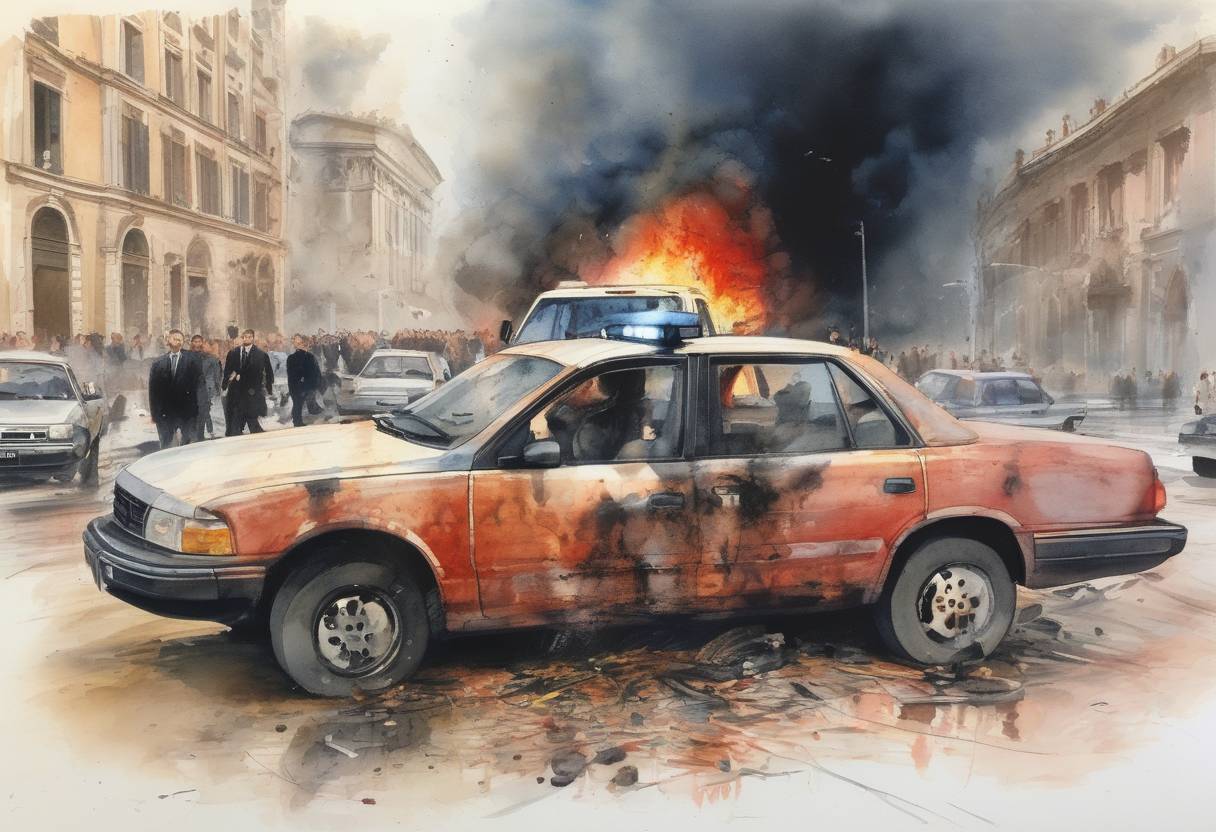
On July 19, 1992, a devastating car bomb explosion in Palermo, Sicily, not Milan, tragically claimed the life of Judge Paolo Borsellino and five members of his police escort. This event was a significant episode in the ongoing struggle against Mafia-related violence in Italy.
Paolo Borsellino was a prominent Italian magistrate known for his relentless fight against the Sicilian Mafia, also known as “Cosa Nostra.” Alongside his close colleague and friend, Judge Giovanni Falcone, Borsellino played a crucial role in the Maxi Trial (1986-1987), which led to the conviction of numerous Mafia members. This trial marked a turning point in Italy’s battle against organized crime, as it was one of the first times the Mafia faced significant legal repercussions.
The assassination of Giovanni Falcone on May 23, 1992, in a similar car bombing, had already sent shockwaves through Italy. Borsellino’s murder, just two months later, underscored the Mafia’s determination to retaliate against those who challenged their power.
On that fateful day, Borsellino was visiting his mother’s house in Via D’Amelio, Palermo. As he and his escort arrived, a car packed with explosives was detonated by remote control. The explosion killed Borsellino and five members of his escort: Agostino Catalano, Emanuela Loi, Vincenzo Li Muli, Walter Eddie Cosina, and Claudio Traina. The attack was a calculated move by the Mafia to eliminate one of their most formidable adversaries.
The murders of Falcone and Borsellino galvanized public opinion in Italy against the Mafia. Massive public demonstrations and calls for justice led to increased efforts by the Italian government to combat organized crime. The deaths of these two judges became a symbol of the sacrifice and courage required to confront the Mafia.
In the years following Borsellino’s assassination, several Mafia members were arrested and convicted for their roles in the killings. The Italian government also implemented stricter anti-Mafia laws and increased resources for law enforcement agencies dedicated to fighting organized crime.
The assassinations of Falcone and Borsellino were pivotal in Italy’s history, marking a turning point in the fight against the Mafia. Their legacy continues to inspire anti-Mafia movements and reforms in Italy and beyond. The courage and dedication of these judges have been commemorated in various ways, including memorials, films, and educational programs aimed at raising awareness about the dangers of organized crime.
The events of July 19, 1992, remain a stark reminder of the ongoing battle against organized crime and the sacrifices made by those who dare to challenge its power.
Source: en.wikipedia.org