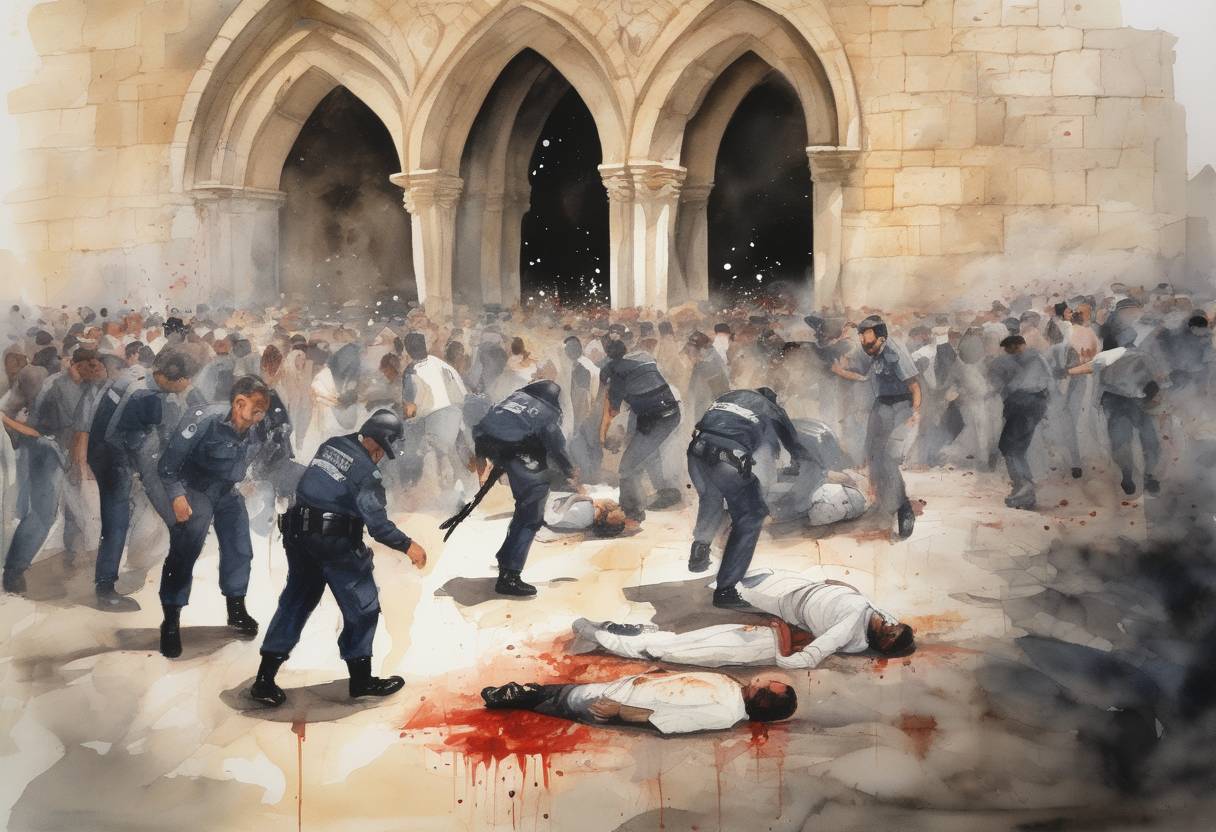
The Al-Aqsa Massacre: October 8, 1990
On October 8, 1990, a tragic and violent event unfolded at the Al-Aqsa Mosque in Jerusalem, resulting in the deaths of 17 Palestinian worshippers and injuries to over 100 others. This incident, known as the Al-Aqsa Massacre, marked a significant and somber moment in the Israeli-Palestinian conflict.
Context Leading Up to the Event
The Al-Aqsa Mosque, located in the Old City of Jerusalem, is one of the holiest sites in Islam and a focal point of religious and political tensions. The late 1980s and early 1990s were a period of heightened conflict, as the First Intifada, a Palestinian uprising against Israeli occupation, was ongoing. Tensions were particularly high in Jerusalem, a city sacred to Jews, Christians, and Muslims alike.
In the days leading up to October 8, rumors and tensions had been escalating. A Jewish group, the Temple Mount Faithful, had announced plans to lay a cornerstone for a Third Temple on the Temple Mount, a site that includes the Al-Aqsa Mosque. This announcement was perceived as a provocation by many Palestinians and Muslims, given the site’s religious significance and the political implications of such an act.
The Events of October 8, 1990
On the morning of October 8, thousands of Palestinian worshippers gathered at the Al-Aqsa Mosque for prayers. The atmosphere was tense, with a heavy presence of Israeli police and security forces in the area, anticipating potential unrest due to the planned activities of the Temple Mount Faithful.
The situation escalated rapidly when a confrontation broke out between Palestinian worshippers and Israeli police. The exact sequence of events remains disputed, but it is reported that stones were thrown by some of the worshippers, prompting a forceful response from the Israeli police. The police opened fire with live ammunition, rubber bullets, and tear gas into the crowd of worshippers.
Aftermath and Consequences
The immediate aftermath of the violence was devastating: 17 Palestinians were killed, and more than 100 were wounded. The incident drew widespread international condemnation and further inflamed tensions between Israelis and Palestinians.
The United Nations Security Council convened to address the incident, resulting in Resolution 672, which condemned the actions of the Israeli security forces and called for an investigation. Israel, however, rejected the resolution and the call for a UN investigation.
The Al-Aqsa Massacre intensified the ongoing conflict and contributed to the already volatile atmosphere of the First Intifada. It also underscored the deep-seated religious and political tensions surrounding the Temple Mount, a flashpoint that continues to be a source of conflict in the region.
Broader Historical Significance
The Al-Aqsa Massacre is a poignant reminder of the complexities and sensitivities involved in the Israeli-Palestinian conflict. It highlights the intersection of religious significance and political sovereignty that characterizes the struggle over Jerusalem. The event remains a significant reference point in discussions about peace, justice, and reconciliation in the region.
In summary, the Al-Aqsa Massacre of October 8, 1990, was a tragic event that underscored the volatility of the Israeli-Palestinian conflict and the profound impact of religious and political tensions on the lives of those in the region.