The Battle of Caporetto: October 26, 1917
1917 · Caporetto, Italy
The Battle of Caporetto began during World War I, where Austro-Hungarian and German forces broke through Italian lines, leading to a significant defeat for Italy.
March 3, 1918
The Treaty of Brest-Litovsk is signed between Soviet Russia and the Central Powers, marking Russia's exit from World War I.
Brest-Litovsk, Belarus | Central Powers
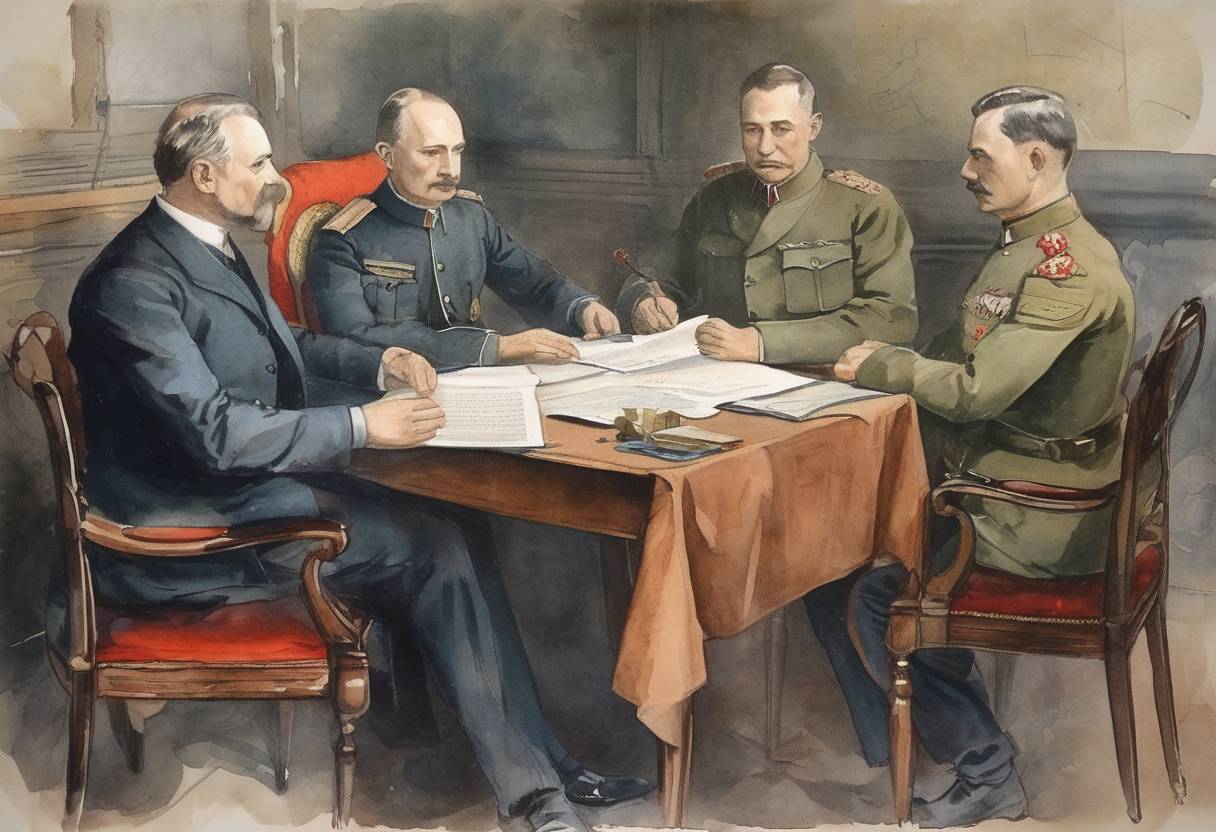
On March 3, 1918, the Treaty of Brest-Litovsk was signed between Soviet Russia and the Central Powers, marking a pivotal moment in World War I as it signaled Russia’s exit from the conflict. This treaty had significant implications for the war and the future of Eastern Europe.
Russian Revolution: The treaty came in the wake of the Russian Revolution of 1917, which saw the Bolsheviks, led by Vladimir Lenin, seize power. The new Soviet government was eager to withdraw from World War I to focus on consolidating power and addressing internal issues.
Military Situation: By 1917, Russia was exhausted from the war effort, suffering from severe military defeats, economic turmoil, and widespread social unrest. The Bolsheviks had promised peace, and exiting the war was a priority.
Negotiations: Peace negotiations began in December 1917 in Brest-Litovsk, a city in modern-day Belarus. The talks were complex, with the Central Powers, particularly Germany, demanding significant territorial concessions.
Territorial Losses: Russia ceded vast territories to the Central Powers, including Finland, the Baltic states (Estonia, Latvia, Lithuania), parts of Poland, and Ukraine. This resulted in a significant loss of population and resources for Russia.
Economic Impact: The treaty imposed harsh economic terms on Russia, including the payment of reparations and the loss of industrial regions, exacerbating the country’s economic difficulties.
Military Clauses: Russia agreed to demobilize its army and navy, further weakening its military capabilities.
Impact on World War I: The treaty allowed Germany to shift its focus and resources to the Western Front, temporarily strengthening its position in the war. However, the eventual entry of the United States into the conflict and the continued resilience of the Allies led to the Central Powers’ defeat later in 1918.
Political Repercussions: The treaty was deeply unpopular in Russia and contributed to internal dissent against the Bolshevik regime. It also set the stage for future conflicts in Eastern Europe, as the territorial changes were not recognized by the Allies and were later reversed by the Treaty of Versailles in 1919.
Legacy: The Treaty of Brest-Litovsk is often viewed as a pragmatic but controversial decision by the Bolsheviks, prioritizing the survival of their nascent regime over territorial integrity. It highlighted the complexities of peace negotiations and the harsh realities of wartime diplomacy.
In summary, the Treaty of Brest-Litovsk was a significant event in World War I, marking Russia’s exit from the war and reshaping the geopolitical landscape of Eastern Europe. Its consequences were felt long after the war ended, influencing the region’s political dynamics for years to come.
Source: en.wikipedia.org