Hosni Mubarak's Resignation: February 11, 2011
2011 · Cairo, Egypt
Egyptian President Hosni Mubarak resigned after 18 days of mass protests, ending his 30-year rule.
October 14, 1981
Hosni Mubarak was elected President of Egypt, following the assassination of Anwar Sadat.
Cairo, Egypt | Egyptian Government
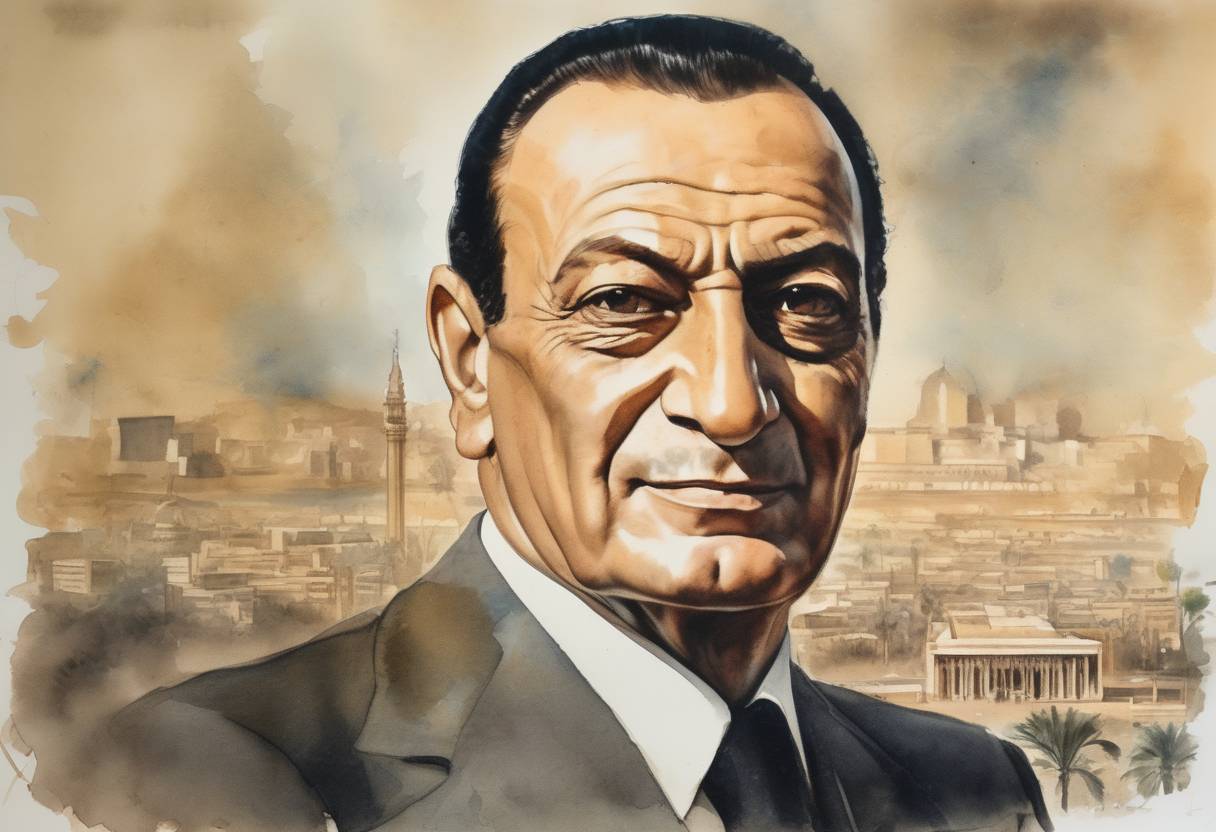
On October 14, 1981, Hosni Mubarak was elected as the President of Egypt, following the assassination of his predecessor, Anwar Sadat. This event marked a significant transition in Egyptian politics and had lasting implications for the country’s domestic and international policies.
Anwar Sadat’s Assassination: On October 6, 1981, President Anwar Sadat was assassinated during a military parade in Cairo. The attack was carried out by members of the Egyptian Islamic Jihad, who opposed Sadat’s peace treaty with Israel and his crackdown on Islamist groups.
Mubarak’s Rise: Prior to his presidency, Hosni Mubarak served as Vice President of Egypt from 1975 under Sadat. His military background and close association with Sadat positioned him as a natural successor in the wake of the assassination.
Emergency Situation: Following Sadat’s assassination, Egypt was in a state of emergency. The need for stability and continuity was paramount, which facilitated Mubarak’s swift election by the People’s Assembly.
Formal Election: Mubarak was formally elected by a national referendum, a process that was largely seen as a formality given the political climate and the structure of the Egyptian political system at the time.
Initial Policies: Mubarak initially focused on maintaining stability and continuity in Egypt. He upheld Sadat’s policies, including the peace treaty with Israel, while also working to improve relations with other Arab nations.
Domestic Focus: Mubarak’s early years in office were marked by efforts to revive the Egyptian economy and address internal security concerns, particularly the threat posed by Islamist militant groups.
Longevity in Power: Mubarak would go on to rule Egypt for nearly 30 years, becoming one of the longest-serving leaders in the Arab world. His presidency was characterized by a mix of economic liberalization and political repression.
Arab Spring: Mubarak’s rule eventually ended in 2011 during the Arab Spring, a series of anti-government protests that swept across the Arab world. His resignation marked a significant turning point in Egyptian history and highlighted the growing demand for democratic reforms in the region.
Legacy: Mubarak’s presidency remains a subject of debate, with discussions focusing on his economic policies, human rights record, and the political stability he maintained at the cost of democratic freedoms.
In summary, Hosni Mubarak’s election as President of Egypt on October 14, 1981, was a pivotal moment in the country’s history, setting the stage for nearly three decades of his leadership and influencing the political landscape of the Middle East.
Source: en.wikipedia.org