1917 · Washington, D.C., United States
The United States Congress passes the Immigration Act of 1917, which restricts immigration by imposing literacy tests and barring immigrants from Asia.
May 19, 1921
The United States Congress passed the Emergency Quota Act, establishing national immigration quotas.
Washington, D.C., United States | United States Congress
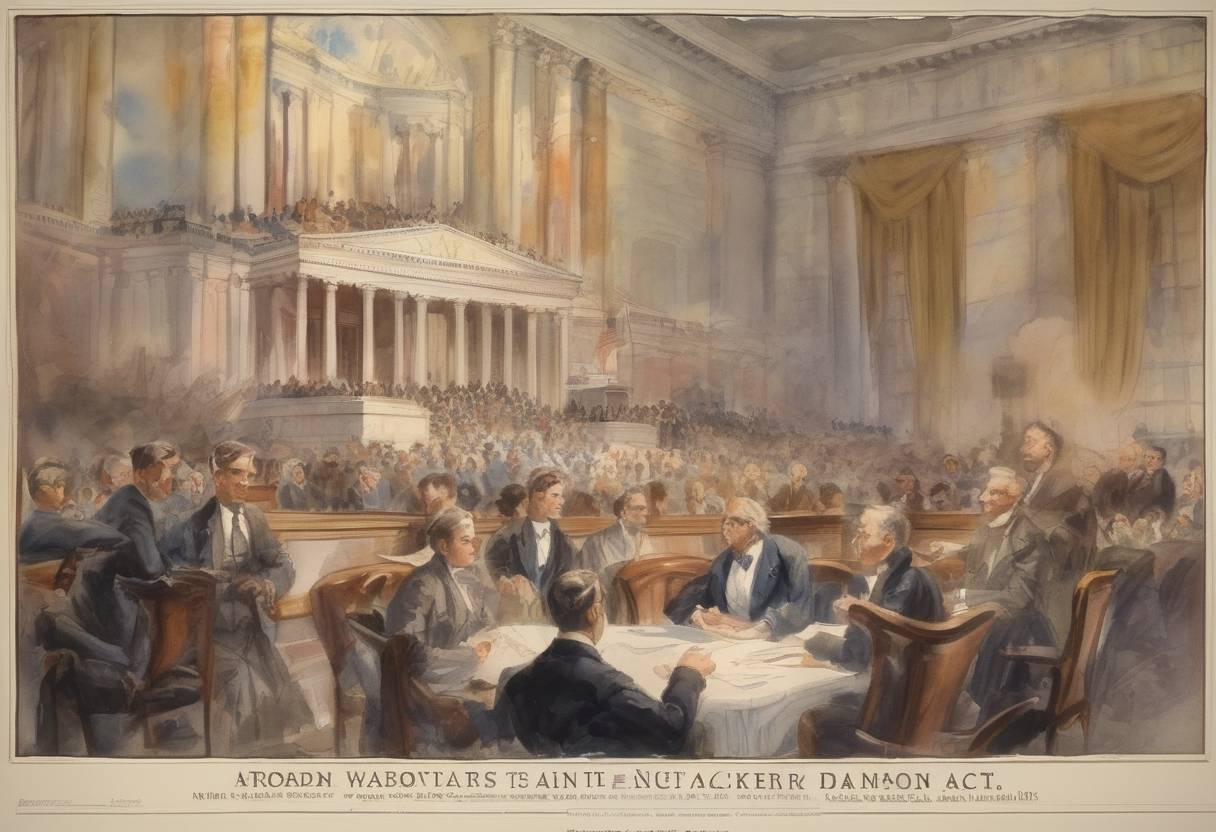
On May 19, 1921, the United States Congress passed the Emergency Quota Act, a significant piece of legislation that marked a pivotal shift in American immigration policy. This act was one of the first major attempts by the U.S. government to regulate the influx of immigrants through a quota system.
In the early 20th century, the United States experienced a massive wave of immigration, primarily from Southern and Eastern Europe. This influx led to growing concerns among native-born Americans about economic competition, cultural differences, and the perceived inability of these new immigrants to assimilate. These anxieties were compounded by the aftermath of World War I and the Red Scare, which heightened fears of radical political ideologies entering the country.
The Emergency Quota Act aimed to address these concerns by establishing numerical limits on immigration. Key provisions included:
Quota System: The act introduced a quota system that restricted the number of immigrants from any given country to 3% of the number of residents from that same country living in the United States as of the 1910 census. This effectively reduced immigration from countries with large populations already in the U.S. and severely limited those from newer immigrant-sending countries.
Annual Limits: The total number of immigrants allowed to enter the U.S. in a single year was capped at approximately 357,000.
The Emergency Quota Act was a temporary measure, intended to be in place for one year, but its principles laid the groundwork for more permanent immigration restrictions. In 1924, the Immigration Act (also known as the Johnson-Reed Act) further tightened these quotas and shifted the base year to the 1890 census, favoring immigrants from Northern and Western Europe.
The act had several significant consequences:
Demographic Shifts: It drastically reduced immigration from Southern and Eastern Europe, altering the demographic composition of new arrivals to the United States.
Precedent for Future Legislation: The act set a precedent for future immigration policies that would continue to emphasize national origins and quotas.
Cultural and Social Impact: The restrictions reflected and reinforced nativist and xenophobic sentiments prevalent in American society at the time.
The Emergency Quota Act of 1921 is a critical moment in U.S. history, illustrating the tension between America’s identity as a nation of immigrants and the desire to control and limit that immigration. It highlights the complexities of immigration policy and its profound impact on the social fabric of the nation. The act’s legacy is evident in ongoing debates about immigration and national identity in the United States.
Source: en.wikipedia.org