Restoration of Deng Xiaoping to Key Positions on July 22, 1977
1977 · Beijing, China
Chinese leader Deng Xiaoping is restored to the posts of Deputy Premier, Vice Chairman of the Communist Party, and Chief of the General Staff.
September 9, 1976
Mao Zedong, the founding father of the People's Republic of China, died, leading to significant political changes in China.
Beijing, China | Chinese Communist Party
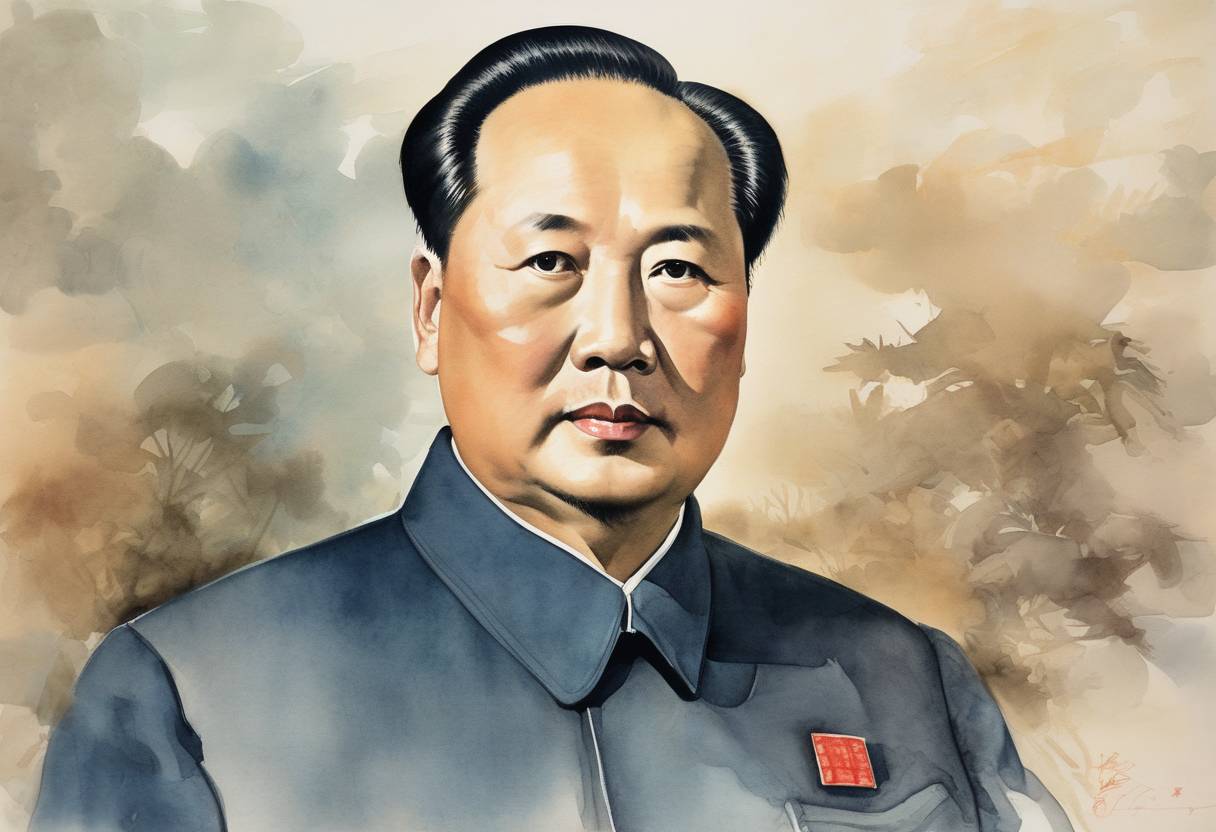
On September 9, 1976, Mao Zedong, the founding father of the People’s Republic of China and a pivotal figure in 20th-century Chinese history, passed away at the age of 82. His death marked the end of an era and set the stage for significant political and social changes in China.
Mao Zedong was a central figure in the Chinese Communist Party (CCP) and played a crucial role in the establishment of the People’s Republic of China in 1949. His leadership was characterized by radical policies such as the Great Leap Forward and the Cultural Revolution, which aimed to transform China into a socialist society but resulted in widespread social and economic upheaval.
In the years leading up to his death, Mao’s health had been deteriorating. He suffered from several ailments, including Parkinson’s disease and heart problems. Despite his declining health, Mao remained a dominant figure in Chinese politics, and his ideological influence was pervasive.
Mao’s death led to a period of uncertainty and power struggle within the Chinese Communist Party. His passing created a vacuum that various factions within the party sought to fill. The immediate aftermath saw the arrest of the “Gang of Four,” a political faction led by Mao’s widow, Jiang Qing, who were blamed for the excesses of the Cultural Revolution.
The death of Mao Zedong paved the way for significant political changes in China:
End of the Cultural Revolution: Mao’s death effectively ended the Cultural Revolution, a decade-long period of political and social chaos that had deeply affected Chinese society.
Rise of Deng Xiaoping: Deng Xiaoping, who had been purged during the Cultural Revolution, emerged as a key leader. He would go on to implement major economic reforms that opened China to the global market and shifted the country towards a more pragmatic, market-oriented economy.
Shift in Ideology: The post-Mao era saw a gradual shift from Maoist ideology to a more pragmatic approach focused on economic development and modernization. This shift laid the groundwork for China’s rapid economic growth in the subsequent decades.
Mao Zedong’s death marked a turning point in Chinese history. It allowed for a reevaluation of his policies and legacy, leading to a period of reform and opening up that transformed China into a major global economic power. The changes initiated in the post-Mao era have had lasting impacts on China’s domestic policies and its role on the world stage.
In summary, the death of Mao Zedong on September 9, 1976, was a pivotal moment in Chinese history, leading to the end of the Cultural Revolution, the rise of new leadership under Deng Xiaoping, and significant economic and political reforms that reshaped China.
Source: en.wikipedia.org